Portal:London transport

The London transport portal

London transport

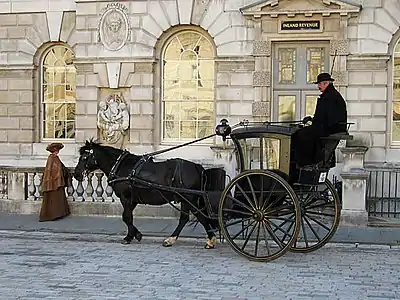
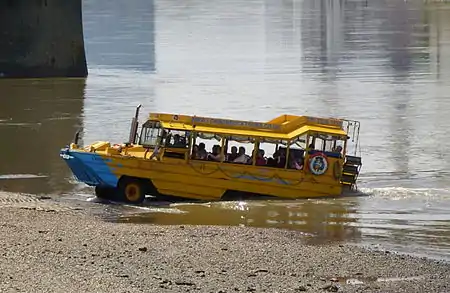
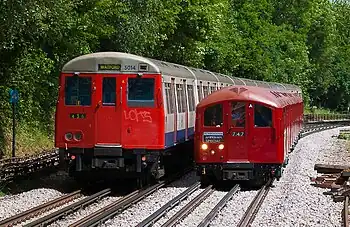
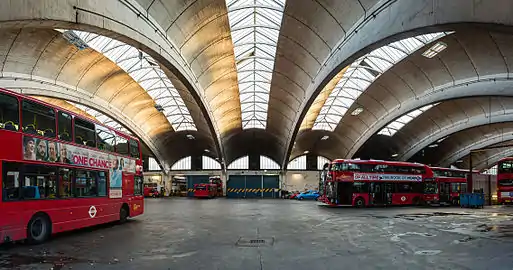
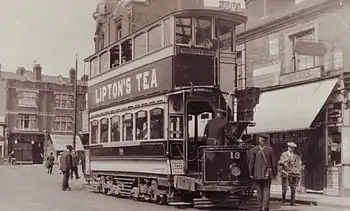
The London transport system is one of the oldest and largest public transport systems in the world. Many components of its transport system, such as the double-decker bus, the Hackney Carriage black taxi and the London Underground, are internationally recognised symbols of London.

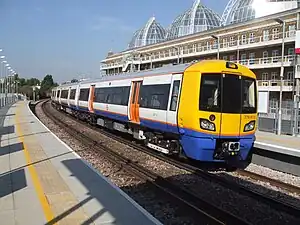
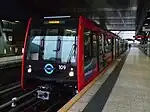
Most transport services in London are controlled by Transport for London (TfL), an executive agency of the Greater London Authority. TfL-controlled services include the London Underground, Docklands Light Railway, the London Overground, Buses and Trams, most of which accept payment by the Oyster card. TfL also administers the congestion charge zone and the low emission zone.

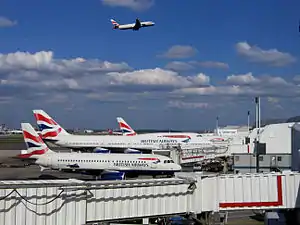
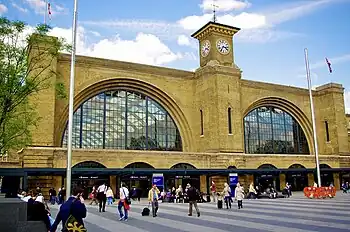
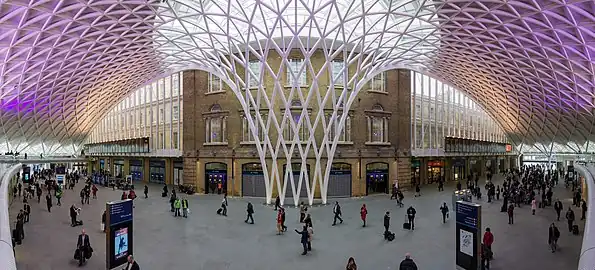
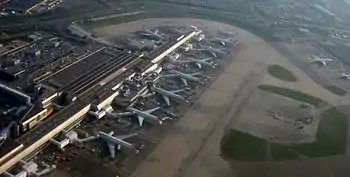
London has a comprehensive rail network with several major railway stations linking to the rest of the country. International travel is possible from St Pancras International which connects to mainland Europe through the Eurostar service, or from one of six international airports, including Heathrow or Gatwick.

The M25 is an orbital motorway which enables vehicles to avoid travelling through central London and is one of the busiest motorways in Europe.

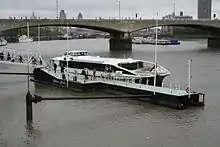
Buses Taxis Underground Overground DLR Tramlink National Rail River Services Heathrow Airport
Selected article
The Great Northern, Piccadilly and Brompton Railway (GNP&BR), also known as the Piccadilly tube, was a railway company established in 1902 that constructed a deep-level underground "tube" railway in London. Formed through a merger of two older companies, the Brompton and Piccadilly Circus Railway and the Great Northern and Strand Railway, it also incorporated part of a tube route planned by the Metropolitan District Railway. The combined company was a subsidiary of the Underground Electric Railways Company of London (UERL).

When it opened in 1906, the GNP&BR's line served 22 stations and ran for 14.17 kilometres (8.80 mi) between its western terminus at Hammersmith and its northern terminus at Finsbury Park. A short 720-metre (2,362 ft) branch connected Holborn to the Strand. Within the first year of opening it became apparent to the management and investors that the estimated passenger numbers for the GNP&BR and the other UERL lines were over-optimistic. Despite improved integration and cooperation with the other tube railways, the GNP&BR struggled financially. In 1933 it and the rest of the UERL were taken into public ownership. Today, the GNP&BR's tunnels and stations form the core central section of the London Underground's Piccadilly line. (Full article...)

All selected articles

Selected biography
Sir Edgar Speyer, 1st Baronet (7 September 1862 – 16 February 1932) was an American-born financier and philanthropist. He became a British subject in 1892 and was chairman of Speyer Brothers, the British branch of his family's international finance house, and a partner in the German and American branches. He was chairman of the Underground Electric Railways Company of London (UERL, forerunner of the London Underground) from 1906 to 1915, a period during which the company opened three underground railway lines, electrified a fourth and took over two more.

Speyer was a supporter of the musical arts and a friend of several leading composers, including Edward Elgar, Richard Strauss and Claude Debussy. He was chairman of the Classical Music Society for ten years, and he largely funded the Promenade Concerts between 1902 and 1914. His non-musical charitable activities included being honorary treasurer of the fund for Captain Scott's Antarctic expedition. For his philanthropy he was made a baronet in 1906 and a Privy Counsellor in 1909.

After the start of the World War I, he became the subject of anti-German attacks in the Press. In 1915, Speyer offered to resign from the Privy Council and to relinquish his baronetcy, but the Prime Minister turned down the offer. He resigned as chairman of the UERL and went to the United States. In 1921, the British government investigated accusations that Speyer had traded with the enemy during the war, and had participated in other wartime conduct incompatible with his status as a British subject. Speyer denied the charges, but his naturalisation was revoked and he was struck off the list of members of the Privy Council. (Full article...)

All Selected biographies

Did you know...
  • ...that the original carriages on the City and South London Railway were nicknamed "padded cells" due to their high backed cushioned seats and very small windows?
  • ...that at 44 tons, the locomotives of the Central London Railway's first underground trains were so heavy that they shook buildings as they passed 60 feet below and were scrapped after three years?

More Did you know...

Related portals
Selected pictures

All Selected pictures

In the news

Archive

Anniversaries
25 October
Maps
Geographic London Underground maps
Central areaComplete network
Recognised content

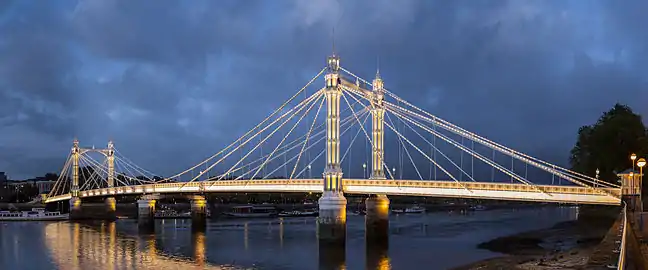
1910 London to Manchester air race • Albert Bridge, London • Aldwych tube station • Albert Stanley, 1st Baron Ashfield • Baker Street and Waterloo Railway • Battersea Bridge • Brill Tramway • Brill railway station • Central London Railway • Charing Cross, Euston and Hampstead Railway • Chelsea Bridge • City and South London Railway • Great Northern, Piccadilly and Brompton Railway • Great Western Railway War Memorial • Green Park tube station • Herne Hill railway station • Charles Holden • London Necropolis Company • London and North Western Railway War Memorial • Marchioness disaster • Metropolitan Railway • Moorgate tube crash • RAF Northolt • Frank Pick • Sinking of SS Princess Alice • Quainton Road railway station • Richmond Bridge, London • Underground Electric Railways Company of London • Vauxhall Bridge • Waddesdon Road railway station • Wandsworth Bridge • Westcott railway station • Wood Siding railway station • Wotton railway station (Brill Tramway)

List of former and unopened London Underground stations • List of London Underground stations • List of London Monopoly locations • List of works by Charles Holden • London station group • Timeline of the London Underground

Brill Tramway • Underground Electric Railways Company of London

Good articles (111)

A1 in London • M25 motorway • A215 road • Acton Town tube station • Angel tube station • Arnos Grove tube station • William Henry Barlow • Becontree tube station • Blackfriars station • Blackwall Tunnel • BOAC Flight 712 • Bond Street • Boston Manor tube station • Bow Back Rivers • Bow Street • Infrastructure of the Brill Tramway • British Airways • British Rail Class 700 • Broad Street railway station (England) • Cannon Street station • Charing Cross railway station • Chesham branch • Chiswick Bridge • City Thameslink railway station • Coventry Street • 2016 Croydon tram derailment • Dartford Crossing • Denmark Street • District Railway • Down Street tube station • Earl's Court tube station • East Finchley tube station • Elephant & Castle tube station • Embankment tube station • Euston Road • Euston railway station • Euston tube station • Fenchurch Street railway station • Finchley Central tube station • Fleet Street • Sir John Fowler, 1st Baronet • Gants Hill tube station • Gloucester Road tube station • Great Marlborough Street • Hammersmith & City line • Hammerton's Ferry • High Speed 1 • Highgate tube station • History of British Airways • Holborn Viaduct railway station • Holborn tube station • Hounslow West tube station • Kennington tube station • Kensington (Olympia) station • Kilburn tube station • King's Cross Thameslink railway station • King's Cross St Pancras tube station • Leicester Square • Murder of Deborah Linsley • Liverpool Street station • London Bridge station • London Country North East • London King's Cross railway station • London Necropolis Railway • London Necropolis railway station • London Paddington station • London Ringways • London Underground departmental stock • London Victoria station • London Waterloo station • M11 link road protest • Marylebone station • Moorgate station • Morden tube station • Newbury Park tube station • North Circular Road • Northern line extension to Battersea • Northumberland Avenue • Old Kent Road • Old Street station • Oxford Circus • Oxford Circus tube station • Oxford Street • Paddington tube station (Bakerloo, Circle and District lines) • Paddington tube station (Circle and Hammersmith & City lines) • Pall Mall, London • Park Lane • Charles Pearson • Pentonville Road • Piccadilly • Piccadilly line • Pimlico tube station • Regent Street • St Pancras railway station • South Circular Road, London • South Kensington tube station • Strand, London • Tillingbourne Bus Company • Trafalgar Square • Upminster Bridge tube station • Vauxhall station • Victoria line • Vine Street, London • Warren Street tube station • Waterloo East railway station • Westminster tube station • Westway (London) • Whitechapel Road • Whitehall • Wimbledon and Sutton Railway • Woolwich Ferry

Good topics (1)

List of London Monopoly locations

Articles
Categories
Category puzzle
Category puzzle
Select [►] to view subcategories
Transport in London
Transport in London by borough
London transport-related lists
Transport design in London
Fare collection systems in London
History of transport in London
Transport infrastructure in London
Modes of transport in London
Transport museums in London
Transport organisations based in London
People associated with transport in London
Public transport in London
Shipwrecks of the River Thames
Streets in London
Transport for London
Transport in the City of London
London transport stubs
Wikiproject
This Portal is maintained by WikiProject London Transport.

Things you can do:

Wikimedia

The following Wikimedia Foundation sister projects provide more on this subject:

Discover Wikipedia using portals
This article is issued from Wikipedia. The text is licensed under Creative Commons - Attribution - Sharealike. Additional terms may apply for the media files.