بعير
Arabic
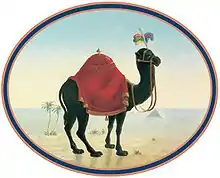
بَعِير
Etymology
From Proto-Semitic *bVʕVr-. Compare Classical Syriac ܒܥܝܪܐ (baʿīrā, “sheep, cattle”), Hebrew בְּעִיר (bəʿīr, “cattle”), Ugaritic 𐎛𐎁𐎗 (ỉbr, “bull”), Ge'ez ብዕር (bəʿər, “ox, horned cattle”), Amharic በሬ (bäre), Old South Arabian 𐩨𐩲𐩧 (bʿr, “cattle”), Akkadian 𒀫 (būrum, “calf”).
Pronunciation
- IPA(key): /ba.ʕiːr/
Noun
بَعِير • (baʕīr) m (plural أَبْعِرَة (ʔabʕira) or بُعْرَان (buʕrān) or أَبَاعِر (ʔabāʕir) or بَعَارِين (baʕārīn))
- (countable) a camel of either sex
-
- قَالُوا نَفْقِدُ صُوَاعَ الْمَلِكِ وَلِمَن جَاءَ بِهِ حِمْلُ بَعِيرٍ وَأَنَا بِهِ زَعِيمٌ
- qālū nafqidu ṣuwāʕa l-maliki waliman jāʔa bihi ḥimlu baʕīrin waʔanā bihi zaʕīmun
- They said, “We are missing the stoop of the king! For whoever brings it back, there will be a camel’s load. This, I guarantee.”
-
Declension
Declension of noun بَعِير (baʕīr)
| Singular | basic singular triptote | ||
|---|---|---|---|
| Indefinite | Definite | Construct | |
| Informal | بَعِير baʕīr |
الْبَعِير al-baʕīr |
بَعِير baʕīr |
| Nominative | بَعِيرٌ baʕīrun |
الْبَعِيرُ al-baʕīru |
بَعِيرُ baʕīru |
| Accusative | بَعِيرًا baʕīran |
الْبَعِيرَ al-baʕīra |
بَعِيرَ baʕīra |
| Genitive | بَعِيرٍ baʕīrin |
الْبَعِيرِ al-baʕīri |
بَعِيرِ baʕīri |
| Dual | Indefinite | Definite | Construct |
| Informal | بَعِيرَيْن baʕīrayn |
الْبَعِيرَيْن al-baʕīrayn |
بَعِيرَيْ baʕīray |
| Nominative | بَعِيرَانِ baʕīrāni |
الْبَعِيرَانِ al-baʕīrāni |
بَعِيرَا baʕīrā |
| Accusative | بَعِيرَيْنِ baʕīrayni |
الْبَعِيرَيْنِ al-baʕīrayni |
بَعِيرَيْ baʕīray |
| Genitive | بَعِيرَيْنِ baʕīrayni |
الْبَعِيرَيْنِ al-baʕīrayni |
بَعِيرَيْ baʕīray |
| Plural | broken plural triptote in ـَة (-a); basic broken plural triptote; basic broken plural diptote | ||
| Indefinite | Definite | Construct | |
| Informal | أَبْعِرَة; بُعْرَان; أَبَاعِر; بَعَارِين ʔabʕira; buʕrān; ʔabāʕir; baʕārīn |
الْأَبْعِرَة; الْبُعْرَان; الْأَبَاعِر; الْبَعَارِين al-ʔabʕira; al-buʕrān; al-ʔabāʕir; al-baʕārīn |
أَبْعِرَة; بُعْرَان; أَبَاعِر; بَعَارِين ʔabʕirat; buʕrān; ʔabāʕir; baʕārīn |
| Nominative | أَبْعِرَةٌ; بُعْرَانٌ; أَبَاعِرُ; بَعَارِينُ ʔabʕiratun; buʕrānun; ʔabāʕiru; baʕārīnu |
الْأَبْعِرَةُ; الْبُعْرَانُ; الْأَبَاعِرُ; الْبَعَارِينُ al-ʔabʕiratu; al-buʕrānu; al-ʔabāʕiru; al-baʕārīnu |
أَبْعِرَةُ; بُعْرَانُ; أَبَاعِرُ; بَعَارِينُ ʔabʕiratu; buʕrānu; ʔabāʕiru; baʕārīnu |
| Accusative | أَبْعِرَةً; بُعْرَانًا; أَبَاعِرَ; بَعَارِينَ ʔabʕiratan; buʕrānan; ʔabāʕira; baʕārīna |
الْأَبْعِرَةَ; الْبُعْرَانَ; الْأَبَاعِرَ; الْبَعَارِينَ al-ʔabʕirata; al-buʕrāna; al-ʔabāʕira; al-baʕārīna |
أَبْعِرَةَ; بُعْرَانَ; أَبَاعِرَ; بَعَارِينَ ʔabʕirata; buʕrāna; ʔabāʕira; baʕārīna |
| Genitive | أَبْعِرَةٍ; بُعْرَانٍ; أَبَاعِرَ; بَعَارِينَ ʔabʕiratin; buʕrānin; ʔabāʕira; baʕārīna |
الْأَبْعِرَةِ; الْبُعْرَانِ; الْأَبَاعِرِ; الْبَعَارِينِ al-ʔabʕirati; al-buʕrāni; al-ʔabāʕiri; al-baʕārīni |
أَبْعِرَةِ; بُعْرَانِ; أَبَاعِرِ; بَعَارِينِ ʔabʕirati; buʕrāni; ʔabāʕiri; baʕārīni |
References
- Behnstedt, Peter; Woidich, Manfred (2010) Wortatlas der arabischen Dialekte – Band I: Mensch, Natur, Fauna und Flora (Handbook of Oriental Studies – Handbuch der Orientalistik; 100) (in German), Leiden, The Netherlands: Brill, , →ISBN, pages 303–308
This article is issued from Wiktionary. The text is licensed under Creative Commons - Attribution - Sharealike. Additional terms may apply for the media files.