ديس
Arabic
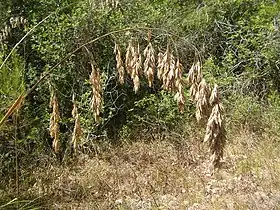
دِيس – Ampelodesmos mauritanicus
Etymology
From the root د و س (d-w-s) or lengthened from د س س (d-s-s) because of their being trodden down. Or according to Dictionnaire du faisceau dialectal arabe andalou, an Old South Arabian variant of ثُدَّاء (ṯuddāʔ, “desert papyrus (Cyperus conglomeratus)”), hence due to Yemenite expatriates markedly occurring in Northwestern Arabic.
Pronunciation
- IPA(key): /diːs/
Noun
دِيس • (dīs) m (collective, singulative دِيسَة f (dīsa), plural أَدْيَاس (ʔadyās))
- rush (Juncus gen. et spp.)
- bulrush, club-rush (Scirpus gen. et spp.)
- diss, rope grass (Ampelodesmos, which has only one relevant species Ampelodesmos mauritanicus syn. Ampelodesmos tenax)
Declension
Declension of noun دِيس (dīs)
| Collective | basic collective triptote | ||
|---|---|---|---|
| Indefinite | Definite | Construct | |
| Informal | دِيس dīs |
الدِّيس ad-dīs |
دِيس dīs |
| Nominative | دِيسٌ dīsun |
الدِّيسُ ad-dīsu |
دِيسُ dīsu |
| Accusative | دِيسًا dīsan |
الدِّيسَ ad-dīsa |
دِيسَ dīsa |
| Genitive | دِيسٍ dīsin |
الدِّيسِ ad-dīsi |
دِيسِ dīsi |
| Singulative | singulative triptote in ـَة (-a) | ||
| Indefinite | Definite | Construct | |
| Informal | دِيسَة dīsa |
الدِّيسَة ad-dīsa |
دِيسَة dīsat |
| Nominative | دِيسَةٌ dīsatun |
الدِّيسَةُ ad-dīsatu |
دِيسَةُ dīsatu |
| Accusative | دِيسَةً dīsatan |
الدِّيسَةَ ad-dīsata |
دِيسَةَ dīsata |
| Genitive | دِيسَةٍ dīsatin |
الدِّيسَةِ ad-dīsati |
دِيسَةِ dīsati |
| Dual | Indefinite | Definite | Construct |
| Informal | دِيسَتَيْن dīsatayn |
الدِّيسَتَيْن ad-dīsatayn |
دِيسَتَيْ dīsatay |
| Nominative | دِيسَتَانِ dīsatāni |
الدِّيسَتَانِ ad-dīsatāni |
دِيسَتَا dīsatā |
| Accusative | دِيسَتَيْنِ dīsatayni |
الدِّيسَتَيْنِ ad-dīsatayni |
دِيسَتَيْ dīsatay |
| Genitive | دِيسَتَيْنِ dīsatayni |
الدِّيسَتَيْنِ ad-dīsatayni |
دِيسَتَيْ dīsatay |
| Paucal (3-10) | sound feminine paucal | ||
| Indefinite | Definite | Construct | |
| Informal | دِيسَات dīsāt |
الدِّيسَات ad-dīsāt |
دِيسَات dīsāt |
| Nominative | دِيسَاتٌ dīsātun |
الدِّيسَاتُ ad-dīsātu |
دِيسَاتُ dīsātu |
| Accusative | دِيسَاتٍ dīsātin |
الدِّيسَاتِ ad-dīsāti |
دِيسَاتِ dīsāti |
| Genitive | دِيسَاتٍ dīsātin |
الدِّيسَاتِ ad-dīsāti |
دِيسَاتِ dīsāti |
| Plural of variety | basic broken plural triptote | ||
| Indefinite | Definite | Construct | |
| Informal | أَدْيَاس ʔadyās |
الْأَدْيَاس al-ʔadyās |
أَدْيَاس ʔadyās |
| Nominative | أَدْيَاسٌ ʔadyāsun |
الْأَدْيَاسُ al-ʔadyāsu |
أَدْيَاسُ ʔadyāsu |
| Accusative | أَدْيَاسًا ʔadyāsan |
الْأَدْيَاسَ al-ʔadyāsa |
أَدْيَاسَ ʔadyāsa |
| Genitive | أَدْيَاسٍ ʔadyāsin |
الْأَدْيَاسِ al-ʔadyāsi |
أَدْيَاسِ ʔadyāsi |
Quotations
- c. 1200, يحيى بن محمد بن أحمد بن العوام [Yaḥyā ibn muḥammad ibn ʾaḥmad ibn al-ʿawwām], José Antonio Banqueri, editor, كتاب الفلاحة [Book on Agriculture], volume 1, Madrid: Imprenta Real, published 1802IA, Cap. 16, page 669 line 6:
- ويجمع التين إذا سقط في الأرض بعد تناهي نضجه ويفرش على رتم أو ديس يابس وييبس للشمس نعما
- And the figs are collected when having fallen to the ground after having finished ripening and are spread on sere retama or rush to dry in the sun towards a more pleasurable experience.
- a. 1369, Ibn Ḵātima, “Un document nouveau sur l’arabe dialectal d’Occident au XIIe siècle = إيراد اللآل من إنشاد الضوال [ʾīrad l-laʾāl min ʾinšād aḍ-ḍawāl]”, in G. S. Colin, editor, Hespéris, volume 12, number 1, published 1931, page 12:
- ديس — لفظ عامّيّ والعرب يسمّيه الأَسَل وهو الذي تتّخذ منه الحُصُر
- Diss is a vulgar term for what the Arabs call rush, one from which one makes mats.
Further reading
 ديس – Scirpus on the Arabic Wikipedia.Wikipedia ar
- ديس – Ampelodesmos on the Arabic Wikipedia.Wikipedia ar
- Corriente, Federico; Pereira, Christophe; Vicente, Angeles, editors (2017) Dictionnaire du faisceau dialectal arabe andalou. Perspectives phraséologiques et étymologiques (in French), Berlin: De Gruyter, page 491
- Dozy, Reinhart Pieter Anne (1881), “ديس”, in Supplément aux dictionnaires arabes (in French), volume 1, Leiden: E. J. Brill, page 481a
- Freytag, Georg (1833), “ديس”, in Lexicon arabico-latinum praesertim ex Djeuharii Firuzabadiique et aliorum Arabum operibus adhibitis Golii quoque et aliorum libris confectum (in Latin), volume 2, Halle: C. A. Schwetschke, page 76a
- Wehr, Hans (1979), “ديس”, in J. Milton Cowan, editor, A Dictionary of Modern Written Arabic, 4th edition, Ithaca, NY: Spoken Language Services, →ISBN, page 352a
- Wehr, Hans; Kropfitsch, Lorenz (1985), “ديس”, in Arabisches Wörterbuch für die Schriftsprache der Gegenwart (in German), 5th edition, Wiesbaden: Otto Harrassowitz, published 2011, →ISBN, page 422a
Hijazi Arabic
Etymology
Unknown.
Pronunciation
- IPA(key): /deːs/
This article is issued from Wiktionary. The text is licensed under Creative Commons - Attribution - Sharealike. Additional terms may apply for the media files.