سور
Arabic
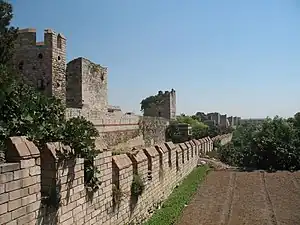
سُور
Etymology 1
Argued to be a loan from Aramaic שׂוּרָא / ܫܘܪܐ (šūrā), but other cognates such as Sabaean 𐩣𐩬𐩪𐩥𐩧𐩩 (mns¹wrt, “walls”) and Tigre ሶር (sor, “partition wall”) (unless that form is itself borrowed from Arabic) suggest that it may in fact be inherited.
Noun
سُور • (sūr) m (plural أَسْوَار (ʔaswār) or سِيرَان (sīrān))
- wall that encloses and protects a building
Declension
Declension of noun سُور (sūr)
| Singular | basic singular triptote | ||
|---|---|---|---|
| Indefinite | Definite | Construct | |
| Informal | سُور sūr |
السُّور as-sūr |
سُور sūr |
| Nominative | سُورٌ sūrun |
السُّورُ as-sūru |
سُورُ sūru |
| Accusative | سُورًا sūran |
السُّورَ as-sūra |
سُورَ sūra |
| Genitive | سُورٍ sūrin |
السُّورِ as-sūri |
سُورِ sūri |
| Dual | Indefinite | Definite | Construct |
| Informal | سُورَيْن sūrayn |
السُّورَيْن as-sūrayn |
سُورَيْ sūray |
| Nominative | سُورَانِ sūrāni |
السُّورَانِ as-sūrāni |
سُورَا sūrā |
| Accusative | سُورَيْنِ sūrayni |
السُّورَيْنِ as-sūrayni |
سُورَيْ sūray |
| Genitive | سُورَيْنِ sūrayni |
السُّورَيْنِ as-sūrayni |
سُورَيْ sūray |
| Plural | basic broken plural triptote | ||
| Indefinite | Definite | Construct | |
| Informal | أَسْوَار; سِيرَان ʔaswār; sīrān |
الْأَسْوَار; السِّيرَان al-ʔaswār; as-sīrān |
أَسْوَار; سِيرَان ʔaswār; sīrān |
| Nominative | أَسْوَارٌ; سِيرَانٌ ʔaswārun; sīrānun |
الْأَسْوَارُ; السِّيرَانُ al-ʔaswāru; as-sīrānu |
أَسْوَارُ; سِيرَانُ ʔaswāru; sīrānu |
| Accusative | أَسْوَارًا; سِيرَانًا ʔaswāran; sīrānan |
الْأَسْوَارَ; السِّيرَانَ al-ʔaswāra; as-sīrāna |
أَسْوَارَ; سِيرَانَ ʔaswāra; sīrāna |
| Genitive | أَسْوَارٍ; سِيرَانٍ ʔaswārin; sīrānin |
الْأَسْوَارِ; السِّيرَانِ al-ʔaswāri; as-sīrāni |
أَسْوَارِ; سِيرَانِ ʔaswāri; sīrāni |
References
- Fraenkel, Siegmund (1886) Die aramäischen Fremdwörter im Arabischen (in German), Leiden: E. J. Brill, page 237
- Kogan, Leonid (2015) Genealogical Classification of Semitic. The Lexical Isoglosses, Berlin: Walter de Gruyter, →ISBN, page 397
- Steingass, Francis Joseph (1884), “سور”, in The Student's Arabic–English Dictionary, London: W.H. Allen
Conjugation
Conjugation of
سَوَّرَ
(form-II sound)| verbal noun الْمَصْدَر |
تَسْوِير taswīr | |||||||||||
|---|---|---|---|---|---|---|---|---|---|---|---|---|
| active participle اِسْم الْفَاعِل |
مُسَوِّر musawwir | |||||||||||
| passive participle اِسْم الْمَفْعُول |
مُسَوَّر musawwar | |||||||||||
| active voice الْفِعْل الْمَعْلُوم | ||||||||||||
| singular الْمُفْرَد |
dual الْمُثَنَّى |
plural الْجَمْع | ||||||||||
| 1st person الْمُتَكَلِّم |
2nd person الْمُخَاطَب |
3rd person الْغَائِب |
2nd person الْمُخَاطَب |
3rd person الْغَائِب |
1st person الْمُتَكَلِّم |
2nd person الْمُخَاطَب |
3rd person الْغَائِب | |||||
| past (perfect) indicative الْمَاضِي |
m | sawwartu |
sawwarta |
سَوَّرَ sawwara |
سَوَّرْتُمَا sawwartumā |
سَوَّرَا sawwarā |
sawwarnā |
سَوَّرْتُمْ sawwartum |
سَوَّرُوا sawwarū | |||
| f | sawwarti |
sawwarat |
سَوَّرَتَا sawwaratā |
سَوَّرْتُنَّ sawwartunna |
sawwarna | |||||||
| non-past (imperfect) indicative الْمُضَارِع الْمَرْفُوع |
m | أُسَوِّرُ ʔusawwiru |
تُسَوِّرُ tusawwiru |
يُسَوِّرُ yusawwiru |
تُسَوِّرَانِ tusawwirāni |
يُسَوِّرَانِ yusawwirāni |
nusawwiru |
تُسَوِّرُونَ tusawwirūna |
يُسَوِّرُونَ yusawwirūna | |||
| f | تُسَوِّرِينَ tusawwirīna |
تُسَوِّرُ tusawwiru |
تُسَوِّرَانِ tusawwirāni |
تُسَوِّرْنَ tusawwirna |
يُسَوِّرْنَ yusawwirna | |||||||
| subjunctive الْمُضَارِع الْمَنْصُوب |
m | أُسَوِّرَ ʔusawwira |
تُسَوِّرَ tusawwira |
يُسَوِّرَ yusawwira |
تُسَوِّرَا tusawwirā |
يُسَوِّرَا yusawwirā |
nusawwira |
تُسَوِّرُوا tusawwirū |
يُسَوِّرُوا yusawwirū | |||
| f | تُسَوِّرِي tusawwirī |
تُسَوِّرَ tusawwira |
تُسَوِّرَا tusawwirā |
تُسَوِّرْنَ tusawwirna |
يُسَوِّرْنَ yusawwirna | |||||||
| jussive الْمُضَارِع الْمَجْزُوم |
m | أُسَوِّرْ ʔusawwir |
تُسَوِّرْ tusawwir |
يُسَوِّرْ yusawwir |
تُسَوِّرَا tusawwirā |
يُسَوِّرَا yusawwirā |
nusawwir |
تُسَوِّرُوا tusawwirū |
يُسَوِّرُوا yusawwirū | |||
| f | تُسَوِّرِي tusawwirī |
تُسَوِّرْ tusawwir |
تُسَوِّرَا tusawwirā |
تُسَوِّرْنَ tusawwirna |
يُسَوِّرْنَ yusawwirna | |||||||
| imperative الْأَمْر |
m | سَوِّرْ sawwir |
سَوِّرَا sawwirā |
سَوِّرُوا sawwirū |
||||||||
| f | sawwirī |
sawwirna | ||||||||||
| passive voice الْفِعْل الْمَجْهُول | ||||||||||||
| singular الْمُفْرَد |
dual الْمُثَنَّى |
plural الْجَمْع | ||||||||||
| 1st person الْمُتَكَلِّم |
2nd person الْمُخَاطَب |
3rd person الْغَائِب |
2nd person الْمُخَاطَب |
3rd person الْغَائِب |
1st person الْمُتَكَلِّم |
2nd person الْمُخَاطَب |
3rd person الْغَائِب | |||||
| past (perfect) indicative الْمَاضِي |
m | suwwirtu |
suwwirta |
سُوِّرَ suwwira |
سُوِّرْتُمَا suwwirtumā |
سُوِّرَا suwwirā |
suwwirnā |
سُوِّرْتُمْ suwwirtum |
سُوِّرُوا suwwirū | |||
| f | suwwirti |
suwwirat |
سُوِّرَتَا suwwiratā |
سُوِّرْتُنَّ suwwirtunna |
suwwirna | |||||||
| non-past (imperfect) indicative الْمُضَارِع الْمَرْفُوع |
m | أُسَوَّرُ ʔusawwaru |
تُسَوَّرُ tusawwaru |
يُسَوَّرُ yusawwaru |
تُسَوَّرَانِ tusawwarāni |
يُسَوَّرَانِ yusawwarāni |
nusawwaru |
تُسَوَّرُونَ tusawwarūna |
يُسَوَّرُونَ yusawwarūna | |||
| f | تُسَوَّرِينَ tusawwarīna |
تُسَوَّرُ tusawwaru |
تُسَوَّرَانِ tusawwarāni |
تُسَوَّرْنَ tusawwarna |
يُسَوَّرْنَ yusawwarna | |||||||
| subjunctive الْمُضَارِع الْمَنْصُوب |
m | أُسَوَّرَ ʔusawwara |
تُسَوَّرَ tusawwara |
يُسَوَّرَ yusawwara |
تُسَوَّرَا tusawwarā |
يُسَوَّرَا yusawwarā |
nusawwara |
تُسَوَّرُوا tusawwarū |
يُسَوَّرُوا yusawwarū | |||
| f | تُسَوَّرِي tusawwarī |
تُسَوَّرَ tusawwara |
تُسَوَّرَا tusawwarā |
تُسَوَّرْنَ tusawwarna |
يُسَوَّرْنَ yusawwarna | |||||||
| jussive الْمُضَارِع الْمَجْزُوم |
m | أُسَوَّرْ ʔusawwar |
تُسَوَّرْ tusawwar |
يُسَوَّرْ yusawwar |
تُسَوَّرَا tusawwarā |
يُسَوَّرَا yusawwarā |
nusawwar |
تُسَوَّرُوا tusawwarū |
يُسَوَّرُوا yusawwarū | |||
| f | تُسَوَّرِي tusawwarī |
تُسَوَّرْ tusawwar |
تُسَوَّرَا tusawwarā |
تُسَوَّرْنَ tusawwarna |
يُسَوَّرْنَ yusawwarna | |||||||
Persian
Etymology
From Old Persian *θūryas (“banquet, feast”), from Proto-Iranian *cuHryás, from Proto-Indo-Iranian *ćuHryás, from Proto-Indo-European *ḱewH- (“to shine”), see also Sanskrit श्वस् (śvas, “tomorrow”).[1][2] Related to Northern Kurdish sor (“red”).
References
- Steingass, Francis Joseph (1892), “سور”, in A Comprehensive Persian–English dictionary, London: Routledge & K. Paul
- Journal of the Asiatic Society of Bengal. (1861). India: Bishop's College Press, p. 341
- de Vaan, Michiel (2003), Beekes, R.S.P.; Lubotsky, A.; Weitenberg, J.J.S., editors, The Avestan Vowels (Leiden Studies in Indo-European; 12), Amsterdam, New York: Rodopi, →ISBN
Punjabi
Etymology
Inherited from Prakrit सूअर (sūara), from Sanskrit सूकर (sūkara). Compare Urdu سؤر (sū'ar).
Pronunciation
- IPA(key): /suː.ɾᵊ/
- Rhymes: -uː.ɾᵊ
References
- Turner, Ralph Lilley (1969–1985), “sūkará”, in A Comparative Dictionary of the Indo-Aryan Languages, London: Oxford University Press, page 780
- “سور”, in Punjabi-English Dictionary, Patiala: Punjabi University, 2023
Southeast Pashayi
Pronunciation
IPA(key): [sʊr]
Further reading
- Abd-El-Malek Lamuwal; Adam Baker (2013), “Southeastern Pashayi”, in Journal of the International Phonetic Association, volume 43, Cambridge: International Phonetic Association, pages 243-246
- Richard F. Strand (2011) Degânʹo Lexicon
Ushojo
This article is issued from Wiktionary. The text is licensed under Creative Commons - Attribution - Sharealike. Additional terms may apply for the media files.