سکا
See also: سكا
Persian
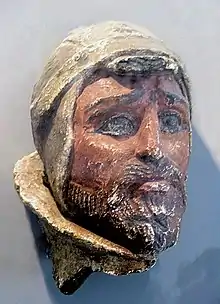
bust of a سکا (sakâ "Scythian") warrior from Bactria, 100 BCE
Alternative forms
- ساکا (sâkâ)
Etymology
From Old Persian 𐎿𐎣 (Saka).
Saraiki
Etymology
Inherited from Sanskrit शुष्क (śuṣka), from Proto-Indo-Iranian *Hsúškas, from Proto-Indo-European *h₂sews-.
Cognate with Assamese শুকান (xukan), Bengali শুখা (śukha), English sear, Hindi सूखा (sūkhā) / Urdu سوکھا (sūkhā), Persian خشک (xušk), Romani śuko and Russian сушить (sušitʹ).
Pronunciation
- IPA(key): /sʊk.kaˑ/
Declension
| Declension of سکا | |||||
|---|---|---|---|---|---|
| masculine | feminine | ||||
| singular | plural | singular | plural | ||
| direct | سُکّا (sukkā) | سُکّے (sukke) | سُکّی (sukkī) | سُکِّیاں (sukkīyā̃) | |
| oblique | سُکّے (sukke) | سُکّے, سُکّیاں (sukke, sukkeyā̃) | سُکّی (sukkī) | سُکِّیاں (sukkīyā̃) | |
Urdu

a Gandharan relief of سکا (sakā, "Scythian, Indo-Scythian") men playing instruments and dancing, Pakistan
.jpg.webp)
a depiction of a battle crafted on the handle of a golden سکا hair comb
Etymology
Either from Persian سکا (sakâ) or a modern learned borrowing from an ancient Indo-Iranian language referring to the same nomadic peoples.
Pronunciation
- (Standard Urdu) IPA(key): /sə.kɑː/
- (Deccani) IPA(key): /sə.kɑː/
Noun
سکا • (sakā) ?
- Scythian; a warlike nomadic people from Scythia
- the Indo-Scythians of ancient Afghanistan and Pakistan
This article is issued from Wiktionary. The text is licensed under Creative Commons - Attribution - Sharealike. Additional terms may apply for the media files.