قزح
Arabic
Etymology
From the root ق ز ح (q-z-ḥ). Compare Hebrew קֶצַח (qeṣaḥ, “black cumin (Nigella sativa))”). Jewish Palestinian Aramaic קִיצְחָא (qiṣḥā, “black cumin (Nigella sativa))”) is likely a Hebraism. But there is also Ugaritic 𐎖𐎕𐎈 (qṣḥ, “black cumin (Nigella sativa)”). Whereas the Classical Syriac lexicographers give ܟܷܣܚܳܐ (kesḥā, “small onion”).
Verb
قَزَحَ • (qazaḥa) I, non-past يَقْزَحُ (yaqzaḥu)
Conjugation
Conjugation of
قَزَحَ
(form-I sound, verbal noun قَزْح)| verbal noun الْمَصْدَر |
قَزْح qazḥ | |||||||||||
|---|---|---|---|---|---|---|---|---|---|---|---|---|
| active participle اِسْم الْفَاعِل |
قَازِح qāziḥ | |||||||||||
| passive participle اِسْم الْمَفْعُول |
مَقْزُوح maqzūḥ | |||||||||||
| active voice الْفِعْل الْمَعْلُوم | ||||||||||||
| singular الْمُفْرَد |
dual الْمُثَنَّى |
plural الْجَمْع | ||||||||||
| 1st person الْمُتَكَلِّم |
2nd person الْمُخَاطَب |
3rd person الْغَائِب |
2nd person الْمُخَاطَب |
3rd person الْغَائِب |
1st person الْمُتَكَلِّم |
2nd person الْمُخَاطَب |
3rd person الْغَائِب | |||||
| past (perfect) indicative الْمَاضِي |
m | قَزَحْتُ qazaḥtu |
قَزَحْتَ qazaḥta |
قَزَحَ qazaḥa |
قَزَحْتُمَا qazaḥtumā |
قَزَحَا qazaḥā |
قَزَحْنَا qazaḥnā |
قَزَحْتُمْ qazaḥtum |
قَزَحُوا qazaḥū | |||
| f | قَزَحْتِ qazaḥti |
قَزَحَتْ qazaḥat |
قَزَحَتَا qazaḥatā |
قَزَحْتُنَّ qazaḥtunna |
قَزَحْنَ qazaḥna | |||||||
| non-past (imperfect) indicative الْمُضَارِع الْمَرْفُوع |
m | أَقْزَحُ ʔaqzaḥu |
تَقْزَحُ taqzaḥu |
يَقْزَحُ yaqzaḥu |
تَقْزَحَانِ taqzaḥāni |
يَقْزَحَانِ yaqzaḥāni |
نَقْزَحُ naqzaḥu |
تَقْزَحُونَ taqzaḥūna |
يَقْزَحُونَ yaqzaḥūna | |||
| f | تَقْزَحِينَ taqzaḥīna |
تَقْزَحُ taqzaḥu |
تَقْزَحَانِ taqzaḥāni |
تَقْزَحْنَ taqzaḥna |
يَقْزَحْنَ yaqzaḥna | |||||||
| subjunctive الْمُضَارِع الْمَنْصُوب |
m | أَقْزَحَ ʔaqzaḥa |
تَقْزَحَ taqzaḥa |
يَقْزَحَ yaqzaḥa |
تَقْزَحَا taqzaḥā |
يَقْزَحَا yaqzaḥā |
نَقْزَحَ naqzaḥa |
تَقْزَحُوا taqzaḥū |
يَقْزَحُوا yaqzaḥū | |||
| f | تَقْزَحِي taqzaḥī |
تَقْزَحَ taqzaḥa |
تَقْزَحَا taqzaḥā |
تَقْزَحْنَ taqzaḥna |
يَقْزَحْنَ yaqzaḥna | |||||||
| jussive الْمُضَارِع الْمَجْزُوم |
m | أَقْزَحْ ʔaqzaḥ |
تَقْزَحْ taqzaḥ |
يَقْزَحْ yaqzaḥ |
تَقْزَحَا taqzaḥā |
يَقْزَحَا yaqzaḥā |
نَقْزَحْ naqzaḥ |
تَقْزَحُوا taqzaḥū |
يَقْزَحُوا yaqzaḥū | |||
| f | تَقْزَحِي taqzaḥī |
تَقْزَحْ taqzaḥ |
تَقْزَحَا taqzaḥā |
تَقْزَحْنَ taqzaḥna |
يَقْزَحْنَ yaqzaḥna | |||||||
| imperative الْأَمْر |
m | اِقْزَحْ iqzaḥ |
اِقْزَحَا iqzaḥā |
اِقْزَحُوا iqzaḥū |
||||||||
| f | اِقْزَحِي iqzaḥī |
اِقْزَحْنَ iqzaḥna | ||||||||||
| passive voice الْفِعْل الْمَجْهُول | ||||||||||||
| singular الْمُفْرَد |
dual الْمُثَنَّى |
plural الْجَمْع | ||||||||||
| 1st person الْمُتَكَلِّم |
2nd person الْمُخَاطَب |
3rd person الْغَائِب |
2nd person الْمُخَاطَب |
3rd person الْغَائِب |
1st person الْمُتَكَلِّم |
2nd person الْمُخَاطَب |
3rd person الْغَائِب | |||||
| past (perfect) indicative الْمَاضِي |
m | قُزِحْتُ quziḥtu |
قُزِحْتَ quziḥta |
قُزِحَ quziḥa |
قُزِحْتُمَا quziḥtumā |
قُزِحَا quziḥā |
قُزِحْنَا quziḥnā |
قُزِحْتُمْ quziḥtum |
قُزِحُوا quziḥū | |||
| f | قُزِحْتِ quziḥti |
قُزِحَتْ quziḥat |
قُزِحَتَا quziḥatā |
قُزِحْتُنَّ quziḥtunna |
قُزِحْنَ quziḥna | |||||||
| non-past (imperfect) indicative الْمُضَارِع الْمَرْفُوع |
m | أُقْزَحُ ʔuqzaḥu |
تُقْزَحُ tuqzaḥu |
يُقْزَحُ yuqzaḥu |
تُقْزَحَانِ tuqzaḥāni |
يُقْزَحَانِ yuqzaḥāni |
نُقْزَحُ nuqzaḥu |
تُقْزَحُونَ tuqzaḥūna |
يُقْزَحُونَ yuqzaḥūna | |||
| f | تُقْزَحِينَ tuqzaḥīna |
تُقْزَحُ tuqzaḥu |
تُقْزَحَانِ tuqzaḥāni |
تُقْزَحْنَ tuqzaḥna |
يُقْزَحْنَ yuqzaḥna | |||||||
| subjunctive الْمُضَارِع الْمَنْصُوب |
m | أُقْزَحَ ʔuqzaḥa |
تُقْزَحَ tuqzaḥa |
يُقْزَحَ yuqzaḥa |
تُقْزَحَا tuqzaḥā |
يُقْزَحَا yuqzaḥā |
نُقْزَحَ nuqzaḥa |
تُقْزَحُوا tuqzaḥū |
يُقْزَحُوا yuqzaḥū | |||
| f | تُقْزَحِي tuqzaḥī |
تُقْزَحَ tuqzaḥa |
تُقْزَحَا tuqzaḥā |
تُقْزَحْنَ tuqzaḥna |
يُقْزَحْنَ yuqzaḥna | |||||||
| jussive الْمُضَارِع الْمَجْزُوم |
m | أُقْزَحْ ʔuqzaḥ |
تُقْزَحْ tuqzaḥ |
يُقْزَحْ yuqzaḥ |
تُقْزَحَا tuqzaḥā |
يُقْزَحَا yuqzaḥā |
نُقْزَحْ nuqzaḥ |
تُقْزَحُوا tuqzaḥū |
يُقْزَحُوا yuqzaḥū | |||
| f | تُقْزَحِي tuqzaḥī |
تُقْزَحْ tuqzaḥ |
تُقْزَحَا tuqzaḥā |
تُقْزَحْنَ tuqzaḥna |
يُقْزَحْنَ yuqzaḥna | |||||||
Verb
قَزَحَ • (qazaḥa) I, non-past يَقْزَحُ (yaqzaḥu)
Conjugation
Conjugation of
قَزَحَ
(form-I sound, verbal nouns قُزُوح or قَزَحَان or قَزْح)| verbal nouns الْمَصَادِر |
قُزُوح or قَزَحَان or قَزْح quzūḥ or qazaḥān or qazḥ | |||||||||||
|---|---|---|---|---|---|---|---|---|---|---|---|---|
| active participle اِسْم الْفَاعِل |
قَازِح qāziḥ | |||||||||||
| active voice الْفِعْل الْمَعْلُوم | ||||||||||||
| singular الْمُفْرَد |
dual الْمُثَنَّى |
plural الْجَمْع | ||||||||||
| 1st person الْمُتَكَلِّم |
2nd person الْمُخَاطَب |
3rd person الْغَائِب |
2nd person الْمُخَاطَب |
3rd person الْغَائِب |
1st person الْمُتَكَلِّم |
2nd person الْمُخَاطَب |
3rd person الْغَائِب | |||||
| past (perfect) indicative الْمَاضِي |
m | قَزَحْتُ qazaḥtu |
قَزَحْتَ qazaḥta |
قَزَحَ qazaḥa |
قَزَحْتُمَا qazaḥtumā |
قَزَحَا qazaḥā |
قَزَحْنَا qazaḥnā |
قَزَحْتُمْ qazaḥtum |
قَزَحُوا qazaḥū | |||
| f | قَزَحْتِ qazaḥti |
قَزَحَتْ qazaḥat |
قَزَحَتَا qazaḥatā |
قَزَحْتُنَّ qazaḥtunna |
قَزَحْنَ qazaḥna | |||||||
| non-past (imperfect) indicative الْمُضَارِع الْمَرْفُوع |
m | أَقْزَحُ ʔaqzaḥu |
تَقْزَحُ taqzaḥu |
يَقْزَحُ yaqzaḥu |
تَقْزَحَانِ taqzaḥāni |
يَقْزَحَانِ yaqzaḥāni |
نَقْزَحُ naqzaḥu |
تَقْزَحُونَ taqzaḥūna |
يَقْزَحُونَ yaqzaḥūna | |||
| f | تَقْزَحِينَ taqzaḥīna |
تَقْزَحُ taqzaḥu |
تَقْزَحَانِ taqzaḥāni |
تَقْزَحْنَ taqzaḥna |
يَقْزَحْنَ yaqzaḥna | |||||||
| subjunctive الْمُضَارِع الْمَنْصُوب |
m | أَقْزَحَ ʔaqzaḥa |
تَقْزَحَ taqzaḥa |
يَقْزَحَ yaqzaḥa |
تَقْزَحَا taqzaḥā |
يَقْزَحَا yaqzaḥā |
نَقْزَحَ naqzaḥa |
تَقْزَحُوا taqzaḥū |
يَقْزَحُوا yaqzaḥū | |||
| f | تَقْزَحِي taqzaḥī |
تَقْزَحَ taqzaḥa |
تَقْزَحَا taqzaḥā |
تَقْزَحْنَ taqzaḥna |
يَقْزَحْنَ yaqzaḥna | |||||||
| jussive الْمُضَارِع الْمَجْزُوم |
m | أَقْزَحْ ʔaqzaḥ |
تَقْزَحْ taqzaḥ |
يَقْزَحْ yaqzaḥ |
تَقْزَحَا taqzaḥā |
يَقْزَحَا yaqzaḥā |
نَقْزَحْ naqzaḥ |
تَقْزَحُوا taqzaḥū |
يَقْزَحُوا yaqzaḥū | |||
| f | تَقْزَحِي taqzaḥī |
تَقْزَحْ taqzaḥ |
تَقْزَحَا taqzaḥā |
تَقْزَحْنَ taqzaḥna |
يَقْزَحْنَ yaqzaḥna | |||||||
| imperative الْأَمْر |
m | اِقْزَحْ iqzaḥ |
اِقْزَحَا iqzaḥā |
اِقْزَحُوا iqzaḥū |
||||||||
| f | اِقْزَحِي iqzaḥī |
اِقْزَحْنَ iqzaḥna | ||||||||||
Verb
قَزَّحَ • (qazzaḥa) II, non-past يُقَزِّحُ (yuqazziḥu)
Conjugation
Conjugation of
قَزَّحَ
(form-II sound)| verbal noun الْمَصْدَر |
تَقْزِيح taqzīḥ | |||||||||||
|---|---|---|---|---|---|---|---|---|---|---|---|---|
| active participle اِسْم الْفَاعِل |
مُقَزِّح muqazziḥ | |||||||||||
| passive participle اِسْم الْمَفْعُول |
مُقَزَّح muqazzaḥ | |||||||||||
| active voice الْفِعْل الْمَعْلُوم | ||||||||||||
| singular الْمُفْرَد |
dual الْمُثَنَّى |
plural الْجَمْع | ||||||||||
| 1st person الْمُتَكَلِّم |
2nd person الْمُخَاطَب |
3rd person الْغَائِب |
2nd person الْمُخَاطَب |
3rd person الْغَائِب |
1st person الْمُتَكَلِّم |
2nd person الْمُخَاطَب |
3rd person الْغَائِب | |||||
| past (perfect) indicative الْمَاضِي |
m | قَزَّحْتُ qazzaḥtu |
قَزَّحْتَ qazzaḥta |
قَزَّحَ qazzaḥa |
قَزَّحْتُمَا qazzaḥtumā |
قَزَّحَا qazzaḥā |
قَزَّحْنَا qazzaḥnā |
قَزَّحْتُمْ qazzaḥtum |
قَزَّحُوا qazzaḥū | |||
| f | قَزَّحْتِ qazzaḥti |
قَزَّحَتْ qazzaḥat |
قَزَّحَتَا qazzaḥatā |
قَزَّحْتُنَّ qazzaḥtunna |
قَزَّحْنَ qazzaḥna | |||||||
| non-past (imperfect) indicative الْمُضَارِع الْمَرْفُوع |
m | أُقَزِّحُ ʔuqazziḥu |
تُقَزِّحُ tuqazziḥu |
يُقَزِّحُ yuqazziḥu |
تُقَزِّحَانِ tuqazziḥāni |
يُقَزِّحَانِ yuqazziḥāni |
نُقَزِّحُ nuqazziḥu |
تُقَزِّحُونَ tuqazziḥūna |
يُقَزِّحُونَ yuqazziḥūna | |||
| f | تُقَزِّحِينَ tuqazziḥīna |
تُقَزِّحُ tuqazziḥu |
تُقَزِّحَانِ tuqazziḥāni |
تُقَزِّحْنَ tuqazziḥna |
يُقَزِّحْنَ yuqazziḥna | |||||||
| subjunctive الْمُضَارِع الْمَنْصُوب |
m | أُقَزِّحَ ʔuqazziḥa |
تُقَزِّحَ tuqazziḥa |
يُقَزِّحَ yuqazziḥa |
تُقَزِّحَا tuqazziḥā |
يُقَزِّحَا yuqazziḥā |
نُقَزِّحَ nuqazziḥa |
تُقَزِّحُوا tuqazziḥū |
يُقَزِّحُوا yuqazziḥū | |||
| f | تُقَزِّحِي tuqazziḥī |
تُقَزِّحَ tuqazziḥa |
تُقَزِّحَا tuqazziḥā |
تُقَزِّحْنَ tuqazziḥna |
يُقَزِّحْنَ yuqazziḥna | |||||||
| jussive الْمُضَارِع الْمَجْزُوم |
m | أُقَزِّحْ ʔuqazziḥ |
تُقَزِّحْ tuqazziḥ |
يُقَزِّحْ yuqazziḥ |
تُقَزِّحَا tuqazziḥā |
يُقَزِّحَا yuqazziḥā |
نُقَزِّحْ nuqazziḥ |
تُقَزِّحُوا tuqazziḥū |
يُقَزِّحُوا yuqazziḥū | |||
| f | تُقَزِّحِي tuqazziḥī |
تُقَزِّحْ tuqazziḥ |
تُقَزِّحَا tuqazziḥā |
تُقَزِّحْنَ tuqazziḥna |
يُقَزِّحْنَ yuqazziḥna | |||||||
| imperative الْأَمْر |
m | قَزِّحْ qazziḥ |
قَزِّحَا qazziḥā |
قَزِّحُوا qazziḥū |
||||||||
| f | قَزِّحِي qazziḥī |
قَزِّحْنَ qazziḥna | ||||||||||
| passive voice الْفِعْل الْمَجْهُول | ||||||||||||
| singular الْمُفْرَد |
dual الْمُثَنَّى |
plural الْجَمْع | ||||||||||
| 1st person الْمُتَكَلِّم |
2nd person الْمُخَاطَب |
3rd person الْغَائِب |
2nd person الْمُخَاطَب |
3rd person الْغَائِب |
1st person الْمُتَكَلِّم |
2nd person الْمُخَاطَب |
3rd person الْغَائِب | |||||
| past (perfect) indicative الْمَاضِي |
m | قُزِّحْتُ quzziḥtu |
قُزِّحْتَ quzziḥta |
قُزِّحَ quzziḥa |
قُزِّحْتُمَا quzziḥtumā |
قُزِّحَا quzziḥā |
قُزِّحْنَا quzziḥnā |
قُزِّحْتُمْ quzziḥtum |
قُزِّحُوا quzziḥū | |||
| f | قُزِّحْتِ quzziḥti |
قُزِّحَتْ quzziḥat |
قُزِّحَتَا quzziḥatā |
قُزِّحْتُنَّ quzziḥtunna |
قُزِّحْنَ quzziḥna | |||||||
| non-past (imperfect) indicative الْمُضَارِع الْمَرْفُوع |
m | أُقَزَّحُ ʔuqazzaḥu |
تُقَزَّحُ tuqazzaḥu |
يُقَزَّحُ yuqazzaḥu |
تُقَزَّحَانِ tuqazzaḥāni |
يُقَزَّحَانِ yuqazzaḥāni |
نُقَزَّحُ nuqazzaḥu |
تُقَزَّحُونَ tuqazzaḥūna |
يُقَزَّحُونَ yuqazzaḥūna | |||
| f | تُقَزَّحِينَ tuqazzaḥīna |
تُقَزَّحُ tuqazzaḥu |
تُقَزَّحَانِ tuqazzaḥāni |
تُقَزَّحْنَ tuqazzaḥna |
يُقَزَّحْنَ yuqazzaḥna | |||||||
| subjunctive الْمُضَارِع الْمَنْصُوب |
m | أُقَزَّحَ ʔuqazzaḥa |
تُقَزَّحَ tuqazzaḥa |
يُقَزَّحَ yuqazzaḥa |
تُقَزَّحَا tuqazzaḥā |
يُقَزَّحَا yuqazzaḥā |
نُقَزَّحَ nuqazzaḥa |
تُقَزَّحُوا tuqazzaḥū |
يُقَزَّحُوا yuqazzaḥū | |||
| f | تُقَزَّحِي tuqazzaḥī |
تُقَزَّحَ tuqazzaḥa |
تُقَزَّحَا tuqazzaḥā |
تُقَزَّحْنَ tuqazzaḥna |
يُقَزَّحْنَ yuqazzaḥna | |||||||
| jussive الْمُضَارِع الْمَجْزُوم |
m | أُقَزَّحْ ʔuqazzaḥ |
تُقَزَّحْ tuqazzaḥ |
يُقَزَّحْ yuqazzaḥ |
تُقَزَّحَا tuqazzaḥā |
يُقَزَّحَا yuqazzaḥā |
نُقَزَّحْ nuqazzaḥ |
تُقَزَّحُوا tuqazzaḥū |
يُقَزَّحُوا yuqazzaḥū | |||
| f | تُقَزَّحِي tuqazzaḥī |
تُقَزَّحْ tuqazzaḥ |
تُقَزَّحَا tuqazzaḥā |
تُقَزَّحْنَ tuqazzaḥna |
يُقَزَّحْنَ yuqazzaḥna | |||||||
Declension
Declension of noun قَزْح (qazḥ)
| Singular | basic singular triptote | ||
|---|---|---|---|
| Indefinite | Definite | Construct | |
| Informal | قَزْح qazḥ |
الْقَزْح al-qazḥ |
قَزْح qazḥ |
| Nominative | قَزْحٌ qazḥun |
الْقَزْحُ al-qazḥu |
قَزْحُ qazḥu |
| Accusative | قَزْحًا qazḥan |
الْقَزْحَ al-qazḥa |
قَزْحَ qazḥa |
| Genitive | قَزْحٍ qazḥin |
الْقَزْحِ al-qazḥi |
قَزْحِ qazḥi |
Proper noun
قُزَح • (quzaḥ) m
- a god or demon of the rainstorm of the pagan Arabs, translatable as “thunder god” or “rain demon”. Related to a certain ritual of “standing” (وُقُوف (wuqūf)) performed at a hill (the hill termed جَبَل قُزَح (jabal quzaḥ), now جَبَل عَرَفَة (jabal ʕarafa, “Mount Arafat”)) east of Mecca at dawn where he was apparently believed to dwell, or perhaps the hill itself was deified.
- 7th century CE, Jamīʿ at-Tirmiḏiyy, 9:78:
- فَلَمَّا أَصْبَحَ أَتَى قُزَحَ فَوَقَفَ عَلَيْهِ وَقَالَ «هَذَا قُزَحُ وَهُوَ الْمَوْقِفُ وَجَمْعٌ كُلُّهَا مَوْقِفٌ»
- falammā ʔaṣbaḥa ʔatā quzaḥa fawaqafa ʕalayhi waqāla “haḏā quzaḥu wahuwa l-mawqifu wajamʕun kulluhā mawqifun”
- When it became morning he went to quzaḥ and stood at him and said: “This is quzaḥ, and it is the place of standing, and all of jamʿ is a place for standing.”
-
Declension
Declension of noun قُزَح (quzaḥ)
| Singular | basic singular diptote | ||
|---|---|---|---|
| Indefinite | Definite | Construct | |
| Informal | — | قُزَح quzaḥ |
— |
| Nominative | — | قُزَحُ quzaḥu |
— |
| Accusative | — | قُزَحَ quzaḥa |
— |
| Genitive | — | قُزَحَ quzaḥa |
— |

قِزْح – Nigellae sativae semina
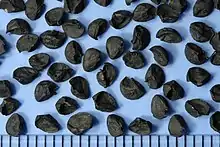
قِزْح – Cepae semina
Derived terms
- قَوْس قُزَح (qaws quzaḥ, “rainbow”)
Noun
قِزْح • (qizḥ) m (collective, singulative قِزْحَة f (qizḥa), plural أَقْزَاح (ʔaqzāḥ))
- black cumin (Nigella sativa)
- Synonyms: شُونِيز (šūnīz), حَبَّة سَوْدَاءُ (ḥabba sawdāʔ), كَمُّون أَسْوَد (kammūn ʔaswad)
- onion seeds
- anything scented added to dishes while cooking
- serpent excrement
Declension
Declension of noun قِزْح (qizḥ)
| Collective | basic collective triptote | ||
|---|---|---|---|
| Indefinite | Definite | Construct | |
| Informal | قِزْح qizḥ |
الْقِزْح al-qizḥ |
قِزْح qizḥ |
| Nominative | قِزْحٌ qizḥun |
الْقِزْحُ al-qizḥu |
قِزْحُ qizḥu |
| Accusative | قِزْحًا qizḥan |
الْقِزْحَ al-qizḥa |
قِزْحَ qizḥa |
| Genitive | قِزْحٍ qizḥin |
الْقِزْحِ al-qizḥi |
قِزْحِ qizḥi |
| Singulative | singulative triptote in ـَة (-a) | ||
| Indefinite | Definite | Construct | |
| Informal | قِزْحَة qizḥa |
الْقِزْحَة al-qizḥa |
قِزْحَة qizḥat |
| Nominative | قِزْحَةٌ qizḥatun |
الْقِزْحَةُ al-qizḥatu |
قِزْحَةُ qizḥatu |
| Accusative | قِزْحَةً qizḥatan |
الْقِزْحَةَ al-qizḥata |
قِزْحَةَ qizḥata |
| Genitive | قِزْحَةٍ qizḥatin |
الْقِزْحَةِ al-qizḥati |
قِزْحَةِ qizḥati |
| Dual | Indefinite | Definite | Construct |
| Informal | قِزْحَتَيْن qizḥatayn |
الْقِزْحَتَيْن al-qizḥatayn |
قِزْحَتَيْ qizḥatay |
| Nominative | قِزْحَتَانِ qizḥatāni |
الْقِزْحَتَانِ al-qizḥatāni |
قِزْحَتَا qizḥatā |
| Accusative | قِزْحَتَيْنِ qizḥatayni |
الْقِزْحَتَيْنِ al-qizḥatayni |
قِزْحَتَيْ qizḥatay |
| Genitive | قِزْحَتَيْنِ qizḥatayni |
الْقِزْحَتَيْنِ al-qizḥatayni |
قِزْحَتَيْ qizḥatay |
| Paucal (3-10) | sound feminine paucal | ||
| Indefinite | Definite | Construct | |
| Informal | قِزْحَات qizḥāt |
الْقِزْحَات al-qizḥāt |
قِزْحَات qizḥāt |
| Nominative | قِزْحَاتٌ qizḥātun |
الْقِزْحَاتُ al-qizḥātu |
قِزْحَاتُ qizḥātu |
| Accusative | قِزْحَاتٍ qizḥātin |
الْقِزْحَاتِ al-qizḥāti |
قِزْحَاتِ qizḥāti |
| Genitive | قِزْحَاتٍ qizḥātin |
الْقِزْحَاتِ al-qizḥāti |
قِزْحَاتِ qizḥāti |
| Plural of variety | basic broken plural triptote | ||
| Indefinite | Definite | Construct | |
| Informal | أَقْزَاح ʔaqzāḥ |
الْأَقْزَاح al-ʔaqzāḥ |
أَقْزَاح ʔaqzāḥ |
| Nominative | أَقْزَاحٌ ʔaqzāḥun |
الْأَقْزَاحُ al-ʔaqzāḥu |
أَقْزَاحُ ʔaqzāḥu |
| Accusative | أَقْزَاحًا ʔaqzāḥan |
الْأَقْزَاحَ al-ʔaqzāḥa |
أَقْزَاحَ ʔaqzāḥa |
| Genitive | أَقْزَاحٍ ʔaqzāḥin |
الْأَقْزَاحِ al-ʔaqzāḥi |
أَقْزَاحِ ʔaqzāḥi |
References
- Al-Azmeh, Aziz (2014) The Emergence of Islam in Late Antiquity, Cambridge: Cambridge University Press, →ISBN, page 187
- Baldick, Julian (1997) Black God. The Afroasiatic Roots of the Jewish, Christian and Muslim religions., London: I. B. Tauris, →ISBN, page 30
- Dozy, Reinhart Pieter Anne (1881), “قزح”, in Supplément aux dictionnaires arabes (in French), volume 2, Leiden: E. J. Brill, page 342
- Freytag, Georg (1835), “قزح”, in Lexicon arabico-latinum praesertim ex Djeuharii Firuzabadiique et aliorum Arabum operibus adhibitis Golii quoque et aliorum libris confectum (in Latin), volume 3, Halle: C. A. Schwetschke, page 439
- Löw, Immanuel (1881) Aramæische Pflanzennamen (in German), Leipzig: Wilhelm Engelmann, page 75
- Löw, Immanuel (1924) Die Flora der Juden (in German), volume 3, Wien und Leipzig: R. Löwit, pages 120–123
- Seeger, Ulrich (2009) Der arabische Dialekt der Dörfer um Ramallah (Semitica Viva; 44, 1/2), volume 2: Glossar, Wiesbaden: Harrassowitz Verlag, →ISBN, page 210
- Seetzen, Ulrich Jasper (1805), Friedrich Karl Hermann Kruse, editor, Reisen durch Syrien, Palästina, Phönicien, die Transjordan-Länder, Arabia Petraea und Unter-Aegypten, volume 1, Berlin: G. Reimer, published 1854, page 123
- Watson, Wilfred G. E. (2004), “A Botanical Snapshot of Ugaritic”, in Aula Orientalis, volume 22, issue 1, Barcelona, page 123
- “قزح” in Almaany
- “qṣḥ”, in The Comprehensive Aramaic Lexicon Project, Cincinnati: Hebrew Union College, 1986–
- “ksḥ”, in The Comprehensive Aramaic Lexicon Project, Cincinnati: Hebrew Union College, 1986–
Ottoman Turkish
Proper noun
قزح • (Kuzah)
Derived terms
- قوس قزح (kus kuzah, “rainbow”)
Descendants
- Turkish: Kuzah
Further reading
- Çağbayır, Yaşar (2007), “kuzah”, in Ötüken Türkçe Sözlük (in Turkish), volume 1, Istanbul: Ötüken Neşriyat, page 2876
- Kélékian, Diran (1911), “قزح”, in Dictionnaire turc-français, Constantinople: Mihran, page 959
- Meninski, Franciszek à Mesgnien (1680), “قزح”, in Thesaurus linguarum orientalium, Turcicae, Arabicae, Persicae, praecipuas earum opes à Turcis peculiariter usurpatas continens, nimirum Lexicon Turkico-Arabico-Persicum, Vienna, column 3689
- Redhouse, James W. (1890), “قزح”, in A Turkish and English Lexicon, Constantinople: A. H. Boyajian, page 1453
This article is issued from Wiktionary. The text is licensed under Creative Commons - Attribution - Sharealike. Additional terms may apply for the media files.