قند
Arabic
Etymology
From Persian کند (kand, “candied sugar”), from Sanskrit खण्ड (khaṇḍa, “scrap, broken piece, candied sugar, dried molasses”).
Noun
قَنْد • (qand) m (plural قُنُود (qunūd))
- rock sugar (originally: the solidified sap of the sugarcane)
Declension
| Singular | basic singular triptote | ||
|---|---|---|---|
| Indefinite | Definite | Construct | |
| Informal | قَنْد qand |
الْقَنْد al-qand |
قَنْد qand |
| Nominative | قَنْدٌ qandun |
الْقَنْدُ al-qandu |
قَنْدُ qandu |
| Accusative | قَنْدًا qandan |
الْقَنْدَ al-qanda |
قَنْدَ qanda |
| Genitive | قَنْدٍ qandin |
الْقَنْدِ al-qandi |
قَنْدِ qandi |
| Dual | Indefinite | Definite | Construct |
| Informal | قَنْدَيْن qandayn |
الْقَنْدَيْن al-qandayn |
قَنْدَيْ qanday |
| Nominative | قَنْدَانِ qandāni |
الْقَنْدَانِ al-qandāni |
قَنْدَا qandā |
| Accusative | قَنْدَيْنِ qandayni |
الْقَنْدَيْنِ al-qandayni |
قَنْدَيْ qanday |
| Genitive | قَنْدَيْنِ qandayni |
الْقَنْدَيْنِ al-qandayni |
قَنْدَيْ qanday |
| Plural | basic broken plural triptote | ||
| Indefinite | Definite | Construct | |
| Informal | قُنُود qunūd |
الْقُنُود al-qunūd |
قُنُود qunūd |
| Nominative | قُنُودٌ qunūdun |
الْقُنُودُ al-qunūdu |
قُنُودُ qunūdu |
| Accusative | قُنُودًا qunūdan |
الْقُنُودَ al-qunūda |
قُنُودَ qunūda |
| Genitive | قُنُودٍ qunūdin |
الْقُنُودِ al-qunūdi |
قُنُودِ qunūdi |
Gulf Arabic
Pronunciation
- (Kuwaiti Gulf Arabic) IPA(key): /qənd/, (q-ʁ merger) /ʁənd/
Noun
قَنْد • (qand) m (collective, singulative قَنْدة (qanda), plural قَنْدات (qandāt))
Usage notes
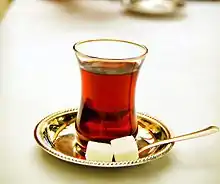
The word can be used with حَبّة (ḥabba, “piece”) to indicate number of pieces, for example: حطلي حبتين قند بالچاي (ḥiṭli ḥabbitēn qand bič-čāy, “Put two pieces of sugar cube in the tea for me”). Alternatively, regular plural (and dual) can be used, eg: حطلي قندتين بالچاي (ḥiṭli qanditēn bič-čāy, “Put two sugar cubes in the tea for me”). Finally, the word can be used as is preceded by a number, ex: حطلي اثنين قند بالچاي (ḥiṭli aṯnēn qand bič-čāy, “Put two sugar cube in the tea for me”).
Ottoman Turkish
Etymology
From Arabic قَنْد (qand, “rock sugar”), from Persian کند (kand, “candied sugar”), from Sanskrit खण्ड (khaṇḍa, “scrap, broken piece, candied sugar, dried molasses”).
Derived terms
- قندی (kandi, “made of sugar candy”)
Further reading
- Kélékian, Diran (1911), “قند”, in Dictionnaire turc-français, Constantinople: Mihran, page 973
- Meninski, Franciszek à Mesgnien (1680), “قند”, in Thesaurus linguarum orientalium, Turcicae, Arabicae, Persicae, praecipuas earum opes à Turcis peculiariter usurpatas continens, nimirum Lexicon Turkico-Arabico-Persicum, Vienna, columns 3767–3768
- Redhouse, James W. (1890), “قند”, in A Turkish and English Lexicon, Constantinople: A. H. Boyajian, page 1477
Persian
Pronunciation
- (Classical Persian) IPA(key): /qand/
- (Dari Persian) IPA(key): /qand/
- (Iranian Persian) IPA(key): /ɢænd/
- (Tajik) IPA(key): /qand/
audio (file)
Derived terms
- قندی (qandi)
- قندان (qandân)
- کلهقند (kalle-qand)
- چغندر قند (čoğondar-e qand)
Descendants
- → Gulf Arabic: قند (qand)