كشوث
Arabic
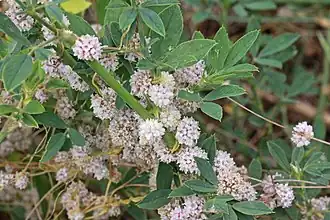
كُشُوت – Cuscuta approximata
Alternative forms
- كُشُوت (kušūt), كُشُوثَى (kušūṯā), كُشُوثَاء (kušūṯāʔ), كُشُوتاء (kušūtāʔ), أُكْشُوث (ʔukšūṯ), أُكْشُوت (ʔukšūt)
Etymology
Borrowed from Aramaic כְּשׁוּתָא / ܟܫܽܘܬܳܐ (kəšūṯā), probably from כַּשָׁא / ܟܰܫܳܐ (kašā, “to pile up”) because of the jumbled fashion in which this parasitic plant climbs trees, else from Akkadian 𒃢 (SILA₄ /kasû/), a plant with many small seeds used for spice, fumigation and medicine, just like dodder species.
Pronunciation
- IPA(key): /ku.ʃuːθ/
Noun
كُشُوث • (kušūṯ) m
- dodder (Cuscuta gen. et spp., especially Cuscuta epithymum)
- Synonym: حَامُول (ḥāmūl)
- (Can we find and add a quotation of Dioscurides triumphans to this entry?)
- (Can we find and add a quotation of Al-Nuwayriyy to this entry?)
- (Can we find and add a quotation of As-Suwaydiyy to this entry?)
- (Can we find and add a quotation of Dāwud Al-Anṭākiyy to this entry?)
Declension
Declension of noun كُشُوث (kušūṯ)
| Singular | basic singular triptote | ||
|---|---|---|---|
| Indefinite | Definite | Construct | |
| Informal | كُشُوث kušūṯ |
الْكُشُوث al-kušūṯ |
كُشُوث kušūṯ |
| Nominative | كُشُوثٌ kušūṯun |
الْكُشُوثُ al-kušūṯu |
كُشُوثُ kušūṯu |
| Accusative | كُشُوثًا kušūṯan |
الْكُشُوثَ al-kušūṯa |
كُشُوثَ kušūṯa |
| Genitive | كُشُوثٍ kušūṯin |
الْكُشُوثِ al-kušūṯi |
كُشُوثِ kušūṯi |
Descendants
References
- Dozy, Reinhart Pieter Anne (1881), “كشوث”, in Supplément aux dictionnaires arabes (in French), volume 2, Leiden: E. J. Brill, page 469
- Lagarde, Paul de (1887) Mittheilungen (in German), volume 2, Göttingen: Dieterichsche Sortimentsbuchhandlung, pages 358–359
This article is issued from Wiktionary. The text is licensed under Creative Commons - Attribution - Sharealike. Additional terms may apply for the media files.