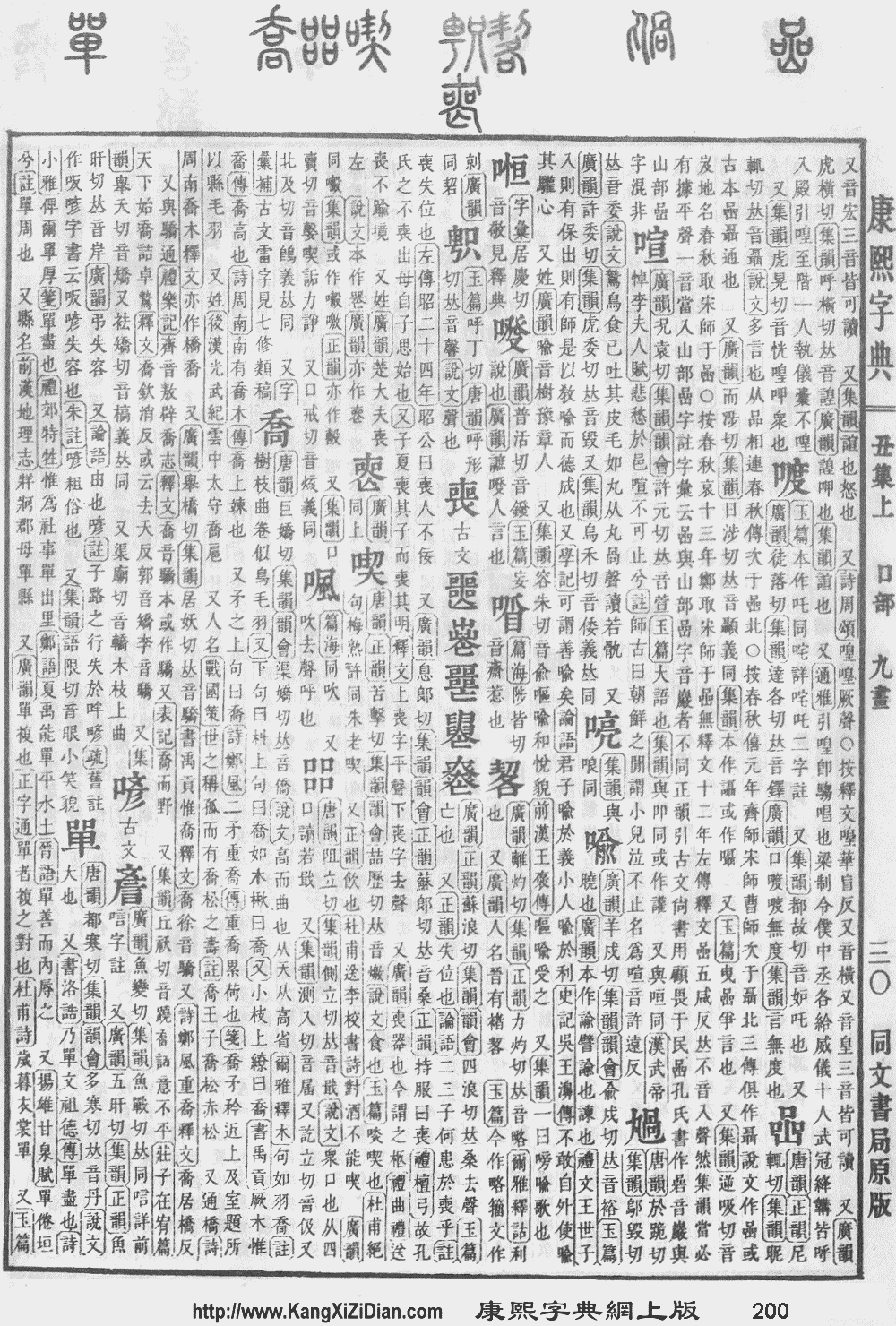
㗊

See also: 品
㗊 U+35CA, 㗊
CJK UNIFIED IDEOGRAPH-35CA
← 㗉
[U+35C9]
CJK Unified Ideographs Extension A 㗋 →
[U+35CB]

Translingual

Han character

㗊 (Kangxi radical 30, 口+9, 12 strokes, cangjie input 口口口口 (RRRR), four-corner 66660, composition ⿱吅吅 or ⿰吕吕)

  1. Shuowen Jiezi radical №45

Derived characters

References

Chinese

simp. and trad.
㗊

Glyph origin

“clamour”
Four mouths (口), indicating a great deal of talking or shouting

Pronunciation 1


Rime
Character 㗊
Reading # 1/1
Initial (聲) 莊 (18)
Final (韻) 侵 (141)
Tone (調) Checked (Ø)
Openness (開合) Open
Division (等) III
Fanqie 阻力切
Reconstructions
Zhengzhang
Shangfang
/t͡ʃiɪp̚/
Pan
Wuyun
/ʈ͡ʂip̚/
Shao
Rongfen
/t͡ʃjep̚/
Edwin
Pulleyblank
/ʈ͡ʂip̚/
Li
Rong
/t͡ʃiəp̚/
Wang
Li
/t͡ʃĭĕp̚/
Bernard
Karlgren
/ʈ͡ʂi̯əp̚/
Expected
Mandarin
Reflex
zhe
Expected
Cantonese
Reflex
zap1

Definitions

㗊

  1. (obsolete) clamour; noise

Pronunciation 2


Definitions

㗊

  1. ‡ Ancient form of 雷 (léi, “thunder”).
  2. (obsolete) porphin
Usage notes
  • (porphin): 㗊 (jí) was formerly officially used in China as a name for porphin with the character being a pictographic representation of the chemical structure. It is now informal. The modern official term is 卟吩 (bǔfēn), a transliteration of English porphin.
See also
  • 卟吩 (bǔfēn, “porphin”)

References

This article is issued from Wiktionary. The text is licensed under Creative Commons - Attribution - Sharealike. Additional terms may apply for the media files.