凪
| ||||||||
Translingual
Han character
凪 (Kangxi radical 16, 几+4, 6 strokes, cangjie input 竹弓卜中一 (HNYLM), composition ⿵𠘨止)
References
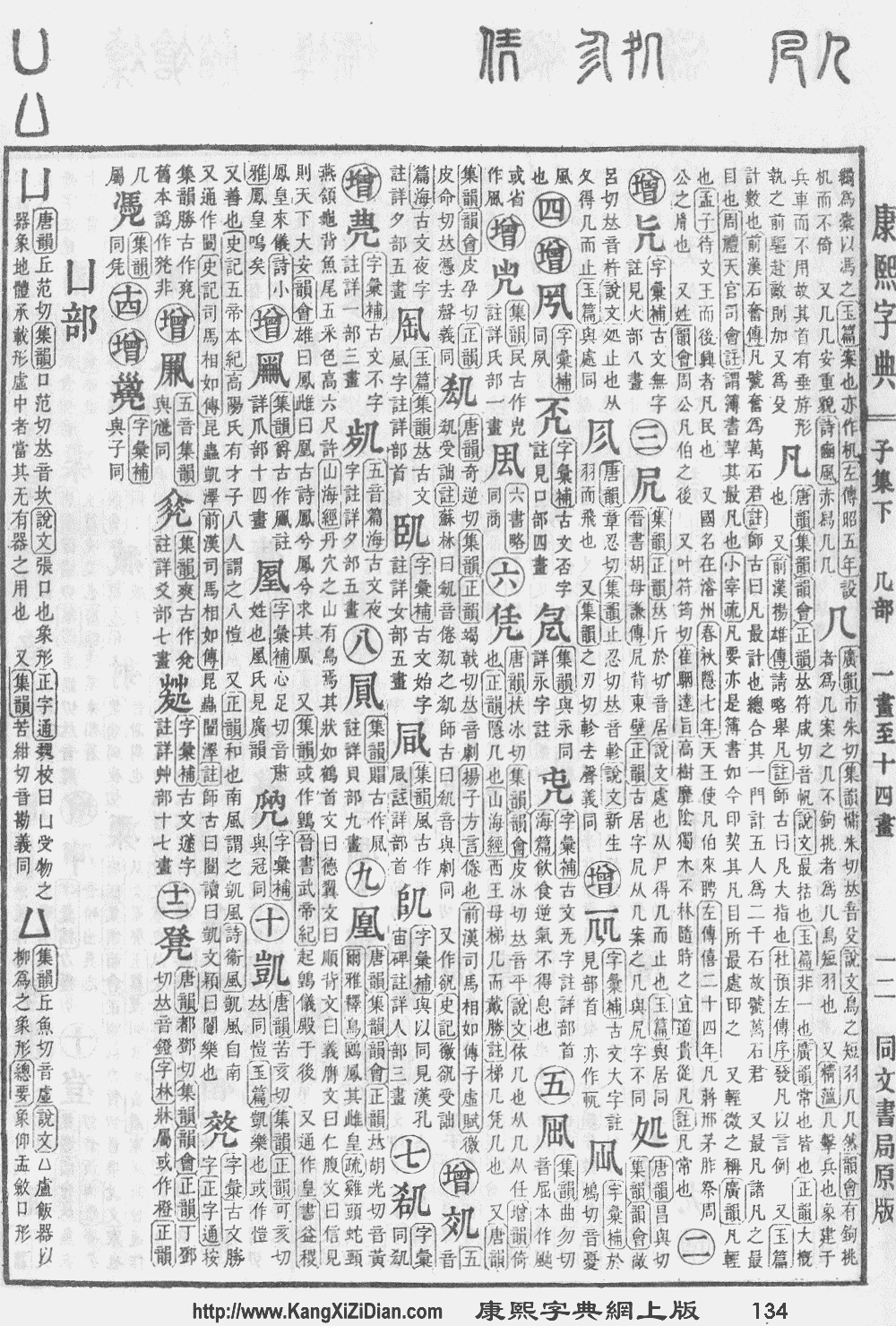
- KangXi: not present, would follow page 134, character 12
- Dai Kanwa Jiten: character 1758
- Dae Jaweon: page 299, character 26
- Hanyu Da Zidian (first edition): not present, would follow volume 1, page 277, character 2
- Unihan data for U+51EA
Chinese
| simp. and trad. |
凪 | |
|---|---|---|
Etymology
Spelling pronunciation, as 止 (zhǐ).
Pronunciation
Definitions
凪
- Used in Japanese names.
Japanese
Alternative forms
- 和ぎ (nagi)
Compounds
Compounds
- 朝凪 (asanagi)
- 油凪 (aburanagi)
- 磯凪 (isonagi)
- 浦凪 (uranagi)
- べた凪 (betanagi)
- 御講凪 (okōnagi)
- 寒凪 (kannagi)
- 小春凪 (koharunagi)
- 風凪 (kazanagi)
- 巣入り凪 (suirinagi)
- 土用凪 (doyōnagi)
- 初凪 (hatsunagi)
- 冬凪 (fuyunagi)
- 夕凪 (yūnagi)
- 夜凪 (yonagi)
Etymology
| Kanji in this term |
|---|
| 凪 |
| なぎ Jinmeiyō |
| kun’yomi |
Korean
Hanja
凪 • (ji) (hangeul 지, revised ji, McCune–Reischauer chi)
- This term needs a translation to English. Please help out and add a translation, then remove the text
{{rfdef}}.
Vietnamese
This article is issued from Wiktionary. The text is licensed under Creative Commons - Attribution - Sharealike. Additional terms may apply for the media files.