咽
See also: 嚥
| ||||||||
| ||||||||
Translingual
Han character
咽 (Kangxi radical 30, 口+6, 9 strokes, cangjie input 口田大 (RWK), four-corner 66000, composition ⿰口因)
References
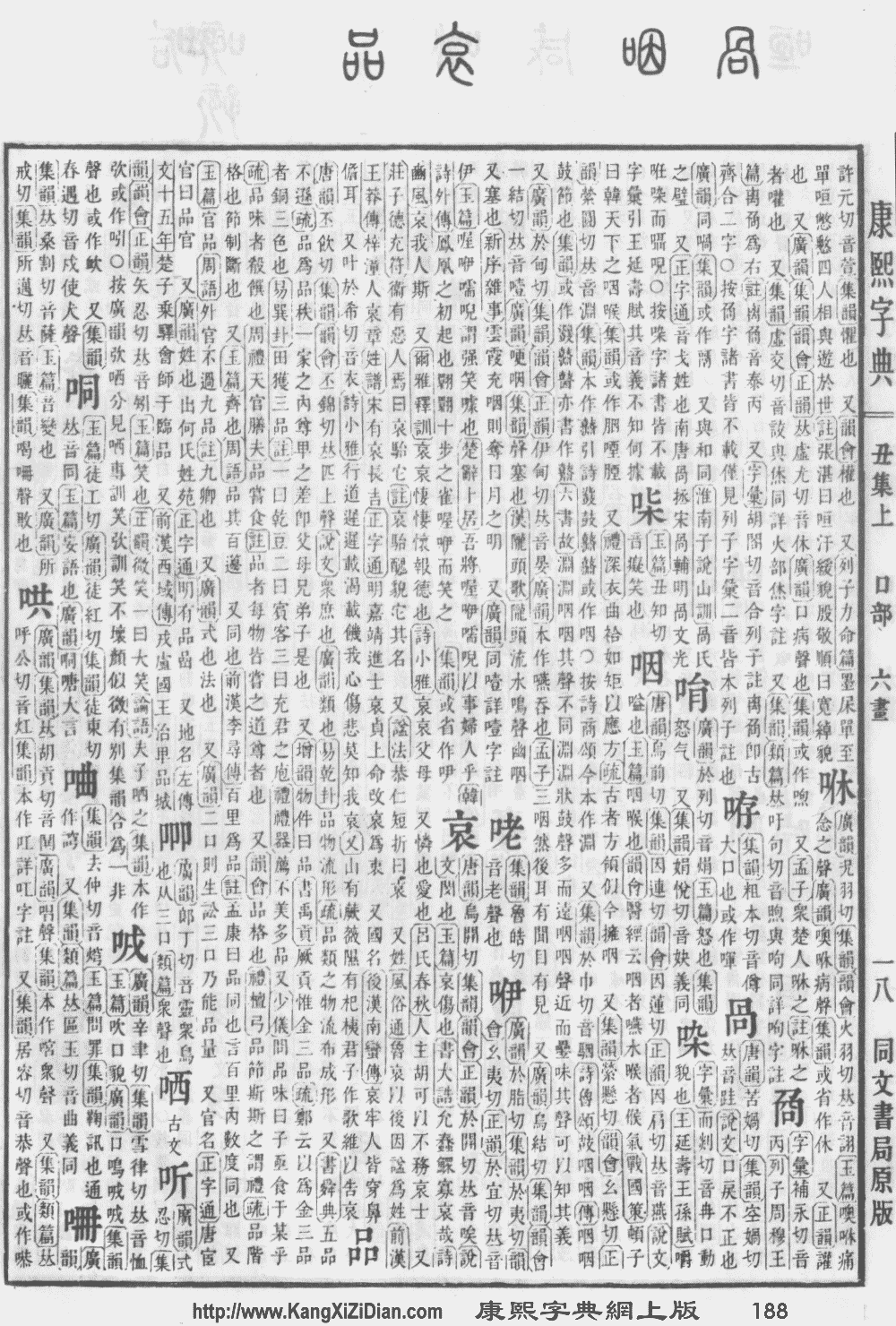
- KangXi: page 188, character 8
- Dai Kanwa Jiten: character 3577
- Dae Jaweon: page 407, character 7
- Hanyu Da Zidian (first edition): volume 1, page 616, character 2
- Unihan data for U+54BD
- Unihan data for U+F99E
Chinese
| simp. and trad. |
咽 | |
|---|---|---|
| alternative forms | 𠰸 胭 | |
Glyph origin
Characters in the same phonetic series (因) (Zhengzhang, 2003)
Phono-semantic compound (形聲, OC *qiːn, *qiːns, *qiːd) : semantic 口 (“mouth”) + phonetic 因 (OC *qin) – connected to the mouth, the throat.
Pronunciation
Etymology 2
| For pronunciation and definitions of 咽 – see 嚥 (“to swallow; swallow, gulp”). (This character, 咽, is the simplified and variant form of 嚥.) |
Notes:
|
Pronunciation
Japanese
Readings
Compounds
- 嗚咽 (oetsu)
Etymology 1
| Kanji in this term |
|---|
| 咽 |
| いん Grade: S |
| kan’yōon |
Pronunciation
- IPA(key): [ĩɴ]
Etymology 2
| Kanji in this term |
|---|
| 咽 |
| えつ Grade: S |
| kan’on |
From Middle Chinese 咽 (MC ʔet̚).
The kan'on pronunciation, so likely a later borrowing.
Pronunciation
- IPA(key): [e̞t͡sɨᵝ]
Pronunciation
- IPA(key): [ẽ̞ɴ]
Affix
咽 • (en)
Etymology 4
| Kanji in this term |
|---|
| 咽 |
| のど Grade: S |
| kun’yomi |
| For pronunciation and definitions of 咽 – see the following entry. | ||
| ||
| (This term, 咽, is an alternative spelling of the above term.) |
Etymology 5
| Kanji in this term |
|---|
| 咽 |
| のんど Grade: S |
| kun’yomi |
| For pronunciation and definitions of 咽 – see のんど. (This term, 咽, is an alternative spelling of the above terms.) |
(The following entry is uncreated: のんど.)
Etymology 6
| Kanji in this term |
|---|
| 咽 |
| のみど Grade: S |
| kun’yomi |
| For pronunciation and definitions of 咽 – see のみど. (This term, 咽, is an alternative spelling of the above terms.) |
(The following entry is uncreated: のみど.)
Etymology 7
| Kanji in this term |
|---|
| 咽 |
| のみと Grade: S |
| kun’yomi |
| For pronunciation and definitions of 咽 – see のみと. (This term, 咽, is an alternative spelling of the above terms.) |
(The following entry is uncreated: のみと.)
Korean
Etymology 1
From Middle Chinese 咽 (MC ʔen).
| Historical Readings | ||
|---|---|---|
| Dongguk Jeongun Reading | ||
| Dongguk Jeongun, 1448 | ᅙᅧᆫ (Yale: qyèn) | |
| Middle Korean | ||
| Text | Eumhun | |
| Gloss (hun) | Reading | |
| Hunmong Jahoe, 1527 | 목ᄭᅮ무 (Yale: mwòk-s-kwùmwù) | 연 (Yale: yèn) |
| Sinjeung Yuhap, 1576 | 식구무 (Yale: sik-kwumwu) | 연 (Yale: yen) |
Pronunciation
- (SK Standard/Seoul) IPA(key): [in]
- Phonetic hangul: [인]
Etymology 2
From Middle Chinese 咽 (MC ʔet̚).
| Historical Readings | ||
|---|---|---|
| Dongguk Jeongun Reading | ||
| Dongguk Jeongun, 1448 | ᅙᅧᇙ〮 (Yale: qyélq) | |
| Middle Korean | ||
| Text | Eumhun | |
| Gloss (hun) | Reading | |
| Sinjeung Yuhap, 1576 | 목몔 (Yale: mwok-myeyl) | 열 (Yale: yel) |
Pronunciation
- (SK Standard/Seoul) IPA(key): [jʌ̹ɭ]
- Phonetic hangul: [열]
Hanja
Vietnamese
This article is issued from Wiktionary. The text is licensed under Creative Commons - Attribution - Sharealike. Additional terms may apply for the media files.