哘
| ||||||||
Translingual
Han character
哘 (Kangxi radical 30, 口+6, 9 strokes, cangjie input 口竹人弓 (RHON), composition ⿰口行)
Further reading
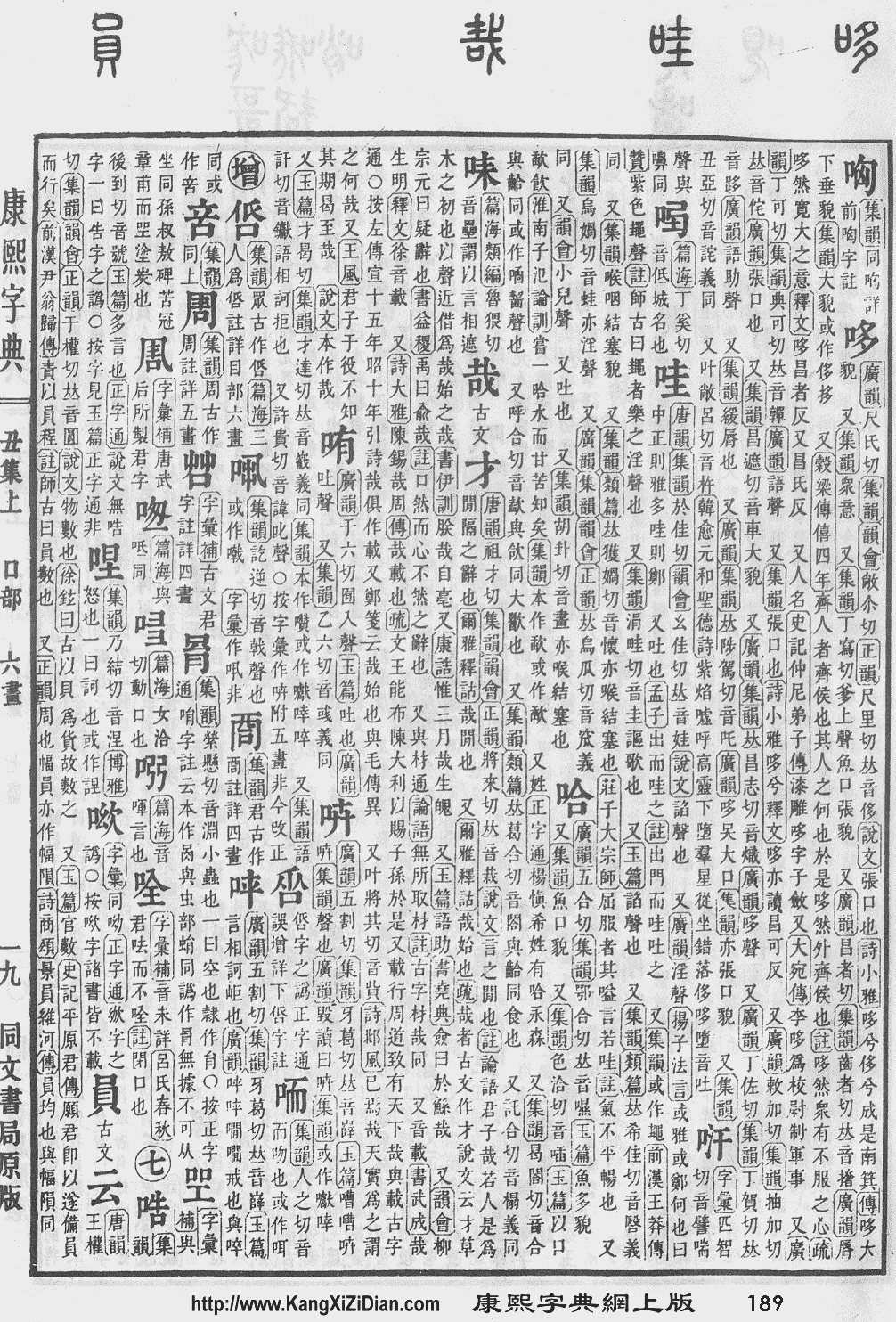
- KangXi: not present, would follow page 189, character 27
- Hanyu Da Zidian (first edition): not present, would follow volume 1, page 618, character 11
- Unihan data for U+54D8
Chinese
| simp. and trad. |
哘 | |
|---|---|---|
Etymology
Spelling pronunciation, as 行 (xíng).
Pronunciation
Definitions
哘
- Used in borrowings of Japanese words.
Japanese
Glyph origin
A 国字 (kokuji, “Japanese-coined character”). Ideogrammic compound (會意) : 口 (“mouth”) + 行 (“to go”).
Kanji
哘
- This term needs a translation to English. Please help out and add a translation, then remove the text
{{rfdef}}.
Readings
- Kun: さそう (sasō, 哘う)←さそふ (sasofu, 哘ふ, historical)
Korean
Etymology
Orthographic borrowing from Japanese 哘. Spelling pronunciation, following the reading of 行 (haeng).
Pronunciation
- (SK Standard/Seoul) IPA(key): [hɛŋ] ~ [he̞ŋ]
- Phonetic hangul: [행/헹]
Hanja
Wikisource 哘 (eumhun 일본(日本) 지명(地名) 행 (ilbon jimyeong haeng))
- Only used in borrowings from Japanese words.
References
This article is issued from Wiktionary. The text is licensed under Creative Commons - Attribution - Sharealike. Additional terms may apply for the media files.