唜
| ||||||||
Translingual
Han character
唜 (Kangxi radical 30, 口+7, 10 strokes, cangjie input 木十口心 (DJRP), composition ⿱末叱)
References
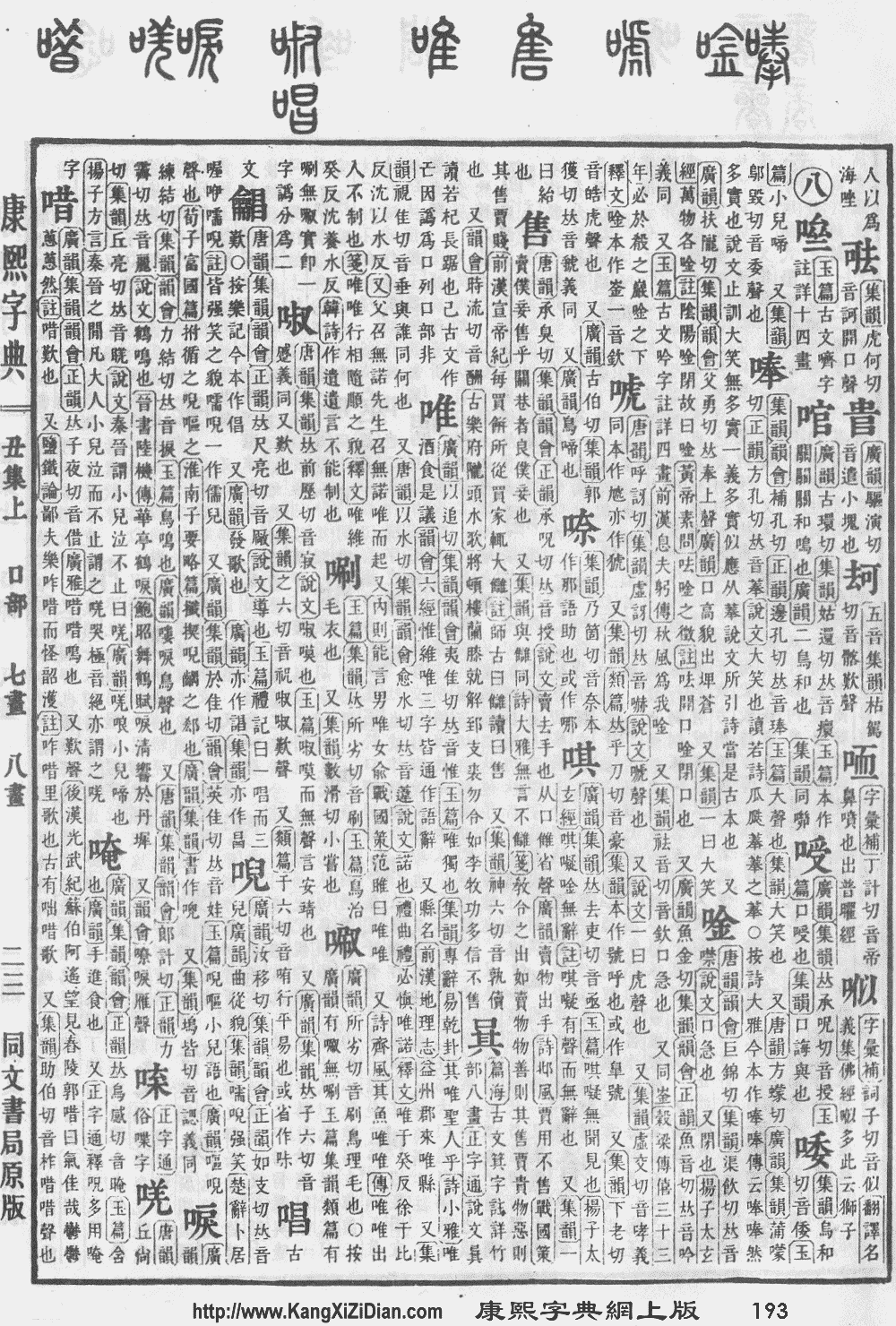
- KangXi: not present, would follow page 193, character 5
- Dae Jaweon: not present, would follow page 344, character 18
- Hanyu Da Zidian (first edition): not present, would follow volume 1, page 624, character 12
- Unihan data for U+551C
Chinese
| simp. and trad. |
唜 | |
|---|---|---|
Etymology
Spelling pronunciation, as 末 (mò).
Pronunciation
Definitions
唜
- Only used in Korean placenames.
Korean
Glyph origin
A Korean-coined Han character (국자 (國字, gukja)).
From Middle Korean 唜, a phono-semantic compound (形聲) : semantic 末 (mal, “end”) + phonetic 叱 (-s).
Now read as mal (same as 末), 唜 probably represented the native Korean word (in modern Korean:) 끝 (kkeut, “end”).
Hanja
唜 (eum 말 (mal))
- This term needs a translation to English. Please help out and add a translation, then remove the text
{{rfdef}}.
References
This article is issued from Wiktionary. The text is licensed under Creative Commons - Attribution - Sharealike. Additional terms may apply for the media files.