壳
| ||||||||
 | ||||||||
Translingual
| Traditional | 殼 |
|---|---|
| Shinjitai | 殻 |
| Simplified | 壳 |
Han character
壳 (Kangxi radical 33, 士+4, 7 strokes, cangjie input 土月竹弓 (GBHN) or X土月竹弓 (XGBHN), composition ⿱士冗 (GH) or ⿱⿳士冖一几 (TJK))
Usage notes
References
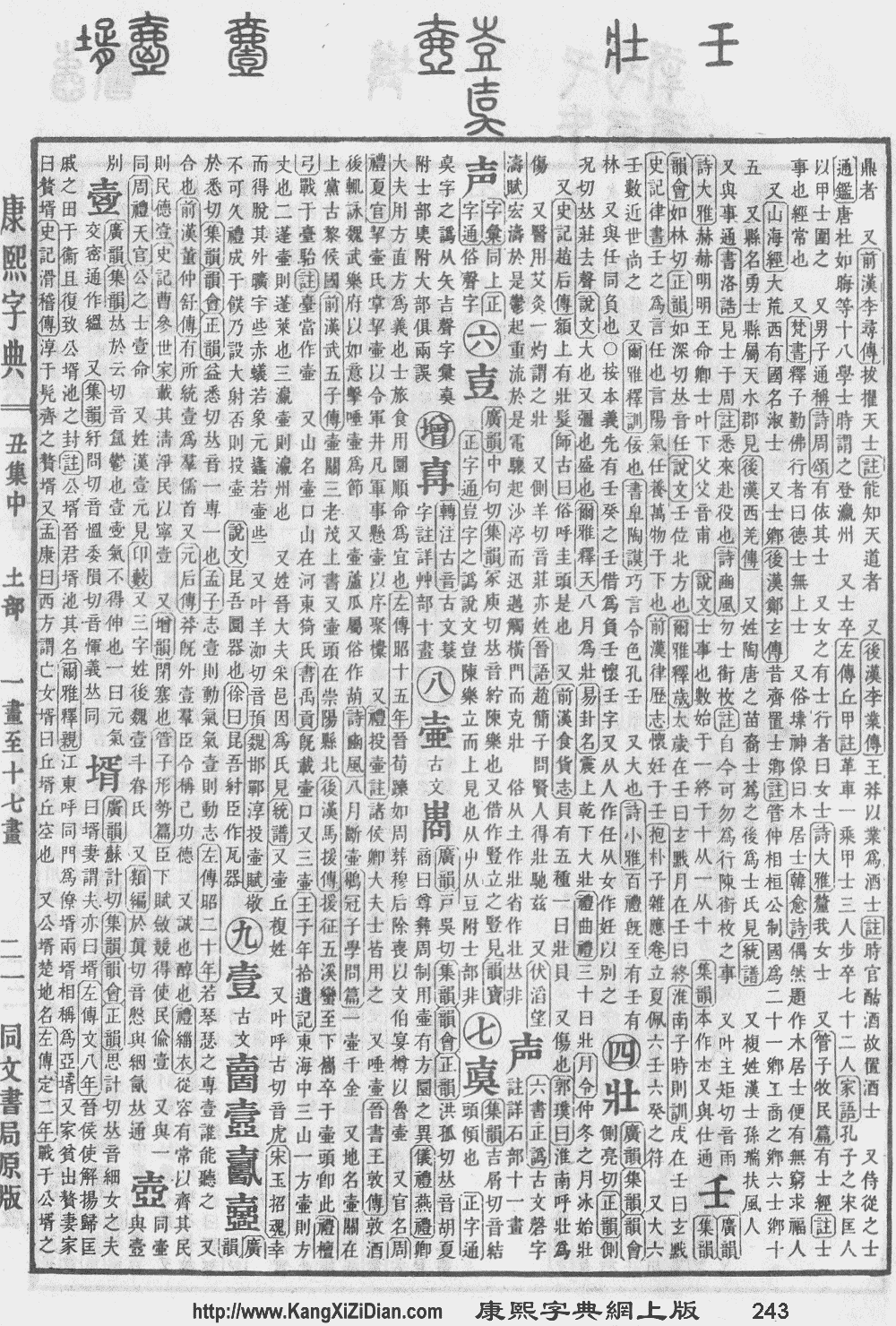
- KangXi: not present, would follow page 243, character 4
- Dai Kanwa Jiten: character 5648
- Dae Jaweon: page 483, character 10
- Hanyu Da Zidian (first edition): volume 1, page 428, character 2
- Unihan data for U+58F3
Chinese
Glyph 1
- This section refers to ⿱士冗 glyph; see
 Han unification to learn more.
Definitions
| For pronunciation and definitions of 壳 – see 殼 (“shell; husk; hull; skin; casing”). (This character, 壳, is the simplified form of 殼.) |
Notes:
|
Glyph 2
- This section refers to ⿱⿳士冖一几 glyph; see Han unification to learn more.
This article is issued from Wiktionary. The text is licensed under Creative Commons - Attribution - Sharealike. Additional terms may apply for the media files.