太刀
Japanese
| Kanji in this term | |
|---|---|
| 太 | 刀 |
| た Grade: 2 |
ち Grade: 2 |
| kan’yōon | nanori |
| Alternative spellings |
|---|
| 大刀 𫥲 |
Etymology
/tati/ → /tat͡ɕi/
From Old Japanese. Appears in the Nihon Shoki of 720 CE.[1]
Derived from 断ち (tachi), the 連用形 (ren'yōkei, “stem or continuative form”) of verb 断つ (tatsu, “to sever”).[1][2][3][4]
The kanji spelling is a shift from the original Chinese 大刀 (dàdāo, literally “great blade”), indicating straight swords before the Heian period, and later indicating curved swords.
Noun
太刀 • (tachi)
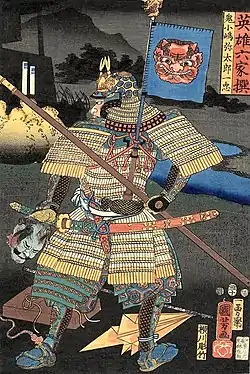
- a type of longsword (as opposed to the shorter katana)
- 720, Nihon Shoki, (poem 20):
- 椰句毛多菟伊頭毛多鶏流餓波鶏流多知菟頭邏佐波磨枳佐微那辞珥阿波礼 [Man'yōgana]
- 八雲立つ出雲たけるが佩ける太刀黒葛多巻きさ身なしにあはれ [Modern spelling]
- ya kumo tatsu Izumo-takeru ga hakeru tachi tsuzura sawamaki saminashi ni aware
- (please add an English translation of this example)
-
- a sword positioned with the blade facing down when worn (as opposed to the katana, which is worn with the blade facing upward)
Derived terms
Derived terms
- 太刀魚 (tachiuo)
- 太刀奪 (Tachiubai), 太刀奪 (Tachibai)
- 太刀音 (tachioto)
- 太刀踊, 太刀踊り (tachi odori)
- 太刀折紙, 太刀折り紙 (tachi origami)
- 太刀影 (tachikage)
- 太刀懸け (tachikake)
- 太刀風 (tachikaze)
- 太刀絡み (tachigarami)
- 太刀傷 (tachi kizu)
- 太刀拵え (tachi-goshirae)
- 太刀先 (tachisaki)
- 太刀捌き (tachisabaki)
- 太刀筋 (tachisuji)
- 太刀遣い (tachi tsukai), 太刀遣い (tachi-zukai)
- 太刀取り (tachitori), 太刀取り (tachidori)
- 太刀の緒 (tachi no o)
- 太刀の魚 (tachi no uo)
- 太刀の後 (tachi no shiri)
- 太刀袋 (tachibukuro)
- 太刀銘 (tachimei)
- 太刀持, 太刀持ち (tachimochi)
- 環頭太刀 (kantō no tachi)
- 赤太刀 (akatachi)
- 足白の太刀 (ashijiro no tachi)
- 後太刀 (atodachi)
- 厳物造りの太刀 (ikamono-zukuri no tachi)
- 糸巻の太刀 (itomaki no tachi)
- 受太刀, 受け太刀 (ukedachi)
- 打ち出での太刀 (uchiide no tachi)
- 打太刀, 打太刀 (uchidachi)
- 打ち出の太刀 (uchide no tachi)
- 衛府の太刀 (efu no tachi)
- 大太刀 (ōdachi)
- 納め太刀 (osamedachi)
- 飾り太刀 (kazari tachi)
- 唐太刀 (Kara tachi)
- 唐様太刀 (karayō tachi)
- 革緒の太刀 (kawao no tachi)
- 革包の太刀 (kawatsutsumi no tachi)
- 環頭大刀 (kantō no tachi), 環頭大刀 (kantō-dachi)
- 菊作りの太刀 (kikuzukuri no tachi)
- 木太刀 (kidachi)
- 黒作りの太刀 (kurozukuri no tachi)
- 毛抜き形の太刀 (kenukigata no tachi)
- 黄金作りの太刀 (kogane-zukuri no tachi)
- 黒漆の太刀 (kokushitsu no tachi)
- 小太刀 (kodachi)
- 先太刀 (sakidachi)
- 菖蒲太刀 (shōbu-dachi)
- 初太刀 (shodachi)
- 標の太刀 (shirushi no tachi)
- 白太刀 (shirotachi), 白太刀 (shirodachi)
- 助太刀 (sukedachi)
- 反太刀, 反り太刀 (soridachi)
- 造り太刀 (tsukuridachi)
- 剣太刀 (tsurugi-tachi)
- 剣の太刀 (tsurugi no tachi)
- 鳥頭の太刀 (torigashira no tachi)
- 鳥頸の太刀 (torikubi no tachi)
- 長太刀 (nagatachi)
- 二の太刀 (ni no tachi)
- 野太刀 (nodachi)
- 後太刀 (nochidachi)
- 半太刀 (handachi)
- 一太刀 (hitotachi)
- 兵庫鎖の太刀 (hyōgo-gusari no tachi)
- 兵具鎖の太刀 (hyōgu-gusari no tachi)
- 平鞘の太刀 (hirazaya no tachi)
- 武太刀 (butachi)
- 細太刀 (hosodachi)
- 枕太刀 (makuradachi)
- 持太刀, 持ち太刀 (mochidachi)
- 焼き太刀 (yakitachi), 焼き太刀 (yakidachi)
- 螺鈿の太刀 (raden no tachi)
- 蕨手の太刀 (warabide no tachi)
Proverbs
- 弓は袋に太刀は鞘 (yumi wa fukuro ni tachi wa saya)
See also
- 刀 (katana)
References
- 1988, 国語大辞典(新装版) (Kokugo Dai Jiten, Revised Edition) (in Japanese), Tōkyō: Shogakukan
- 1995, 大辞泉 (Daijisen) (in Japanese), Tōkyō: Shogakukan, →ISBN
- 2006, 大辞林 (Daijirin), Third Edition (in Japanese), Tōkyō: Sanseidō, →ISBN
- 1997, 新明解国語辞典 (Shin Meikai Kokugo Jiten), Fifth Edition (in Japanese), Tōkyō: Sanseidō, →ISBN
- 1998, NHK日本語発音アクセント辞典 (NHK Japanese Pronunciation Accent Dictionary) (in Japanese), Tōkyō: NHK, →ISBN
This article is issued from Wiktionary. The text is licensed under Creative Commons - Attribution - Sharealike. Additional terms may apply for the media files.