姫
See also: 姬
| ||||||||
Translingual
Han character
姫 (Kangxi radical 38, 女+6 in Chinese and Korean, 女+7 in Japanese, 9 strokes in Chinese and Korean, 10 strokes in Japanese, cangjie input 女尸中中 (VSLL) or X女尸中中 (XVSLL), four-corner 41417, composition ⿰女臣)
References
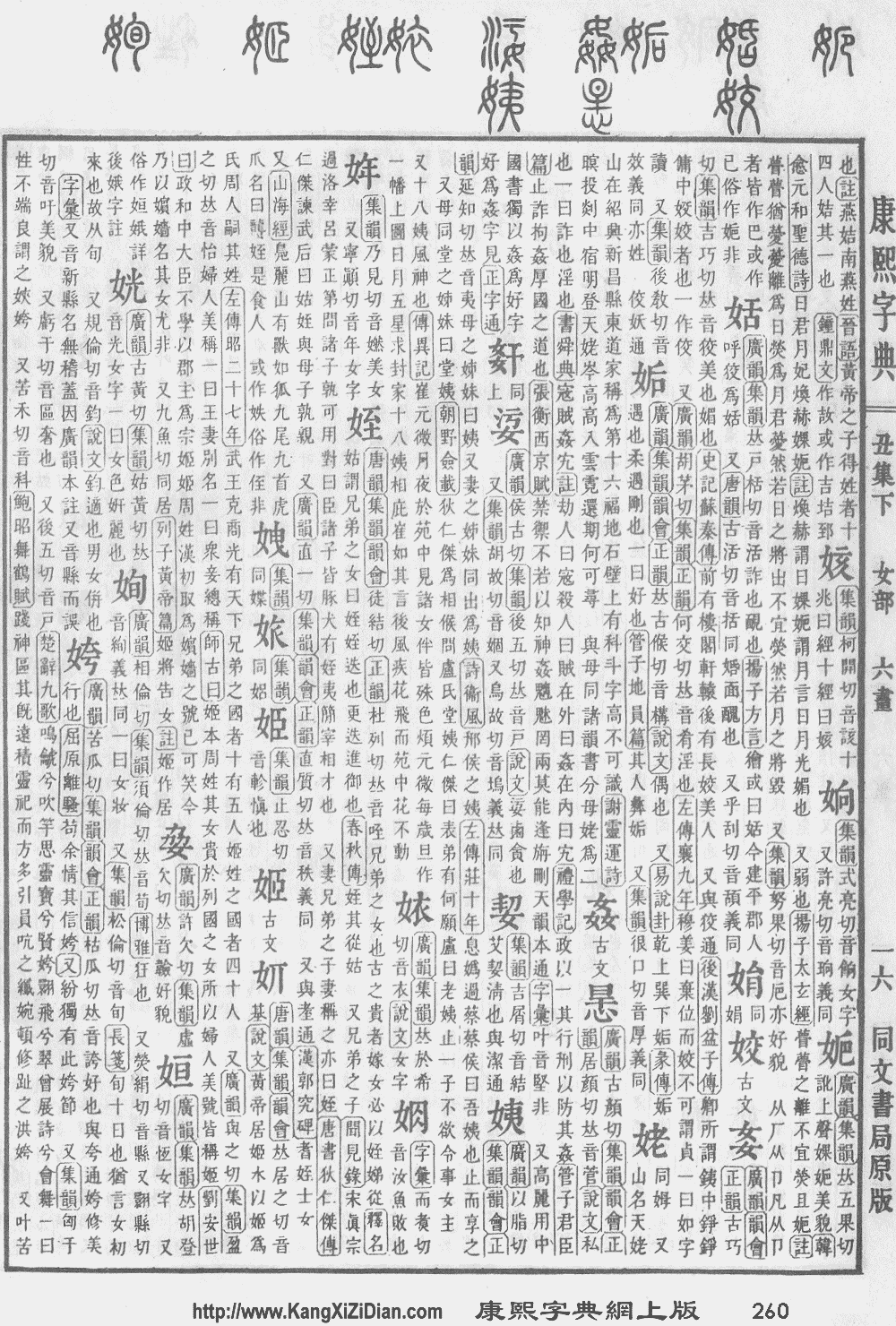
- KangXi: page 260, character 22
- Dai Kanwa Jiten: character 6229
- Dae Jaweon: page 526, character 21
- Hanyu Da Zidian (first edition): volume 2, page 1043, character 4
- Unihan data for U+59EB
Chinese
Glyph origin
Phono-semantic compound (形聲) : semantic 女 (“woman”) + phonetic 臣 (OC *ɡiŋ)
Pronunciation
Japanese
Readings
From its original form 姬:
- Go-on: き (ki)
- Kan-on: き (ki)
- Kun: ひめ (hime, 姫, Jōyō)
- Nanori: こひめ (kohime); ひめさき (himesaki); れもん (remon)
In its current form 姫:
Etymology 1
| Kanji in this term |
|---|
| 姫 |
| ひめ Grade: S |
| kun’yomi |
⟨pi1 me1⟩ → */pʲimʲe/ → /fime/ → /hime/
From Old Japanese.
Originally a compound of 日 (hi, “sun”, a prefix or appellation used in reference to the imperial family) + 女 (me, “woman”).[1][2]
Noun
姫 • (hime)
Alternative forms
- 媛 (hime)
Derived terms
Derived terms
- 姫君 (himegimi)
- 姫様 (hime-sama): honorable princess (term of address or reference)
- 歌姫 (utahime): a chanteuse, a female singer
- 弟姫, 乙姫 (otohime)
- お姫様抱っこ (o-hime-sama dakko): (slang) bridal carry: the manner of carrying a bride over a threshold
- 織姫 (Orihime), 織り姫 (orihime)
- 木花之開耶姫 (Ko-no-hana-no-saku-ya-hime): (Shintō): in Japanese mythology, the blossom princess and symbol of delicate earthly life
- 佐保姫 (Sahohime), 佐保姫 (Saohime)
- 月の姫 (tsuki-no-hime): the princess of the moon: Kaguya-hime from The Tale of the Bamboo Cutter
- 舞姫 (maihime)
Derived terms
Derived terms
- 姫鏡台 (hime-kyōdai)
- 姫小松 (hime-komatsu)
- 姫百合 (himeyuri)
Pronunciation
- IPA(key): [kʲi]
Pronunciation
- IPA(key): [ɕĩɴ]
References
- 1988, 国語大辞典(新装版) (Kokugo Dai Jiten, Revised Edition) (in Japanese), Tōkyō: Shogakukan
- 2006, 大辞林 (Daijirin), Third Edition (in Japanese), Tōkyō: Sanseidō, →ISBN
Vietnamese
Han character
References
- Nguyễn et al. (2009).
This article is issued from Wiktionary. The text is licensed under Creative Commons - Attribution - Sharealike. Additional terms may apply for the media files.