娚
| ||||||||
Translingual
Han character
娚 (Kangxi radical 38, 女+7, 10 strokes, cangjie input 女田大尸 (VWKS), composition ⿰女男)
References
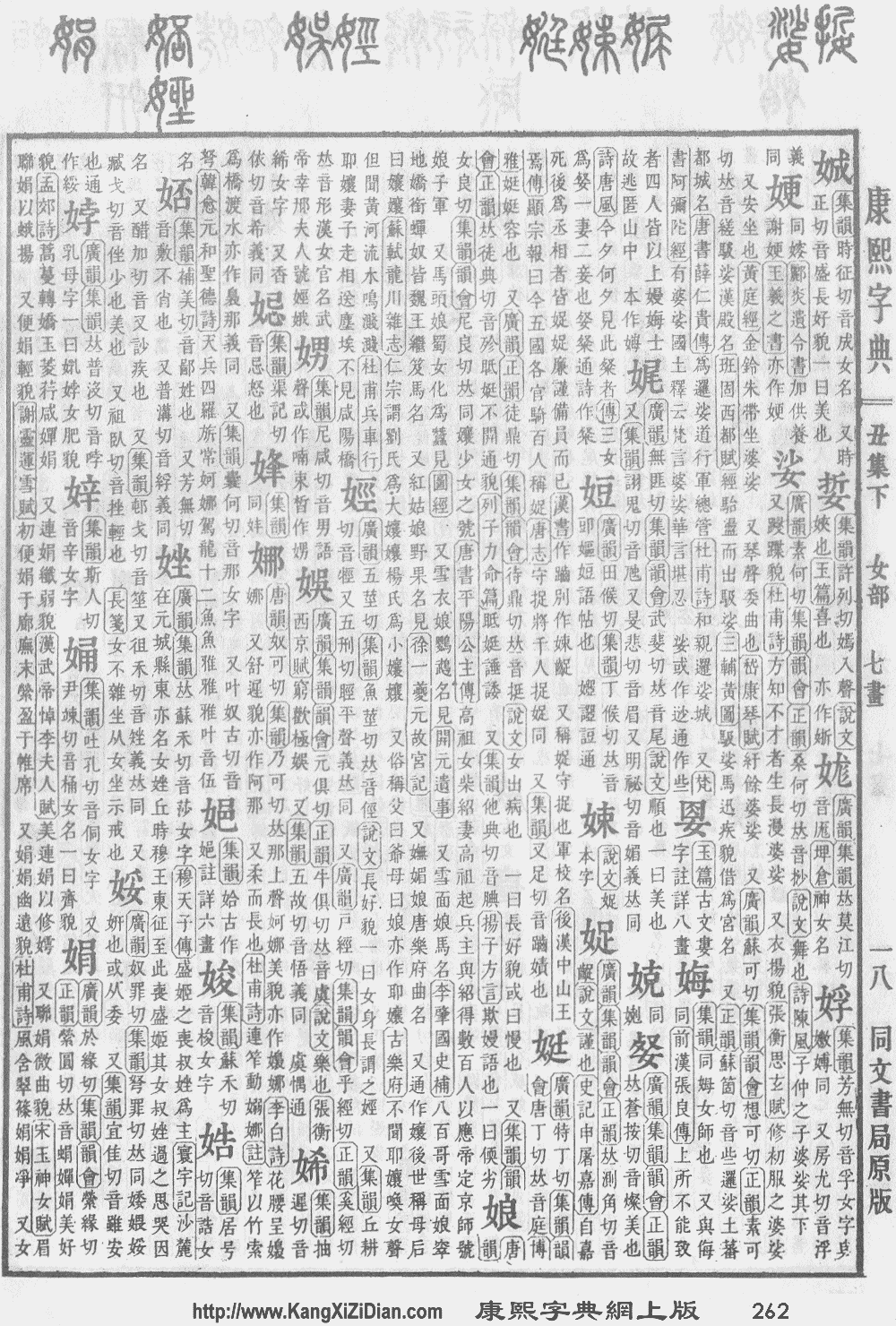
- KangXi: page 262, character 18
- Dai Kanwa Jiten: character 6306
- Dae Jaweon: page 529, character 8
- Hanyu Da Zidian (first edition): volume 2, page 1051, character 9
- Unihan data for U+5A1A
Chinese
Etymology 1
| For pronunciation and definitions of 娚 – see 嫐 (“to make fun of”). (This character, 娚, is a variant form of 嫐.) |
Etymology 2
| For pronunciation and definitions of 娚 – see 喃. (This character, 娚, is a variant form of 喃.) |
Etymology 3
| For pronunciation and definitions of 娚 – see 甥 (“sororal niece or sororal nephew; son-in-law; etc.”). (This character, 娚, is a variant form of 甥.) |
Japanese

娚
Alternative forms
This article is issued from Wiktionary. The text is licensed under Creative Commons - Attribution - Sharealike. Additional terms may apply for the media files.