拹
| ||||||||
Translingual
Han character
拹 (Kangxi radical 64, 手+6, 9 strokes, cangjie input 手大尸尸 (QKSS), four-corner 54027, composition ⿰扌劦)
References
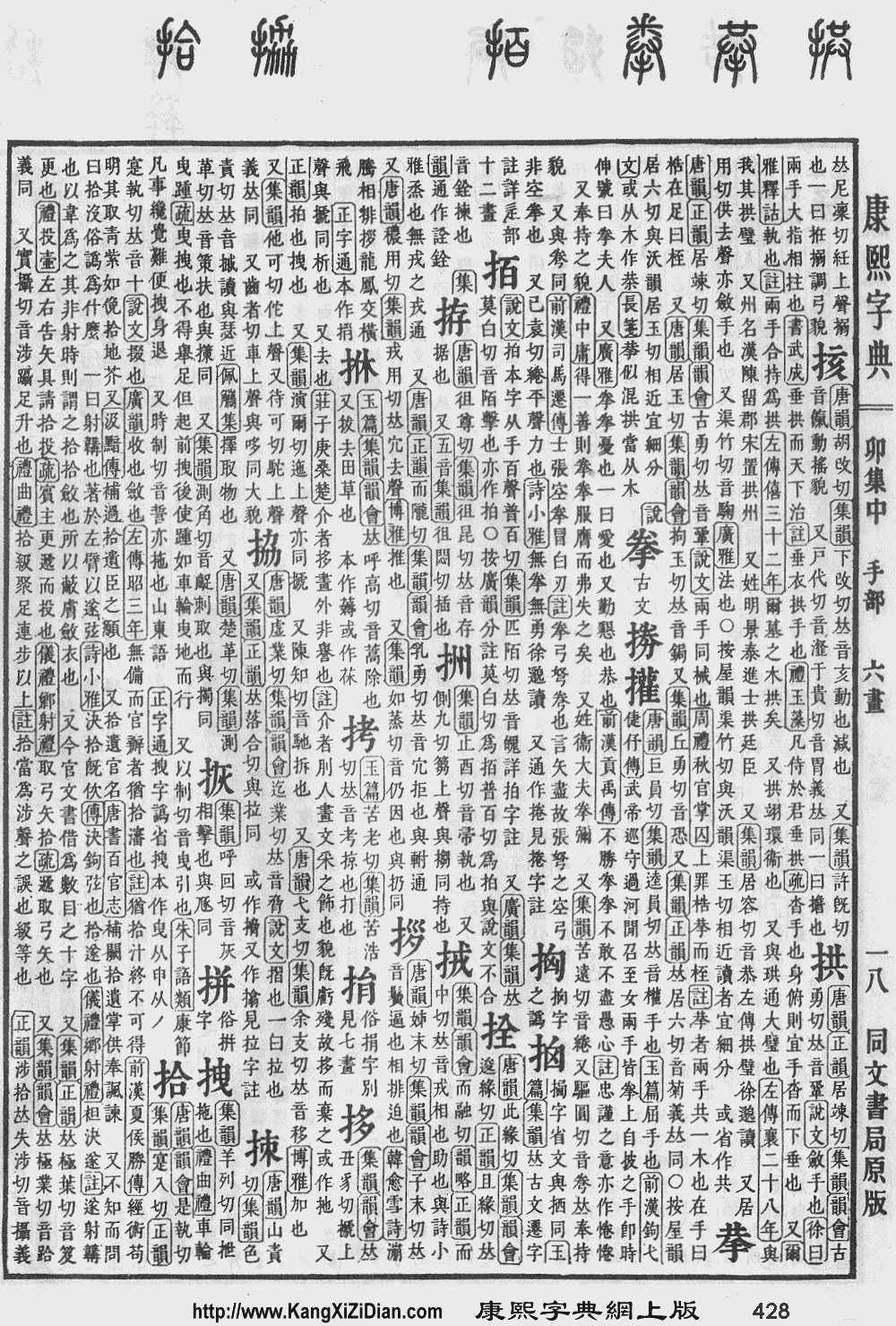
- KangXi: page 428, character 19
- Dai Kanwa Jiten: character 12009
- Dae Jaweon: page 777, character 13
- Hanyu Da Zidian (first edition): volume 3, page 1877, character 1
- Unihan data for U+62F9
Chinese
| simp. and trad. |
拹 | |
|---|---|---|

Pronunciation
Etymology 2
| For pronunciation and definitions of 拹 – see 搚. (This character, 拹, is a variant form of 搚.) |
References
- (Min Nan) “Entry #4994”, in 臺灣閩南語常用詞辭典 [Dictionary of Frequently-Used Taiwan Minnan] (in Chinese and Min Nan), Ministry of Education, R.O.C., 2011.
Vietnamese
Han character
- This term needs a translation to English. Please help out and add a translation, then remove the text
{{rfdef}}.
References
This article is issued from Wiktionary. The text is licensed under Creative Commons - Attribution - Sharealike. Additional terms may apply for the media files.