槯

槯 U+69EF, 槯
CJK UNIFIED IDEOGRAPH-69EF
← 槮
[U+69EE]
CJK Unified Ideographs 槰 →
[U+69F0]

Translingual

Han character

槯 (Kangxi radical 75, 木+11, 15 strokes, cangjie input 木山人土 (DUOG), composition ⿰木崔)

References

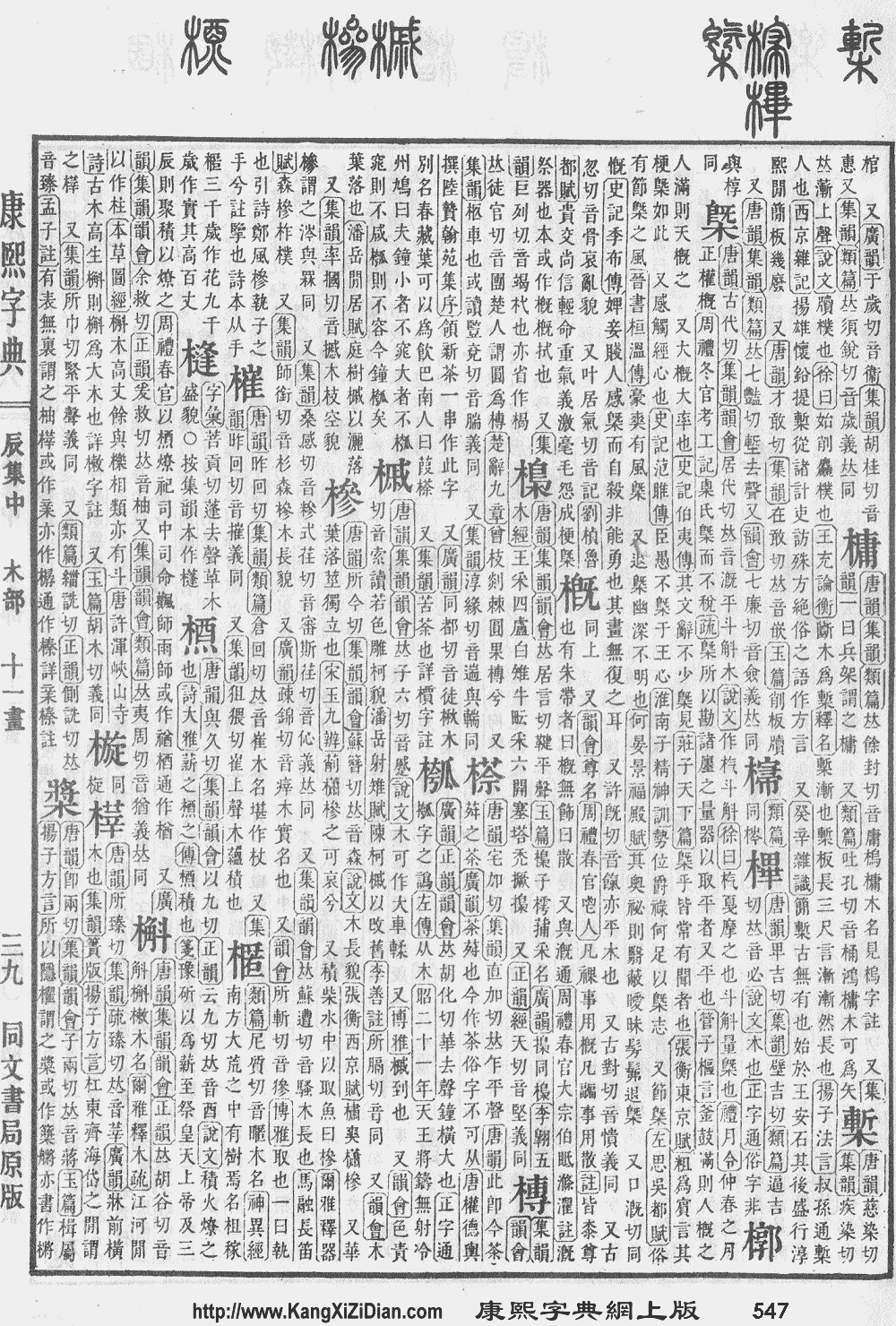
  • KangXi: page 547, character 14
  • Dai Kanwa Jiten: character 15371
  • Dae Jaweon: page 935, character 12
  • Hanyu Da Zidian (first edition): volume 2, page 1280, character 4
  • Unihan data for U+69EF

Chinese

simp. and trad.
槯

Glyph origin

Pronunciation


Rime
Character 槯
Reading # 1/1
Initial (聲) 從 (15)
Final (韻) 灰 (42)
Tone (調) Level (Ø)
Openness (開合) Closed
Division (等) I
Fanqie 昨回切
Reconstructions
Zhengzhang
Shangfang
/d͡zuʌi/
Pan
Wuyun
/d͡zuoi/
Shao
Rongfen
/d͡zuɒi/
Edwin
Pulleyblank
/d͡zwəj/
Li
Rong
/d͡zuᴀi/
Wang
Li
/d͡zuɒi/
Bernard
Karlgren
/d͡zʱuɑ̆i/
Expected
Mandarin
Reflex
cuí
Expected
Cantonese
Reflex
ceoi4
Zhengzhang system (2003)
Character 槯
Reading # 1/1
No. 1885
Phonetic
component
崔
Rime
group
微
Rime
subdivision
2
Corresponding
MC rime
摧
Old
Chinese
/*zluːl/

Definitions

槯

  1. This term needs a translation to English. Please help out and add a translation, then remove the text {{rfdef}}.

References

Japanese

Kanji

槯

(uncommon “Hyōgai” kanji)

  1. This term needs a translation to English. Please help out and add a translation, then remove the text {{rfdef}}.

Readings

  • On (unclassified): さい (sai); せ (se)
  • Kun: つむ (tsumu)

Vietnamese

Han character

槯: Hán Nôm readings: chuôi

  1. This term needs a translation to English. Please help out and add a translation, then remove the text {{rfdef}}.
This article is issued from Wiktionary. The text is licensed under Creative Commons - Attribution - Sharealike. Additional terms may apply for the media files.