氕
| ||||||||
Translingual
Han character
氕 (Kangxi radical 84, 气+1, 5 strokes, cangjie input 人弓中 (ONL), four-corner 80217, composition ⿹气丿)
References
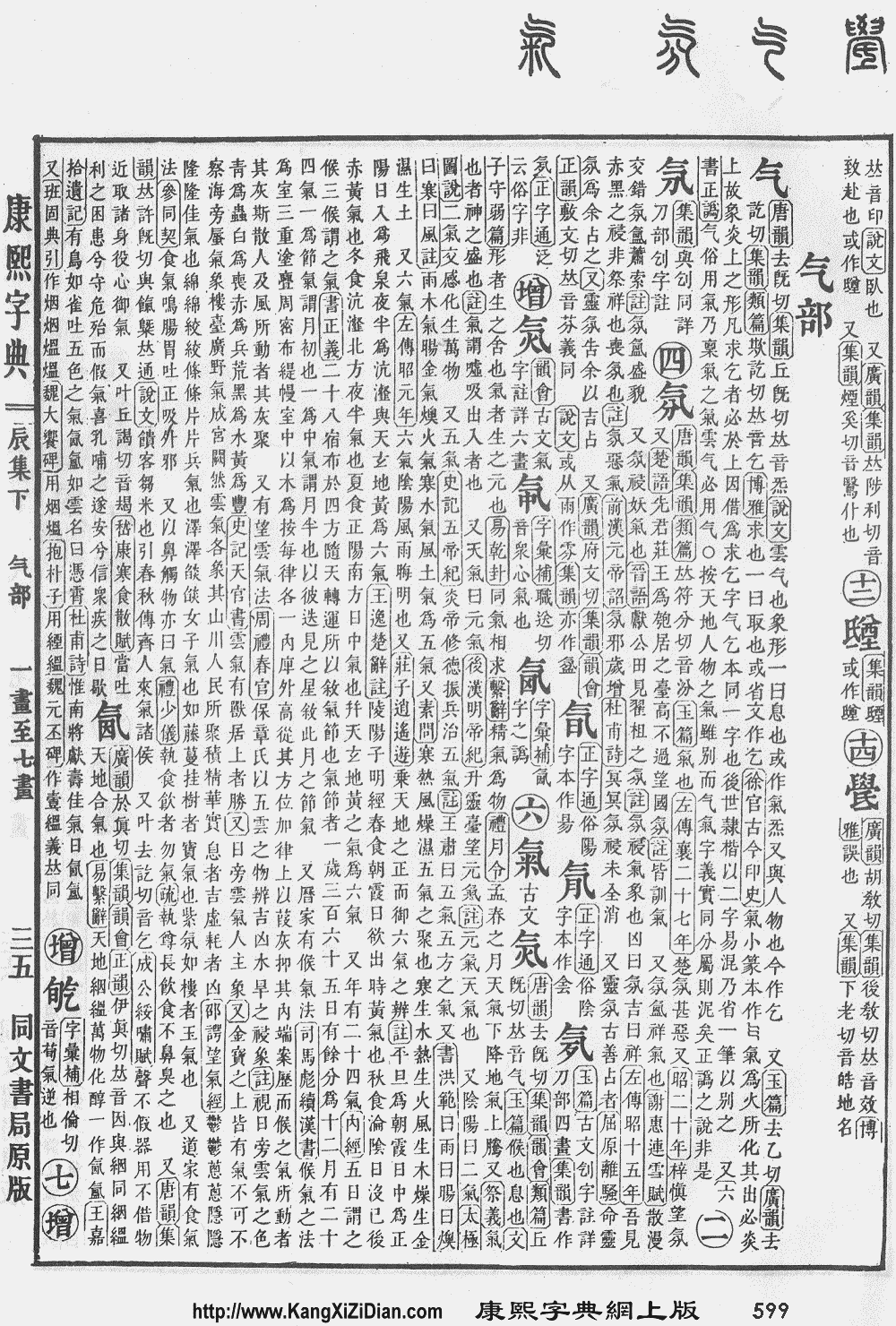
- KangXi: not present, would follow page 599, character 3
- Hanyu Da Zidian (first edition): volume 3, page 2010, character 2
- Unihan data for U+6C15
Chinese
| simp. and trad. |
氕 | |
|---|---|---|
Glyph origin
Ideogrammic compound (會意) : 气 (“gas”) + 丿 (“one”). Also a phono-semantic compound (形聲) , where 丿 (piě) acts as the phonetic component. Compare 氘 (“deuterium”) and 氚 (“tritium”).
Etymology
From 丿 (piě, “left falling stroke”) from the glyph, possibly influenced by New Latin protium. In Mandarin, it is pronounced in the first tone by analogy with 氘 (dāo, “deuterium”) and 氚 (chuān, “tritium”).
Pronunciation
This article is issued from Wiktionary. The text is licensed under Creative Commons - Attribution - Sharealike. Additional terms may apply for the media files.