状
See also: 狀
| ||||||||
Translingual
| Stroke order | |||
 | |||
Han character
状 (Kangxi radical 94, 犬+3, 7 strokes, cangjie input 中一戈大 (LMIK), composition ⿰丬犬)
References
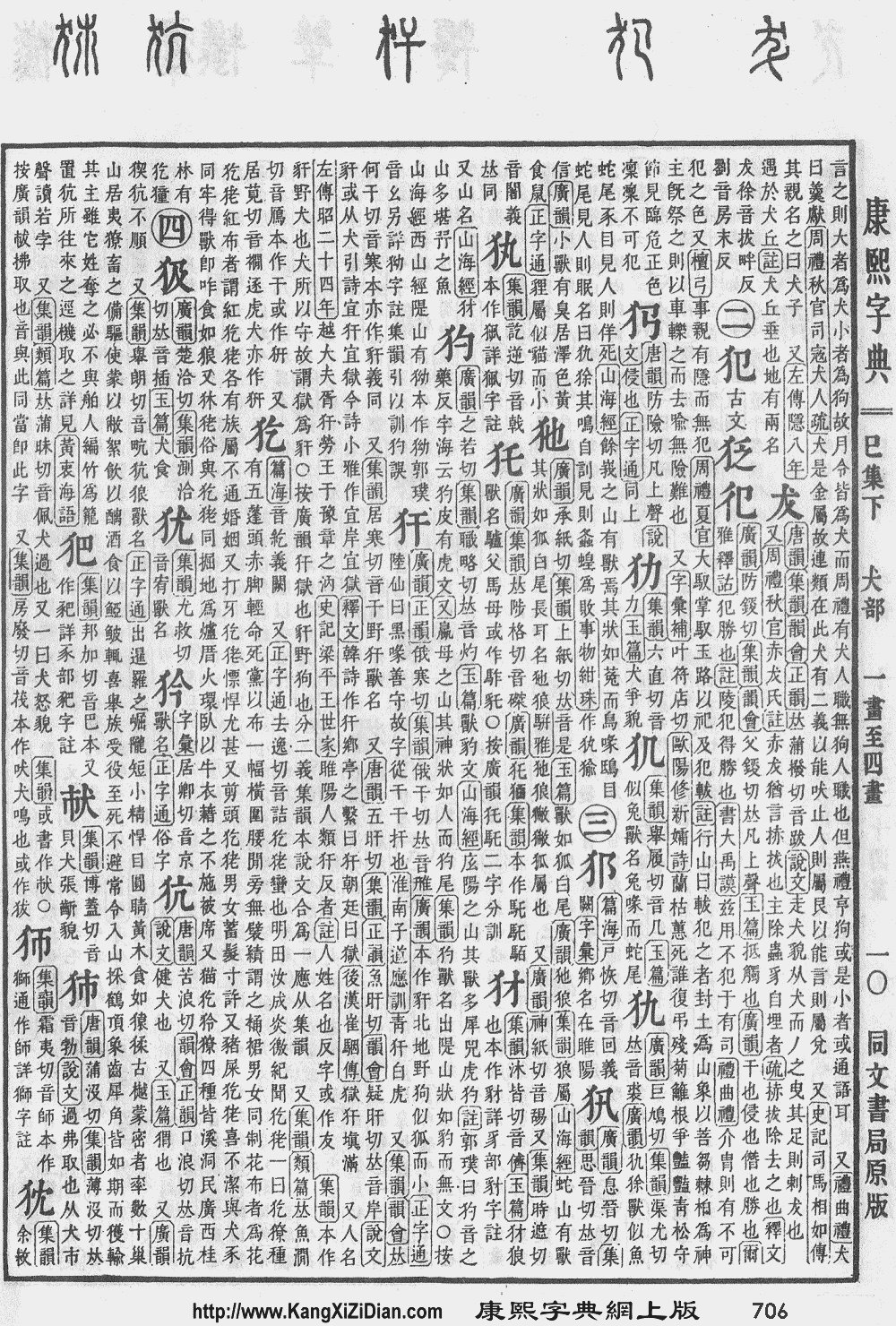
- KangXi: not present, would follow page 706, character 17
- Dai Kanwa Jiten: character 20257
- Dae Jaweon: page 1119, character 10
- Hanyu Da Zidian (first edition): volume 2, page 1332, character 3
- Unihan data for U+72B6
Chinese
| For pronunciation and definitions of 状 – see 狀 (“form; appearance; state; shape; etc.”). (This character, 状, is the simplified form of 狀.) |
Notes:
|
Japanese
| 状 | |
| 狀 |
Readings
- Go-on: じょう (jō, Jōyō)←じやう (zyau, historical)
- Kan-on: そう (sō)←さう (sau, historical)
- Kun: かたち (katachi, 状)
Compounds
- 腺状
Korean
This article is issued from Wiktionary. The text is licensed under Creative Commons - Attribution - Sharealike. Additional terms may apply for the media files.