遅
| ||||||||
Translingual
| Traditional | 遲 |
|---|---|
| Shinjitai | 遅 |
| Simplified | 迟 |
Glyph origin
Variant of 遲. Simplified from 遲 (犀 (xī) → 𡱝). 𡱝 is a variant of 犀.
The modern Japanese usage is of reform (shinjitai) nature.
Han character
遅 (Kangxi radical 162, 辵+9, 13 strokes in traditional Chinese and Korean, 12 strokes in mainland China and Japanese, cangjie input 卜尸廿手 (YSTQ), four-corner 37305, composition ⿺辶𡱝)
Derived characters
- 𥣔, 𫋢
References
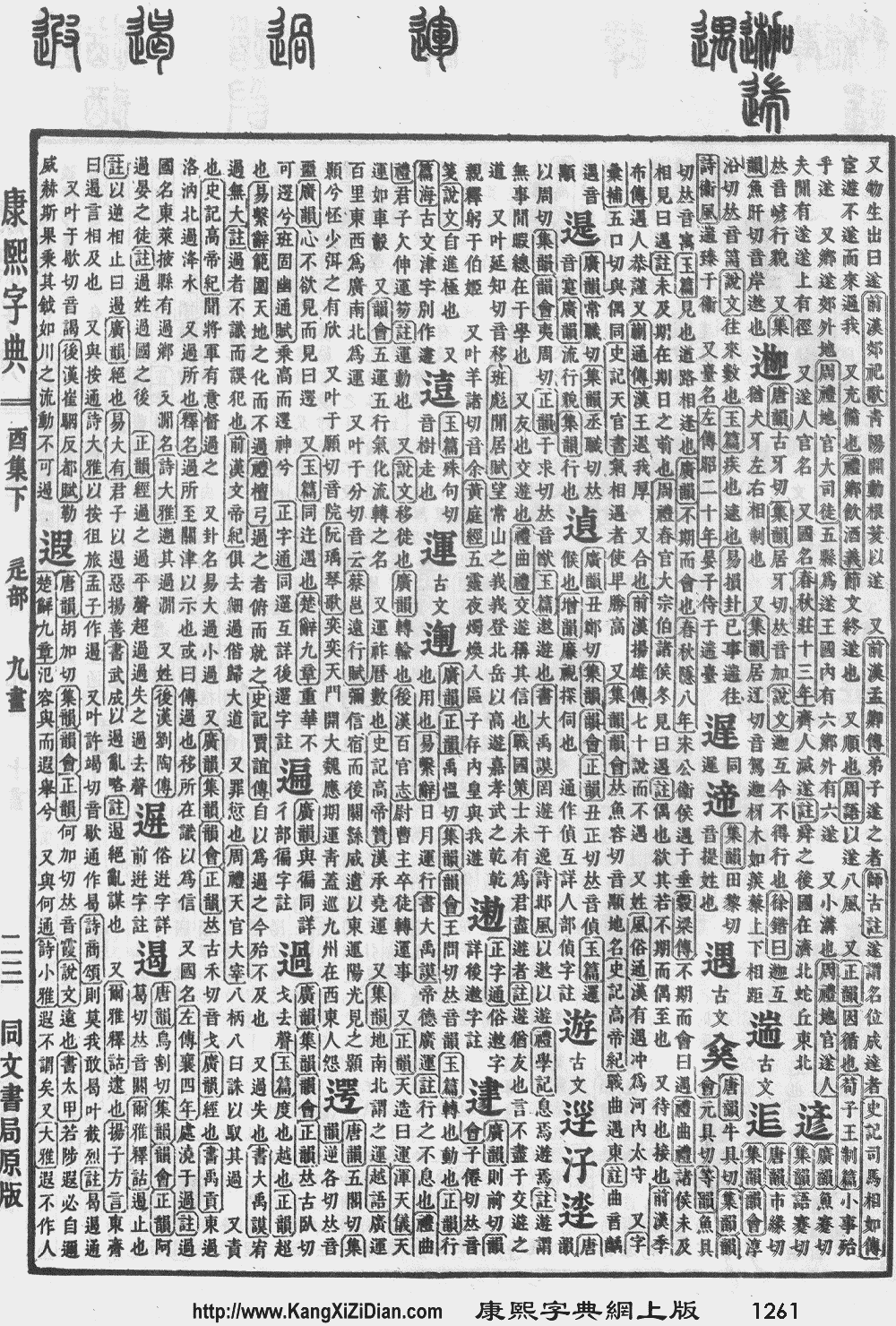
- KangXi: page 1261, character 5
- Dai Kanwa Jiten: character 38989
- Dae Jaweon: page 1751, character 8
- Hanyu Da Zidian (first edition): volume 6, page 3868, character 1
- Unihan data for U+9045
Chinese
Japanese
| 遅 | |
| 遲 |
Alternative forms
Readings
Etymology
| Kanji in this term |
|---|
| 遅 |
| おそ Grade: S |
| kun’yomi |
| Alternative spelling |
|---|
| 遲 (kyūjitai) |
Stem form of classical adjective おそし (ososhi),[1] modern おそい (osoi, “late”). Attested in the Man'yōshū.
Pronunciation
- IPA(key): [o̞so̞]
Noun
遅 • (oso)
- (obsolete) slowness, tardiness
- c. 759, Man'yōshū (book 14, poem 3493), text here
- 於曽波夜母奈乎許曽麻多賣牟可都乎能四比乃故夜提能安比波多我波自 [Man'yōgana]
- 遅速も汝をこそ待ため向つ峰の椎の小枝の逢ひは違はじ [Modern spelling]
- osohaya mo na o koso matame mukatsu-o no shii no koyade no, ai wa tagawaji
- (please add an English translation of this example)
- (obsolete) foolishness
- c. 759, Man'yōshū (book 9, poem 1741), text here
- 常世邊可住物乎劔刀己之行柄於曽也是君 [Man'yōgana]
- 常世辺に住むべきものを剣大刀汝が心からおそやこの君 [Modern spelling]
- tokoyohe ni sumubeki mono o tsurugitachi na ga kokoro kara oso ya kono kimi
- O he might be still dwelling in the Eternal Land, but foolishness was in the heart of yonder wight.[2]
See also
- 遅れ (okure)
Korean
Hanja
遅 • (ji) (hangeul 지, revised ji, McCune–Reischauer chi, Yale ci)
- This term needs a translation to English. Please help out and add a translation, then remove the text
{{rfdef}}.
Vietnamese
Han character
- This term needs a translation to English. Please help out and add a translation, then remove the text
{{rfdef}}.
This article is issued from Wiktionary. The text is licensed under Creative Commons - Attribution - Sharealike. Additional terms may apply for the media files.