黄砂
See also: 黃砂
Chinese
| For pronunciation and definitions of 黄砂 – see 黃砂 (“yellow sand; loess; Asian Dust; etc.”). (This term, 黄砂, is the simplified form of 黃砂.) |
Notes:
|
Japanese
Etymology 1
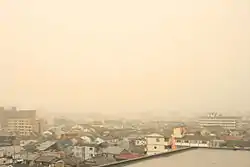
黄砂: Kyōto, spring 2010, with the skies full of yellow sand (Asian Dust).

The Taklamakan Desert, source of the Asian Dust.
| Kanji in this term | |
|---|---|
| 黄 | 砂 |
| こう Grade: 2 |
さ Grade: 6 |
| on’yomi | |
| Alternative spelling |
|---|
| 黃砂 (kyūjitai) |
From Middle Chinese compound 黃砂 (MC ɦwɑŋ ʃˠa, “yellow sand”). Compare modern Mandarin 黃砂/黄砂.
Kan'on reading of both characters, suggesting a later borrowing.
Alternative forms
Noun
This article is issued from Wiktionary. The text is licensed under Creative Commons - Attribution - Sharealike. Additional terms may apply for the media files.