𠕇
| ||||||||
Translingual
Han character
𠕇 (Kangxi radical 13, 冂+3, 5 strokes, cangjie input 大月戈 (KBI), composition ⿵冇丶)
References
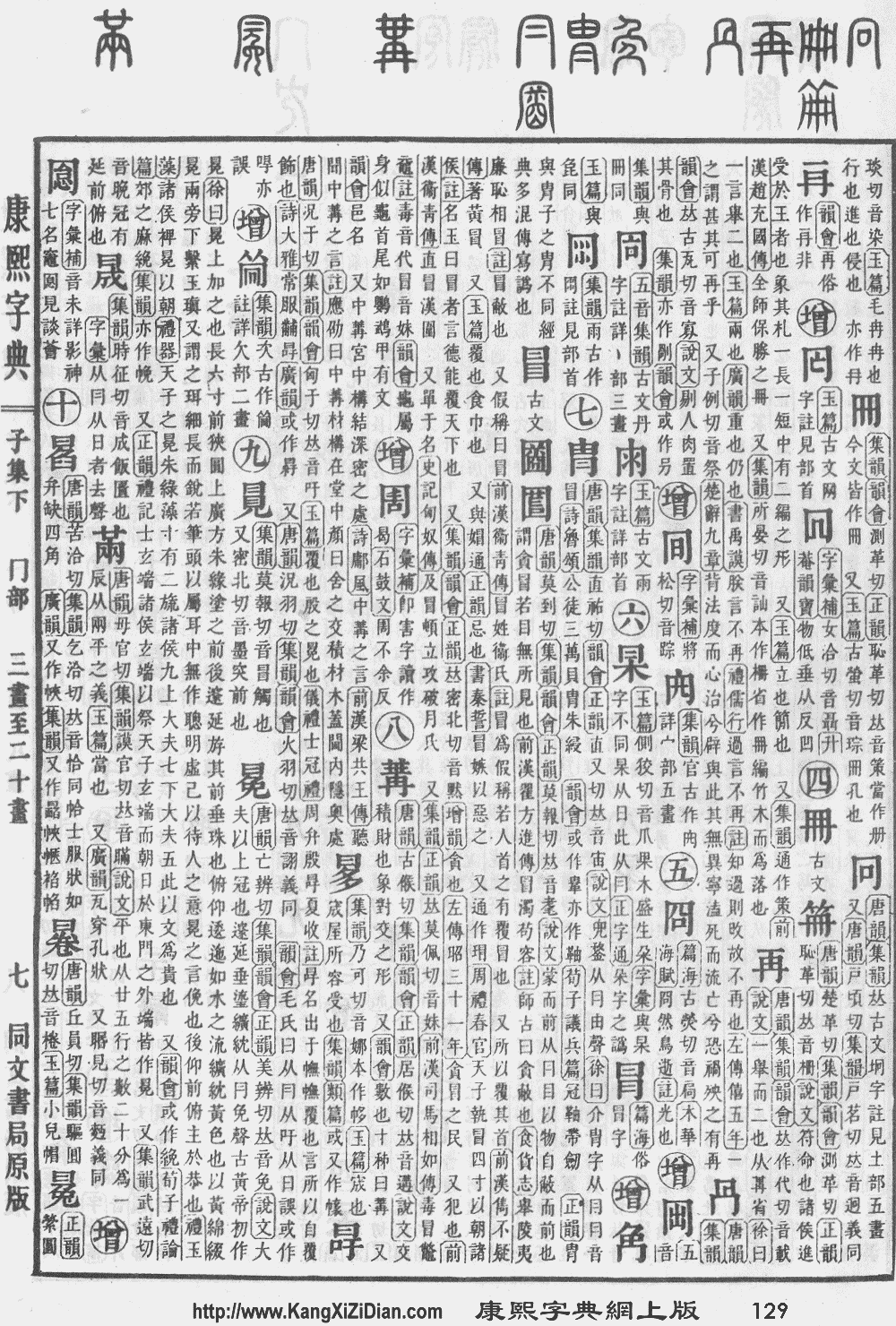
- KangXi: not present, would follow page 129, character 5
- Unihan data for U+20547
Chinese
Glyph origin
Ideogrammic compound (會意) : 冇 + 丶. In Min Nan, 冇, which is 有 (“to have”) without the two inner strokes, is used to mean "empty, hollow", originally when describing grain kernels. Adding 丶 inside 冇 shows a full kernel in the hollow husk, therefore meaning "hard, solid".
Pronunciation
Synonyms
Dialectal synonyms of 硬 (“hard”) [map]
Etymology 2
| For pronunciation and definitions of 𠕇 – see 冇 (“to not have; to not exist; etc.”). (This character, 𠕇, is a variant form of 冇.) |
References
- “Entry #13603”, in 臺灣閩南語常用詞辭典 [Dictionary of Frequently-Used Taiwan Minnan] (in Chinese and Min Nan), Ministry of Education, R.O.C., 2011.
- “臺灣閩南語按呢寫 (Tâi-oân Bân-lâm-gí Án-ne Siá) #415”, in 臺灣閩南語常用詞辭典 [Dictionary of Frequently-Used Taiwan Minnan], Ministry of Education, R.O.C., 2011.
- Teochew Pronunciation Dictionary (潮州音字典)
- Cantonese Pronunciation List of the Characters for Computers (U+E000)
This article is issued from Wiktionary. The text is licensed under Creative Commons - Attribution - Sharealike. Additional terms may apply for the media files.