aprikoze
See also: aprikozē
Latvian

Aprikoze (1)
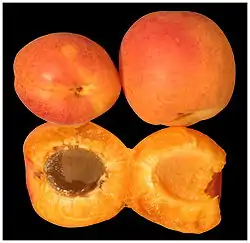
Aprikoze (2)
Etymology
Via other European languages, ultimately borrowed from Arabic الْبَرْقُوق (al-barqūq, “plums”), itself from Byzantine Greek βερικοκκῐ́ᾱ (berikokkíā, “apricot tree”), from Ancient Greek πραικὄκῐον (praikókion), from Late Latin (persica) praecocia (literally “over-ripe (peaches)”), (mālum) praecoquum (literally “over-ripe (apple)”).
Pronunciation
- IPA(key): [apɾikoːzɛ]
| (file) |
Noun
aprikoze f (5th declension)
- apricot (tree of the family Rosaceae, especially Prunus armeniaca, with orange fruits)
- stādīt, kultivēt aprikozes ― to plant, to cultivate apricot trees
- dārznieks nolēma radīt jaunas augļu koku un ogulāju šķirnes, bet dienvidu august - aprikozes, vīnogas, saldos ķiršus - sākt audzēt arī ziemeļos ― the gardener decided to create new fruit and berry trees, but the southern plants - apricots, grapes, sweet cherries - are now beginning to grow also in the north
- apricot (the fruit of this tree)
- līdzās aprikozēmizmēģinājumu dārzā nogatavojas arī citi dienvidu augļi ― along with apricots also other southern fruits are being planted in the experimental garden
- citi kalcija avoti uzturā ir žāvēti augļi, sevišķi vīģes, aprikozes... ― other sources of calcium in (our) diet are dried fruits, especially figs, apricots...
- Armēnijas saimniecības ik gadus izaudzē tūkstošiem tonnu aprikožu, persiku, bumbieru un citu augļu ― Armenian farms produce every year thousands of tonnes of apricots, peaches, pears and other fruits
Declension
Declension of aprikoze (5th declension)
| singular (vienskaitlis) | plural (daudzskaitlis) | |
|---|---|---|
| nominative (nominatīvs) | aprikoze | aprikozes |
| accusative (akuzatīvs) | aprikozi | aprikozes |
| genitive (ģenitīvs) | aprikozes | aprikožu |
| dative (datīvs) | aprikozei | aprikozēm |
| instrumental (instrumentālis) | aprikozi | aprikozēm |
| locative (lokatīvs) | aprikozē | aprikozēs |
| vocative (vokatīvs) | aprikoze | aprikozes |
This article is issued from Wiktionary. The text is licensed under Creative Commons - Attribution - Sharealike. Additional terms may apply for the media files.