dundurs
Latvian
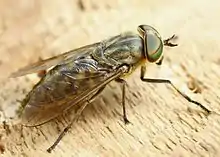
Dundurs
Etymology
Derived from the verb dundēt (“to thunder”), etymologically a variant of dunēt (“to drone, to boom”) (q.v.): both iterative-intensive forms of a no longer existing verb *dunt (“to resound”). The word was originally a reference to the low-pitched buzzing noise made by horseflies. Cognates include Lithuanian dunduris (“thunder, thunderclap”), dundurỹs (“horsefly”), Middle Dutch dunder, German Donner (“thunder”).[1]
Pronunciation
- IPA(key): [dūnduɾs]
| (file) |
Noun
dundurs m (1st declension)
- horsefly, gadfly (medium to large flies (family: Tabanidae, especially Tabanus spp.) that suck the blood of mammals)
- dunduru laiks ― horsefly time, weather
- atgaiņāt dundurus ― to repel, drive away horseflies
- rūc kā dundurs ― (s/he) growls like a horsefly (i.e., sings very badly)
- dunduri ēda nost zirgus un uzbruka arī cilvēkiem, kur vien varēdami piekļūt un pasūkt asinis ― horseflies ate away the horses and attacked also people, wherever they could go and suck blood
Declension
Declension of dundurs (1st declension)
| singular (vienskaitlis) | plural (daudzskaitlis) | |
|---|---|---|
| nominative (nominatīvs) | dundurs | dunduri |
| accusative (akuzatīvs) | dunduru | dundurus |
| genitive (ģenitīvs) | dundura | dunduru |
| dative (datīvs) | dunduram | dunduriem |
| instrumental (instrumentālis) | dunduru | dunduriem |
| locative (lokatīvs) | dundurā | dunduros |
| vocative (vokatīvs) | dundur | dunduri |
References
- Karulis, Konstantīns (1992), “dundurs”, in Latviešu Etimoloģijas Vārdnīca (in Latvian), Rīga: AVOTS, →ISBN
This article is issued from Wiktionary. The text is licensed under Creative Commons - Attribution - Sharealike. Additional terms may apply for the media files.