nāss
Latvian
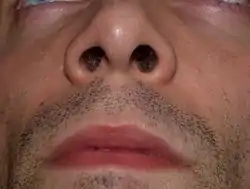
Nāsis
Etymology
From Proto-Baltic *nāsis, from Proto-Indo-European *nās-, an allomorph of *nas- (“nostril”). Semantic changes from “nose” to “nostril” or vice-versa were frequent in Indo-European. Cognates include Lithuanian nósis, Old Prussian nozy ([nōsi]), Sudovian nasis ([nāsis]) “nose”, Old Church Slavonic носъ (nosŭ), Bulgarian нос (nos), Ukrainian ніс (nis), Czech, Polish nos, Old English nasu, Old High German nasa, German Nase, English nose, Sanskrit नासा (nā́sā), Latin nāsus (“nose”), nāris (“nostril”) (< *nāsis).[1]
Pronunciation
- IPA(key): [nāːs]
Noun
nāss f (6th declension)
- (anatomy) nostril (one of two openings at the bottom of the nose)
- jutīgas nāsis ― sensitive nostrils
- platas nāsis ― wide nostrils
- nāsis dreb ― the nostrils are trembling
- aizspiest nāsis ― to clip one's nostrils
- knišļi lien zirgam nāsīs ― midges are crawling into the horse's nostrils
- zaķa purniņš sāka raustīties, nāsis dzīvāk ošņāt ― the hare's little muzzle began to twitch, (its) nostrils to sniff more actively
- salda medus dvaša spiedās viņam mutē un nāsīs ― the sweet breath (= smell) of honey pressed itself into his mouth and nostrils
Declension
Declension of nāss (6th declension)
| singular (vienskaitlis) | plural (daudzskaitlis) | |
|---|---|---|
| nominative (nominatīvs) | nāss | nāsis |
| accusative (akuzatīvs) | nāsi | nāsis |
| genitive (ģenitīvs) | nāss | nāšu |
| dative (datīvs) | nāsij | nāsīm |
| instrumental (instrumentālis) | nāsi | nāsīm |
| locative (lokatīvs) | nāsī | nāsīs |
| vocative (vokatīvs) | nāss | nāsis |
Derived terms
See also
References
- Karulis, Konstantīns (1992), “nāss”, in Latviešu Etimoloģijas Vārdnīca (in Latvian), Rīga: AVOTS, →ISBN
This article is issued from Wiktionary. The text is licensed under Creative Commons - Attribution - Sharealike. Additional terms may apply for the media files.