pīle
Latvian
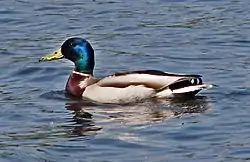
Pīle
Etymology
Of onomatopoeic (imitative) origin, as is the case with several other Indo-European bird names, all from Proto-Indo-European onomatopoeic *pī- (reduplicated form *pīp-): Samogitian pīlė (“duck”), Bulgarian пи́ле (píle, “chick, young bird”), Serbo-Croatian pȉle (“chick”), Slovene pípa (“chicken”), Ancient Greek πῑ́πος (pī́pos, “young bird”). The Latvian term, originally probably a dialectal colloquialism, has apparently replaced an earlier Proto-Baltic *antis; compare Lithuanian ántis (“duck”).[1]
Pronunciation
- IPA(key): [pīːlɛ]
Noun
pīle f (5th declension)
- duck (birds of family Anatidae)
- mājas pīle ― domestic (lit. house) duck
- meža pīle ― wild (lit. forest) duck
- pīļu mātīte ― female duck
- pīļu olas ― duck eggs
- pīļu ligzdošanas vietas ― duck nesting areas
- pīļu audzētava ― duck farm
- pīles cepetis ― roast duck
- (colloquial) false sensationalist rumors
- avīžu pīle ― newspaper sensationalist rumors
- palaist pīli ― to run a sensationalist rumor
Declension
Declension of pīle (5th declension)
Derived terms
References
- Karulis, Konstantīns (1992), “pīle”, in Latviešu Etimoloģijas Vārdnīca (in Latvian), Rīga: AVOTS, →ISBN
This article is issued from Wiktionary. The text is licensed under Creative Commons - Attribution - Sharealike. Additional terms may apply for the media files.