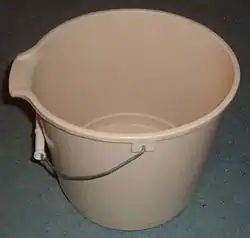
spainis
Latvian
Etymology
Borrowed from Middle Low German span(n) (“wooden bucket”), generating dialectal form spanis, spannis; in Kurzeme, also *spandis > spaņģis (with ģ probably from genitive *spandya); compare Lithuanian dialectal forms spandis, spañgis (possibly borrowings from Kurzeme dialects). Two explanations have been proposed for the irregular ai (instead of an(n)) in the literary form: influence from dialectal (Kurzeme) *spainis, a variant of spailis, spails (“set of fishing equipment”), at first in Kurzeme, and later on spreading to other dialects; or a contamination between an earlier form *span(n)is and Livonian pàynal (“wooden round container”), or its Ewe dialectal synonym paenas, paenal. The borrowing is first mentioned as spanis, spannis in 17th-century dictionaries; by the end of that century, the variant spainis is also attested. In the first Bible translations one finds spaņģis. The literary form spainis progressed slowly: in the 19th century, J. Alunāns still used spannis, spanis; in dictionaries from the 1870s and 1880s, spainis was only a variant. Only at the beginning of the 20th century did spainis begin to dominate, when spannis, spanis was perceived (and avoided) as a Germanism.[1]
Pronunciation
- IPA(key): [spāīnis]
Noun
spainis m (2nd declension)
Declension
| singular (vienskaitlis) | plural (daudzskaitlis) | |
|---|---|---|
| nominative (nominatīvs) | spainis | spaiņi |
| accusative (akuzatīvs) | spaini | spaiņus |
| genitive (ģenitīvs) | spaiņa | spaiņu |
| dative (datīvs) | spainim | spaiņiem |
| instrumental (instrumentālis) | spaini | spaiņiem |
| locative (lokatīvs) | spainī | spaiņos |
| vocative (vokatīvs) | spaini | spaiņi |
References
- Karulis, Konstantīns (1992), “spainis”, in Latviešu Etimoloģijas Vārdnīca (in Latvian), Rīga: AVOTS, →ISBN