حبارى
See also: حباري
Arabic
FWOTD – 3 August 2020
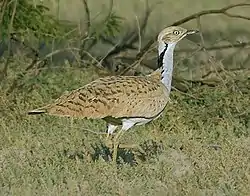
حُبَارَى – Chlamydotis macqueenii
Etymology
From the root ح ب ر (ḥ-b-r) related to delight since it is the most-prized fowl flesh. For the pattern compare سُمَانَى (sumānā, “quail, Coturnix coturnix”).
Pronunciation
- IPA(key): /ħu.baː.raː/
Noun
حُبَارَى • (ḥubārā) f (dual حُبَارَيَانِ (ḥubārayāni), plural حُبَارَيَات (ḥubārayāt))
- bustard (Otididae bird such as Chlamydotis spp., Otis tarda, Ardeotis arabs)
- 7th century CE, Sunan Abī Dāwud, 28:62:
- أَكَلْتُ مَعَ رَسُولِ اللَّهِ صَلَّى اللّٰهُ عَلَيْهِ وَسَلَّمَ لَحْمَ حُبَارَى.
- ʔakaltu maʕa rasūli llāhi ṣallā llāhu ʕalayhi wa-sallama laḥma ḥubārā.
- I ate with the Prophet (peace be upon him) the flesh of a bustard.
-
Declension
Declension of noun حُبَارَى (ḥubārā)
| Singular | singular invariable | ||
|---|---|---|---|
| Indefinite | Definite | Construct | |
| Informal | حُبَارَى ḥubārā |
الْحُبَارَى al-ḥubārā |
حُبَارَى ḥubārā |
| Nominative | حُبَارَى ḥubārā |
الْحُبَارَى al-ḥubārā |
حُبَارَى ḥubārā |
| Accusative | حُبَارَى ḥubārā |
الْحُبَارَى al-ḥubārā |
حُبَارَى ḥubārā |
| Genitive | حُبَارَى ḥubārā |
الْحُبَارَى al-ḥubārā |
حُبَارَى ḥubārā |
| Dual | Indefinite | Definite | Construct |
| Informal | حُبَارَيَيْن ḥubārayayn |
الْحُبَارَيَيْن al-ḥubārayayn |
حُبَارَيَيْ ḥubārayay |
| Nominative | حُبَارَيَانِ ḥubārayāni |
الْحُبَارَيَانِ al-ḥubārayāni |
حُبَارَيَا ḥubārayā |
| Accusative | حُبَارَيَيْنِ ḥubārayayni |
الْحُبَارَيَيْنِ al-ḥubārayayni |
حُبَارَيَيْ ḥubārayay |
| Genitive | حُبَارَيَيْنِ ḥubārayayni |
الْحُبَارَيَيْنِ al-ḥubārayayni |
حُبَارَيَيْ ḥubārayay |
| Plural | sound feminine plural | ||
| Indefinite | Definite | Construct | |
| Informal | حُبَارَيَات ḥubārayāt |
الْحُبَارَيَات al-ḥubārayāt |
حُبَارَيَات ḥubārayāt |
| Nominative | حُبَارَيَاتٌ ḥubārayātun |
الْحُبَارَيَاتُ al-ḥubārayātu |
حُبَارَيَاتُ ḥubārayātu |
| Accusative | حُبَارَيَاتٍ ḥubārayātin |
الْحُبَارَيَاتِ al-ḥubārayāti |
حُبَارَيَاتِ ḥubārayāti |
| Genitive | حُبَارَيَاتٍ ḥubārayātin |
الْحُبَارَيَاتِ al-ḥubārayāti |
حُبَارَيَاتِ ḥubārayāti |
Derived terms
Descendants
- → English: hubara
- → French: houbara f or m
- → English: houbara
- → German: Hubara f or m
- → Persian: هوبره (hubare, hubarre), آهوبره (âhubare)
- → Polish: hubara f
- → Spanish: hubara f
- → Translingual: Outis houbara; Chlamydotis houbara (obsolete)
Further reading
- Aʿlam, Hūšang; Scott, Derek A. (1990-12-15), “bustard”, in Encyclopædia Iranica, online edition, New York
- Hauenschild, Ingeborg (2003) Die Tierbezeichnungen bei Mahmud al-Kaschgari: eine Untersuchung aus sprach- und kulturhistorischer Sicht (Turcologica; 53) (in German), Otto Harrassowitz: Wiesbaden, →ISBN, pages 224–225
- Lane, Edward William (1863), “حبارى”, in Arabic-English Lexicon, London: Williams & Norgate, pages 499–500
This article is issued from Wiktionary. The text is licensed under Creative Commons - Attribution - Sharealike. Additional terms may apply for the media files.