劆
| ||||||||
Translingual
Han character
劆 (Kangxi radical 18, 刀+13, 15 strokes, cangjie input 戈金中弓 (ICLN), four-corner 02200, composition ⿰廉刂)
Related characters
- 鐮 (Orthodox traditional form based on Zhengzitong dictionary)
- 镰 (Simplified form of 鐮 in mainland China)
References
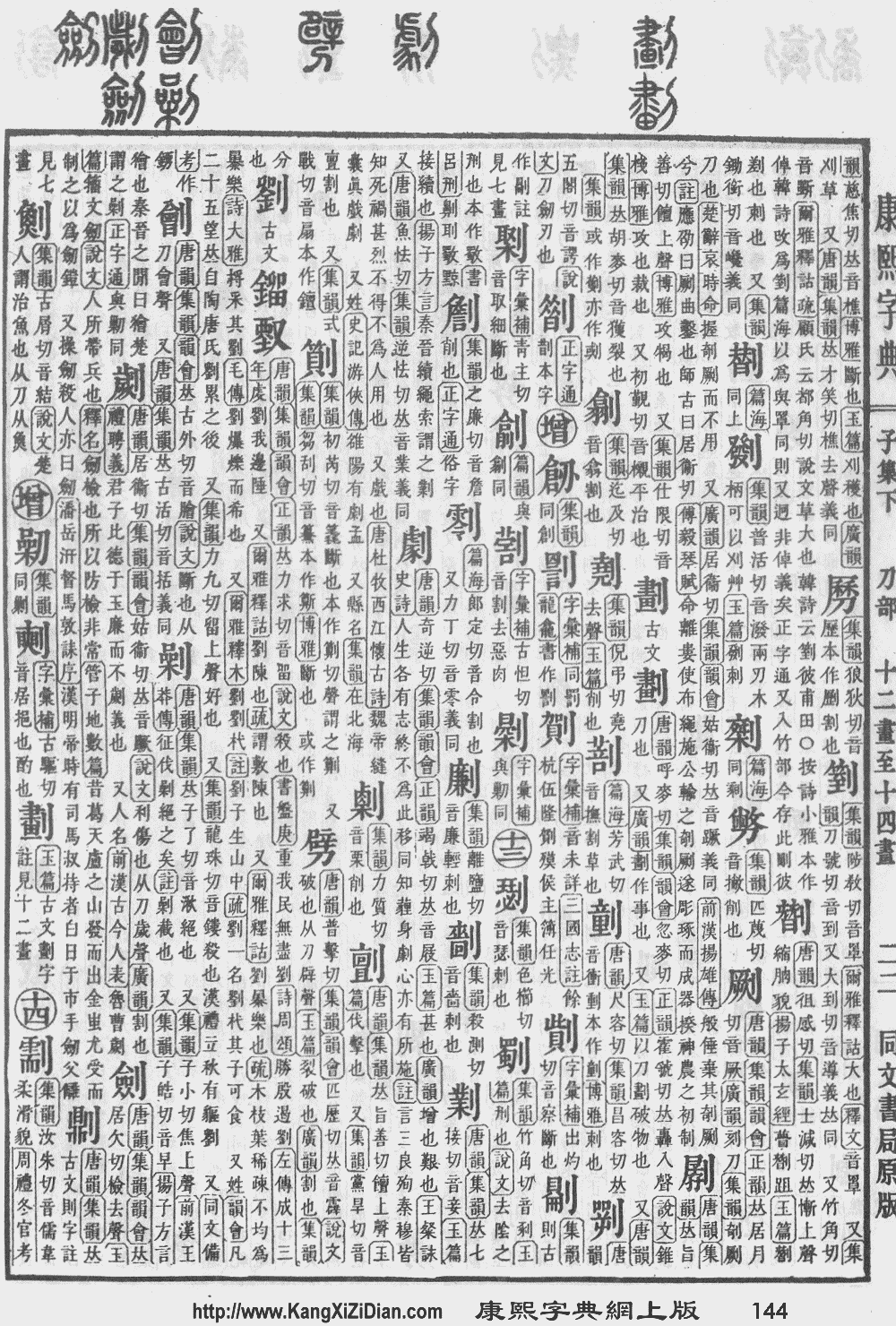
- KangXi: page 144, character 31
- Dai Kanwa Jiten: character 2215
- Hanyu Da Zidian (first edition): volume 1, page 360, character 1
- Unihan data for U+5286
Chinese
Glyph origin
Found in the historical Jiyun 《集韻 (Jíyùn)》 dictionary published during the Song dynasty (1037 AD).
Phono-semantic compound (形聲) : phonetic 廉 (OC *ɡ·rem) + semantic 刂 (“knife; blade”).
Pronunciation
Glyph origin
Found in the historical Zhengzitong 《正字通 (Zhèngzìtōng)》 dictionary published during the Qing dynasty (1671 AD).
Japanese
Kanji
劆
- This term needs a translation to English. Please help out and add a translation, then remove the text
{{rfdef}}.
This article is issued from Wiktionary. The text is licensed under Creative Commons - Attribution - Sharealike. Additional terms may apply for the media files.