厠
| ||||||||
Translingual
Han character
厠 (Kangxi radical 27, 厂+9, 11 strokes, cangjie input 一月金弓 (MBCN), composition ⿸厂則)
References
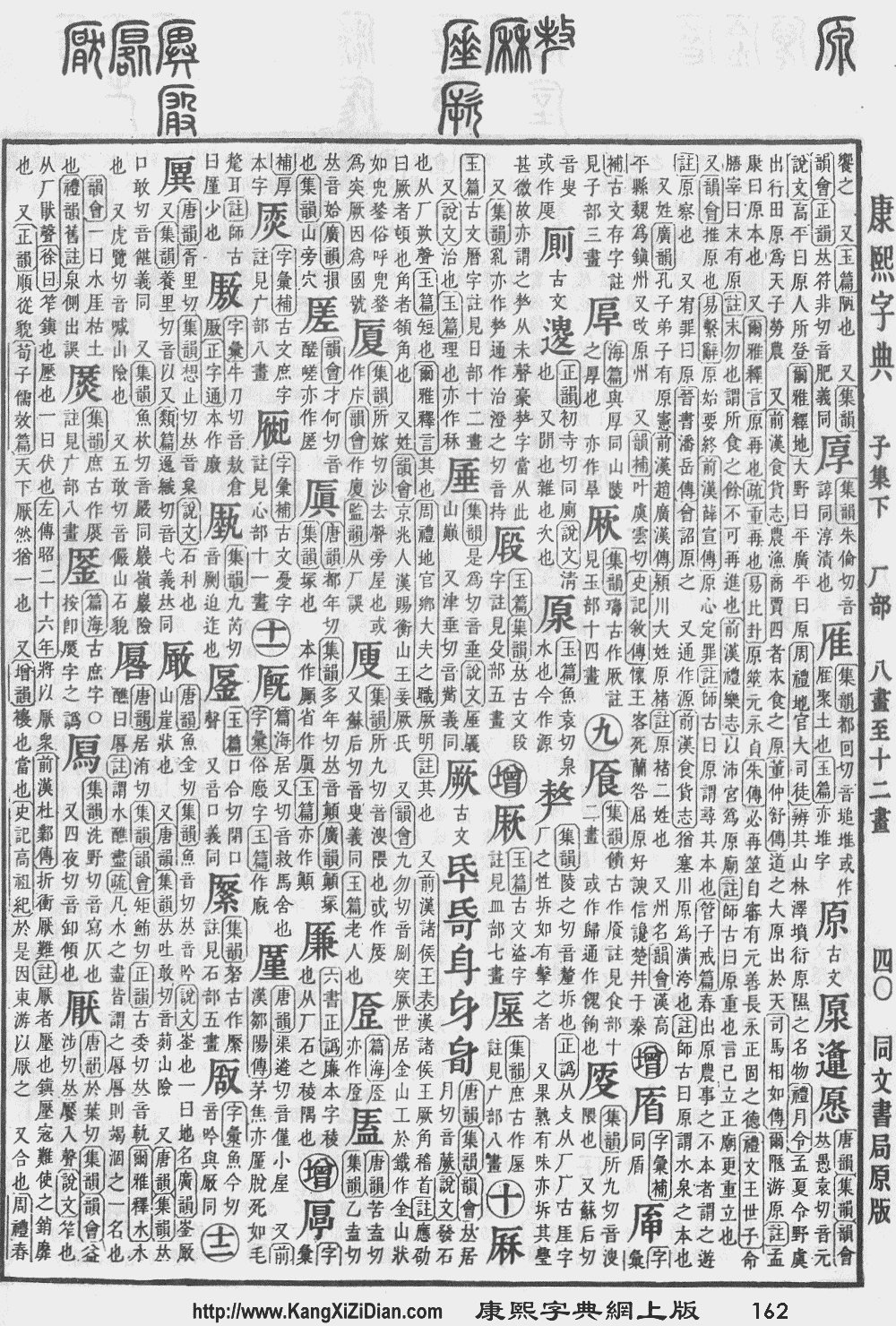
- KangXi: page 162, character 13
- Dai Kanwa Jiten: character 2981
- Dae Jaweon: page 370, character 1
- Hanyu Da Zidian (first edition): volume 1, page 75, character 12
- Unihan data for U+53A0
Chinese
| trad. | 廁*/厠 | |
|---|---|---|
| simp. | 厕 | |
| For pronunciation and definitions of 厠 – see 廁 (“toilet; lavatory; to mingle with; to participate in; etc.”). (This character, 厠, is a variant form of 廁.) |
Japanese
Korean
Hanja
厠 • (cheuk) (hangeul 측, revised cheuk, McCune–Reischauer ch'ŭk)
- This term needs a translation to English. Please help out and add a translation, then remove the text
{{rfdef}}.
This article is issued from Wiktionary. The text is licensed under Creative Commons - Attribution - Sharealike. Additional terms may apply for the media files.