廁

See also: 厕 and 厠
廁 U+5EC1, 廁
CJK UNIFIED IDEOGRAPH-5EC1
← 廀
[U+5EC0]
CJK Unified Ideographs 廂 →
[U+5EC2]

Translingual

Han character

廁 (Kangxi radical 53, 广+9, 12 strokes, cangjie input 戈月金弓 (IBCN), four-corner 00220, composition ⿸广則)

References

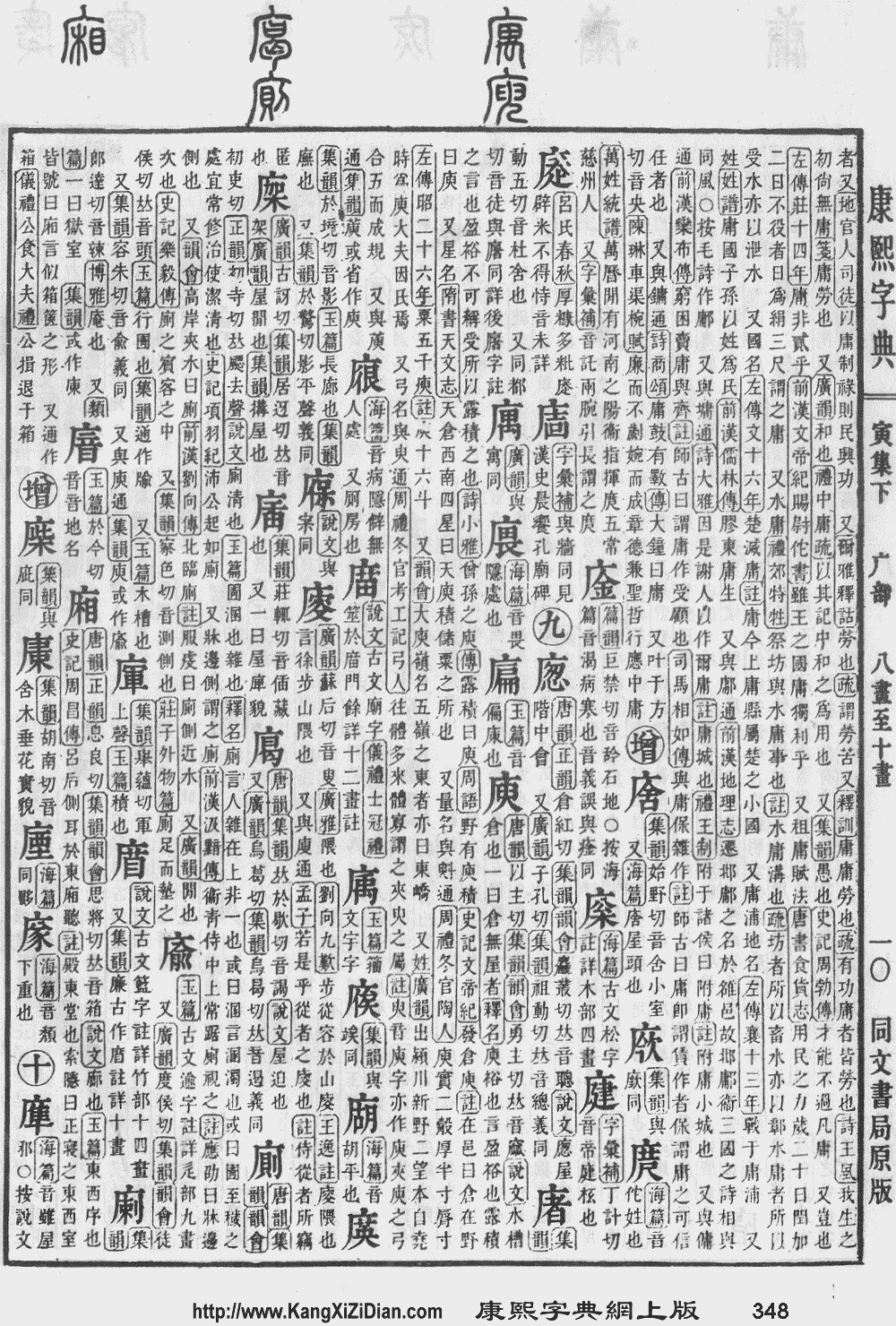
  • KangXi: page 348, character 26
  • Dai Kanwa Jiten: character 9410
  • Dae Jaweon: page 659, character 15
  • Hanyu Da Zidian (first edition): volume 2, page 893, character 3
  • Unihan data for U+5EC1

Chinese

trad. 廁/厠
simp. 厕

Glyph origin

Phono-semantic compound (形聲, OC *sʰrɯɡs, *sʰrɯɡ) : semantic 广 + phonetic 則 (OC *ʔsɯːɡ).

Etymology 1

Possibly from Proto-Sino-Tibetan *g-ts(j)i-t/n (“urine; to urinate”) (Schuessler, 2007).

Pronunciation


Note: sì - variant reading used in 茅廁/茅厕 (máosi).
Note: si1 - reading used in 茅廁/茅厕.
Note: ci - reading used in 茅廁/茅厕.
Note:
  • ceh4 - literary;
  • cah4, si1 - vernacular.
Note:
  • chheh/chhè - vernacular;
  • chhek/chhiak - literary.
Note:
  • cr4, sr1 - vernacular;
  • ze6 - literary.

Rime
Character 廁
Reading # 1/1
Initial (聲) 初 (19)
Final (韻) 之 (19)
Tone (調) Departing (H)
Openness (開合) Open
Division (等) III
Fanqie 初吏切
Baxter tsrhiH
Reconstructions
Zhengzhang
Shangfang
/t͡ʃʰɨH/
Pan
Wuyun
/ʈ͡ʂʰɨH/
Shao
Rongfen
/t͡ʃʰieH/
Edwin
Pulleyblank
/ʈ͡ʂʰɨH/
Li
Rong
/t͡ʃʰiəH/
Wang
Li
/t͡ʃʰĭəH/
Bernard
Karlgren
/ʈ͡ʂʰiH/
Expected
Mandarin
Reflex
chì
Expected
Cantonese
Reflex
ci3
Baxter–Sagart system 1.1 (2014)
Character 廁
Reading # 1/1
Modern
Beijing
(Pinyin)
cè
Middle
Chinese
‹ tsrhiH ›
Old
Chinese
/*[tsʰ]rək-s/
English latrine

Notes for Old Chinese notations in the Baxter–Sagart system:

* Parentheses "()" indicate uncertain presence;
* Square brackets "[]" indicate uncertain identity, e.g. *[t] as coda may in fact be *-t or *-p;
* Angle brackets "<>" indicate infix;
* Hyphen "-" indicates morpheme boundary;

* Period "." indicates syllable boundary.
Zhengzhang system (2003)
Character 廁
Reading # 1/2
No. 16594
Phonetic
component
則
Rime
group
代
Rime
subdivision
0
Corresponding
MC rime
廁
Old
Chinese
/*sʰrɯɡs/

Definitions

廁

  1. toilet; lavatory
Synonyms

Compounds

Pronunciation


Rime
Character 廁
Reading # 1/1
Initial (聲) 初 (19)
Final (韻) 之 (19)
Tone (調) Departing (H)
Openness (開合) Open
Division (等) III
Fanqie 初吏切
Baxter tsrhiH
Reconstructions
Zhengzhang
Shangfang
/t͡ʃʰɨH/
Pan
Wuyun
/ʈ͡ʂʰɨH/
Shao
Rongfen
/t͡ʃʰieH/
Edwin
Pulleyblank
/ʈ͡ʂʰɨH/
Li
Rong
/t͡ʃʰiəH/
Wang
Li
/t͡ʃʰĭəH/
Bernard
Karlgren
/ʈ͡ʂʰiH/
Expected
Mandarin
Reflex
chì
Expected
Cantonese
Reflex
ci3
Zhengzhang system (2003)
Character 廁
Reading # 1/2
No. 16594
Phonetic
component
則
Rime
group
代
Rime
subdivision
0
Corresponding
MC rime
廁
Old
Chinese
/*sʰrɯɡs/

Definitions

廁

  1. (literary) to mingle with; to participate in

Compounds

  • 匽廁/匽厕
  • 廁神/厕神
  • 溷廁/溷厕
  • 雜廁/杂厕

Pronunciation


Zhengzhang system (2003)
Character 廁
Reading # 2/2
No. 16604
Phonetic
component
則
Rime
group
職
Rime
subdivision
0
Corresponding
MC rime
測
Old
Chinese
/*sʰrɯɡ/

Definitions

廁

  1. Used in 廁足/厕足 (cèzú).

Etymology 4

For pronunciation and definitions of 廁 – see 仄 (“slanting; oblique; narrow; etc.”).
(This character, 廁, is a variant form of 仄.)

References

Japanese

Kanji

廁

(uncommon “Hyōgai” kanji)

  1. This term needs a translation to English. Please help out and add a translation, then remove the text {{rfdef}}.

Readings

  • Go-on: し (shi); しき (shiki)
  • Kan-on: し (shi); そく (soku)
  • On: しょく (shoku)
  • Kun: かわや (kawaya)

Korean

Hanja

廁 (eum 치 (chi))

  1. This term needs a translation to English. Please help out and add a translation, then remove the text {{rfdef}}.

Vietnamese

Han character

廁: Hán Nôm readings: xí

  1. This term needs a translation to English. Please help out and add a translation, then remove the text {{rfdef}}.
This article is issued from Wiktionary. The text is licensed under Creative Commons - Attribution - Sharealike. Additional terms may apply for the media files.