圉

See also: 禦
圉 U+5709, 圉
CJK UNIFIED IDEOGRAPH-5709
← 圈
[U+5708]
CJK Unified Ideographs 圊 →
[U+570A]

Translingual

Han character

圉 (Kangxi radical 31, 囗+8, 11 strokes, cangjie input 田土廿十 (WGTJ), four-corner 60401, composition ⿴囗幸)

Derived characters

References

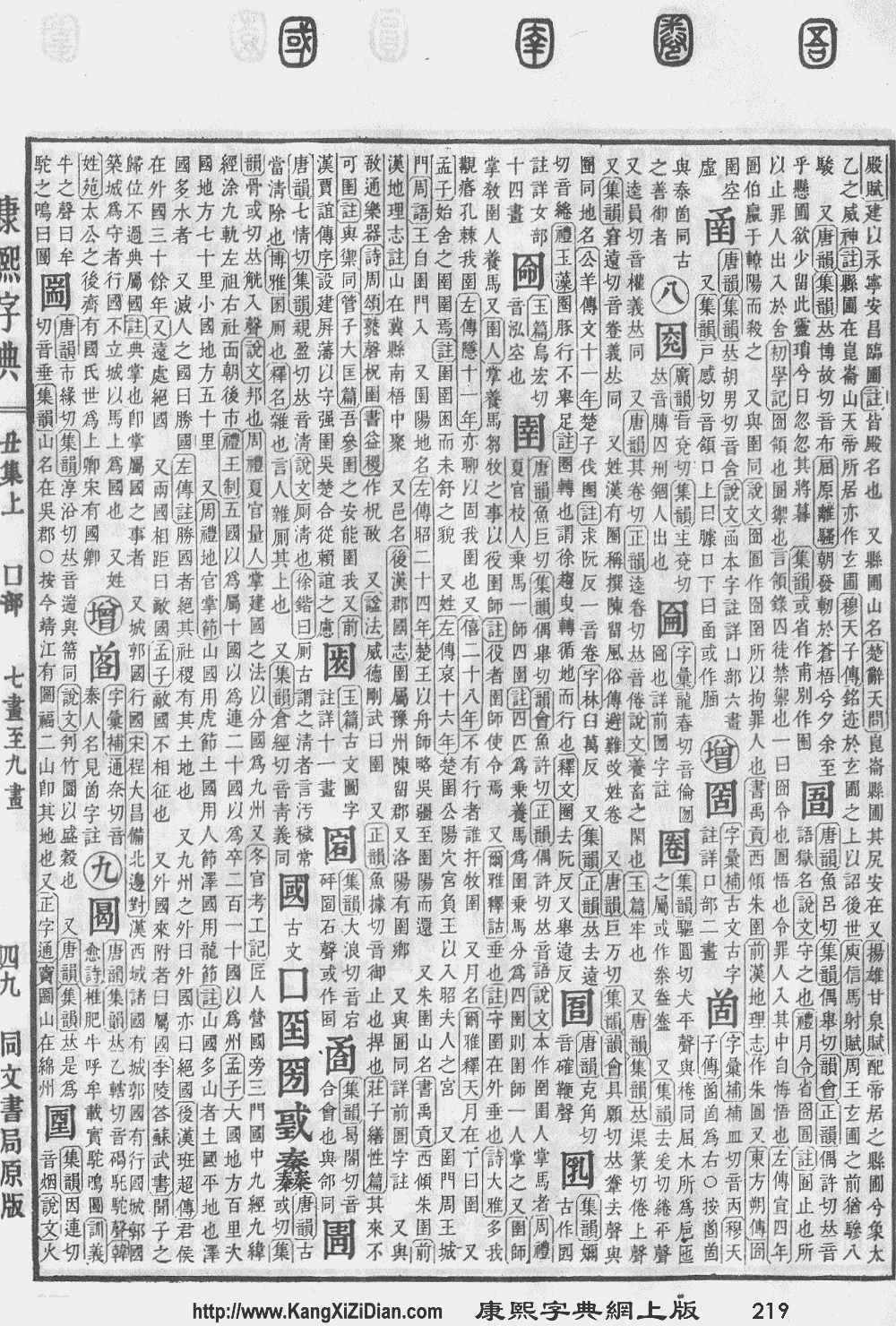
  • KangXi: page 219, character 11
  • Dai Kanwa Jiten: character 4793
  • Dae Jaweon: page 447, character 4
  • Hanyu Da Zidian (first edition): volume 1, page 720, character 7
  • Unihan data for U+5709

Chinese

simp. and trad.
圉

Glyph origin

Pictogram (象形) . An enclosure (囗) with a hand-restricting instrument (㚔 (niè)) — prison.

In many oracle bone engravements, there was a form composed of 囗 + 執/执 (zhí); it additionally depicted a kneeling human who is confined with the forementioned instrument.

Pronunciation


Rime
Character 圉
Reading # 1/1
Initial (聲) 疑 (31)
Final (韻) 魚 (22)
Tone (調) Rising (X)
Openness (開合) Open
Division (等) III
Fanqie 魚巨切
Reconstructions
Zhengzhang
Shangfang
/ŋɨʌX/
Pan
Wuyun
/ŋiɔX/
Shao
Rongfen
/ŋiɔX/
Edwin
Pulleyblank
/ŋɨə̆X/
Li
Rong
/ŋiɔX/
Wang
Li
/ŋĭoX/
Bernard
Karlgren
/ŋi̯woX/
Expected
Mandarin
Reflex
yǔ
Expected
Cantonese
Reflex
jyu5
Baxter–Sagart system 1.1 (2014)
Character 圉
Reading # 1/1
Modern
Beijing
(Pinyin)
yǔ
Middle
Chinese
‹ ngjoX ›
Old
Chinese
/*m-qʰ<r>aʔ/
English prison; keep in enclosure

Notes for Old Chinese notations in the Baxter–Sagart system:

* Parentheses "()" indicate uncertain presence;
* Square brackets "[]" indicate uncertain identity, e.g. *[t] as coda may in fact be *-t or *-p;
* Angle brackets "<>" indicate infix;
* Hyphen "-" indicates morpheme boundary;

* Period "." indicates syllable boundary.
Zhengzhang system (2003)
Character 圉
Reading # 1/1
No. 15966
Phonetic
component
圉
Rime
group
魚
Rime
subdivision
0
Corresponding
MC rime
語
Old
Chinese
/*ŋaʔ/

Definitions

圉

  1. prison
    alt. forms: 圄 (yǔ)
  2. to keep the horse
  3. one who keeps the horse; horse keeper
    alt. forms: 圄 (yǔ)
  4. frontier
  5. Alternative form of 禦/御 (yù).
  6. Alternative form of 敔 (yǔ).

Compounds

  • 牧圉
  • 豢圉 (huànyǔ)
  • 圉師/圉师
  • 圉絆/圉绊
  • 強圉/强圉

Japanese

Kanji

圉

(uncommon “Hyōgai” kanji)

  1. prison
  2. horse tender, ostler

Readings

  • Go-on: ご (go)
  • Kan-on: ぎょ (gyo)
  • Kun: うまかい (umakai, 圉)←うまかひ (umakafi, 圉, historical); ひとや (hitoya, 圉)

Compounds

Korean

Hanja

圉 • (eo) (hangeul 어, revised eo, McCune–Reischauer ŏ)

  1. This term needs a translation to English. Please help out and add a translation, then remove the text {{rfdef}}.

Vietnamese

Han character

圉: Hán Nôm readings: ngữ, vũ

  1. This term needs a translation to English. Please help out and add a translation, then remove the text {{rfdef}}.

References

This article is issued from Wiktionary. The text is licensed under Creative Commons - Attribution - Sharealike. Additional terms may apply for the media files.