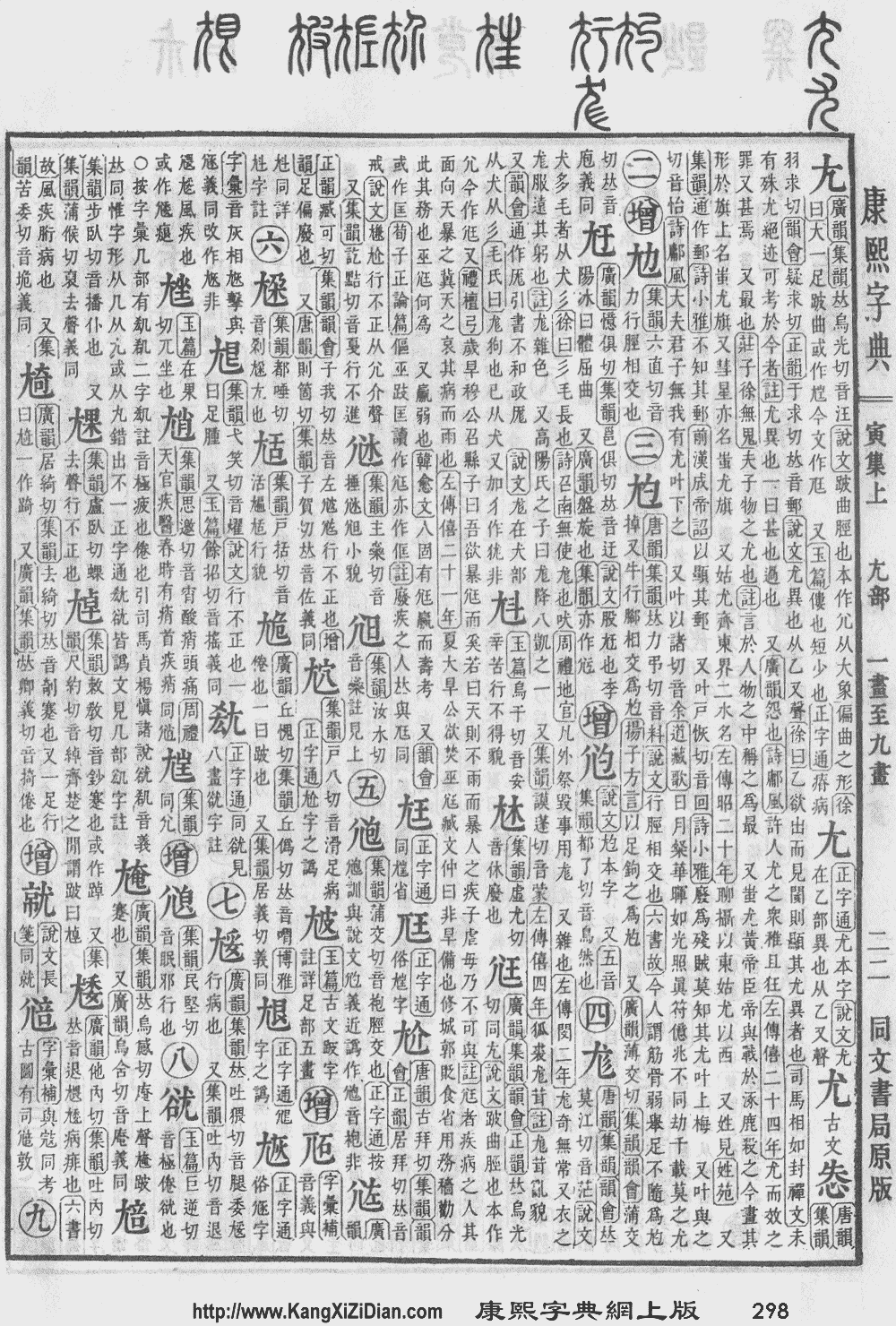
尬

尬 U+5C2C, 尬
CJK UNIFIED IDEOGRAPH-5C2C
← 尫
[U+5C2B]
CJK Unified Ideographs 尭 →
[U+5C2D]

Translingual

Han character

尬 (Kangxi radical 43, 尢+4, 7 strokes, cangjie input 大山人中中 (KUOLL), four-corner 48012, composition ⿺尢介)

References

  • KangXi: page 298, character 15
  • Dai Kanwa Jiten: character 7560
  • Dae Jaweon: page 593, character 18
  • Hanyu Da Zidian (first edition): volume 1, page 553, character 10
  • Unihan data for U+5C2C

Chinese

simp. and trad.
尬
alternative forms 魀

Glyph origin

Phono-semantic compound (形聲, OC *kreːds) : semantic 尢 + phonetic 介 (OC *kreːds).

Pronunciation


Rime
Character 尬
Reading # 1/1
Initial (聲) 見 (28)
Final (韻) 皆 (33)
Tone (調) Departing (H)
Openness (開合) Open
Division (等) II
Fanqie 古拜切
Reconstructions
Zhengzhang
Shangfang
/kˠɛiH/
Pan
Wuyun
/kᵚæiH/
Shao
Rongfen
/kɐiH/
Edwin
Pulleyblank
/kəɨjH/
Li
Rong
/kɛiH/
Wang
Li
/kɐiH/
Bernard
Karlgren
/kăiH/
Expected
Mandarin
Reflex
jiè
Expected
Cantonese
Reflex
gaai3
Zhengzhang system (2003)
Character 尬
Reading # 1/1
No. 6523
Phonetic
component
介
Rime
group
祭
Rime
subdivision
2
Corresponding
MC rime
誡
Old
Chinese
/*kreːds/

Definitions

尬

  1. Used in 尷尬/尴尬 (gāngà).
  2. (neologism, Mainland China, Taiwan, slang) Short for 尷尬/尴尬 (gāngà). [since 2010s]

Compounds

Etymology 2

Borrowed from Min Nan 較/较.

Pronunciation


Definitions

尬

  1. (neologism) to compete
Compounds
  • 尬酒

Japanese

Kanji

尬

(uncommon “Hyōgai” kanji)

  1. This term needs a translation to English. Please help out and add a translation, then remove the text {{rfdef}}.

Readings

  • On (unclassified): かい (kai), かつ (katsu), けち (kechi)
  • Kun: あしなえ (ashinae)

Vietnamese

Han character

尬: Hán Nôm readings: giới

  1. This term needs a translation to English. Please help out and add a translation, then remove the text {{rfdef}}.
This article is issued from Wiktionary. The text is licensed under Creative Commons - Attribution - Sharealike. Additional terms may apply for the media files.