屺
See also: 𡴾
| ||||||||
Translingual
Han character
屺 (Kangxi radical 46, 山+3, 6 strokes, cangjie input 山尸山 (USU) or X山尸山 (XUSU), four-corner 27717, composition ⿰山己)
References
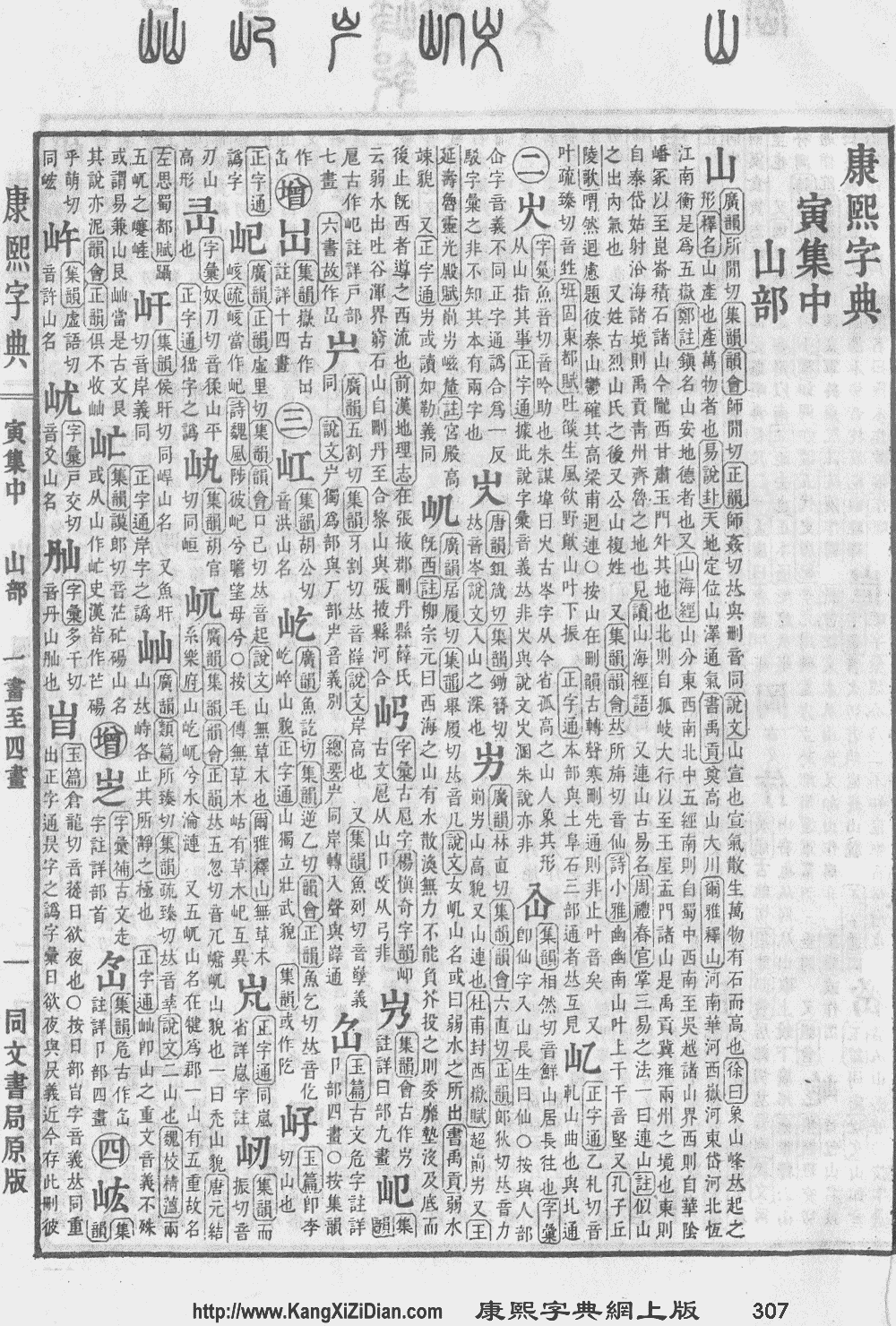
- KangXi: not present, would follow page 307, character 27
- Dai Kanwa Jiten: character 7891
- Dae Jaweon: page 607, character 15
- Hanyu Da Zidian (first edition): volume 1, page 761, character 22
- Unihan data for U+5C7A
Chinese
| trad. | 屺 | |
|---|---|---|
| simp. # | 屺 | |
| alternative forms | 𡴾 | |
Glyph origin
Characters in the same phonetic series (己) (Zhengzhang, 2003)
Phono-semantic compound (形聲, OC *kʰɯʔ) : semantic 山 (“mountain; hill”) + phonetic 己 (OC *kɯʔ).
Etymology
(This etymology is missing or incomplete. Please add to it, or discuss it at the Etymology scriptorium.)
Pronunciation
Definitions
屺
- † hill without vegetation
- 陟彼屺兮,瞻望母兮。 [Pre-Classical Chinese, trad. and simp.]
- From: The Classic of Poetry, c. 11th – 7th centuries BCE, translated based on James Legge's version
- Zhì bǐ qǐ xī, zhānwàng mǔ xī. [Pinyin]
- I ascend that bare hill,
And look towards [the residence of] my mother.
Compounds
|
|
Japanese
Kanji
屺
- This term needs a translation to English. Please help out and add a translation, then remove the text
{{rfdef}}.
Korean
This article is issued from Wiktionary. The text is licensed under Creative Commons - Attribution - Sharealike. Additional terms may apply for the media files.