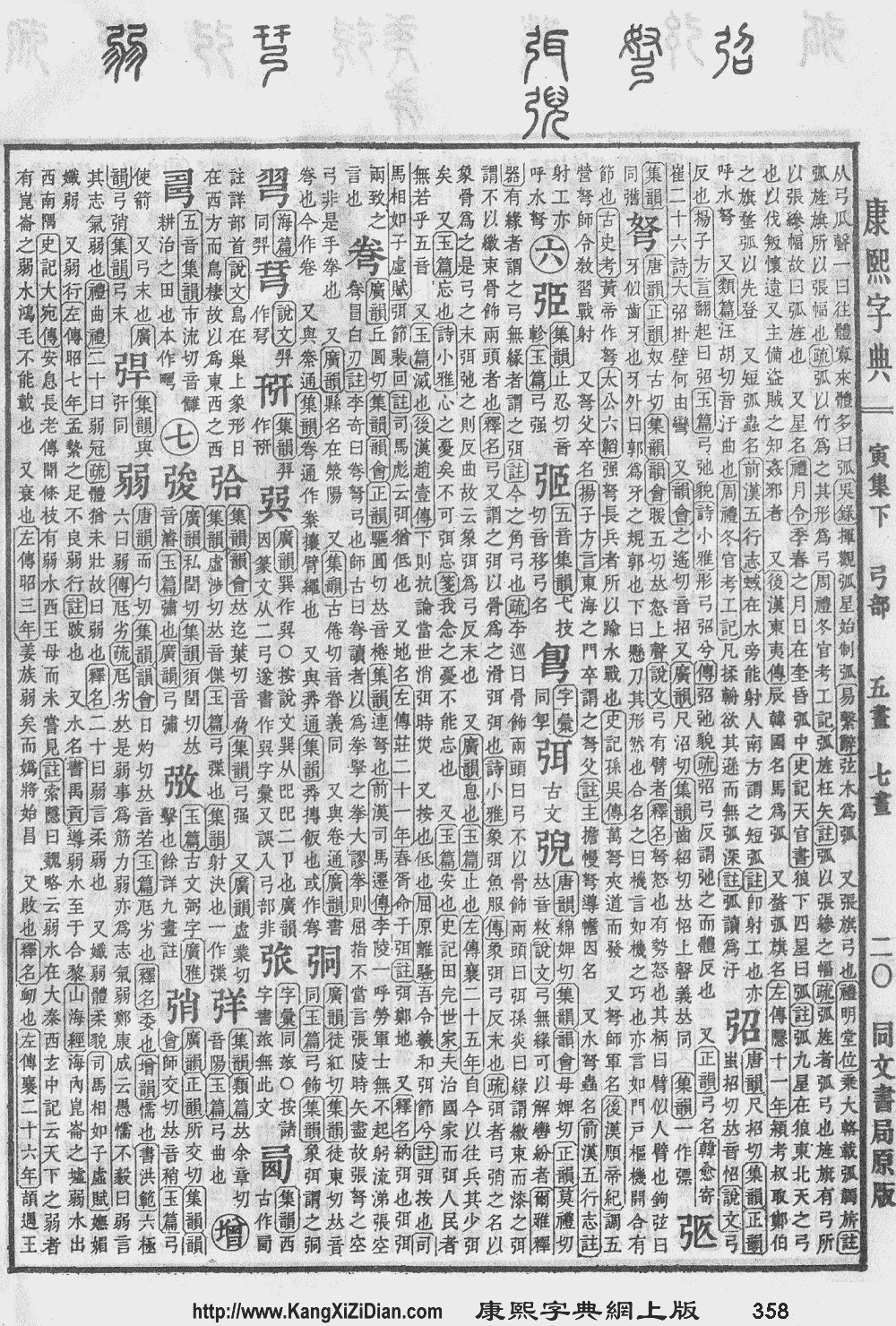
弭

弭 U+5F2D, 弭
CJK UNIFIED IDEOGRAPH-5F2D
← 弬
[U+5F2C]
CJK Unified Ideographs 弮 →
[U+5F2E]

Translingual

Han character

弭 (Kangxi radical 57, 弓+6, 9 strokes, cangjie input 弓尸十 (NSJ), four-corner 11240, composition ⿰弓耳)

  1. stop, desist, end, quell

References

Chinese

trad. 弭
simp. # 弭
alternative forms 彌/弥

Glyph origin

Pronunciation


Rime
Character 弭
Reading # 1/1
Initial (聲) 明 (4)
Final (韻) 支 (11)
Tone (調) Rising (X)
Openness (開合) Open
Division (等) III
Fanqie 綿婢切
Reconstructions
Zhengzhang
Shangfang
/miᴇX/
Pan
Wuyun
/miɛX/
Shao
Rongfen
/mjɛX/
Edwin
Pulleyblank
/miə̆X/
Li
Rong
/mieX/
Wang
Li
/mǐeX/
Bernard
Karlgren
/mie̯X/
Expected
Mandarin
Reflex
mǐ
Expected
Cantonese
Reflex
mei5
Baxter–Sagart system 1.1 (2014)
Character 弭
Reading # 1/1
Modern
Beijing
(Pinyin)
mǐ
Middle
Chinese
‹ mjieX ›
Old
Chinese
/*[m-ŋ]e(j)ʔ/
English bow decorated with bone or ivory ends

Notes for Old Chinese notations in the Baxter–Sagart system:

* Parentheses "()" indicate uncertain presence;
* Square brackets "[]" indicate uncertain identity, e.g. *[t] as coda may in fact be *-t or *-p;
* Angle brackets "<>" indicate infix;
* Hyphen "-" indicates morpheme boundary;

* Period "." indicates syllable boundary.
Zhengzhang system (2003)
Character 弭
Reading # 1/1
No. 2775
Phonetic
component
耳
Rime
group
脂
Rime
subdivision
2
Corresponding
MC rime
渳
Old
Chinese
/*mniʔ/

Definitions

弭

  1. (literary) to stop; to put an end to; to remove
  2. (archaic) bow decorated with bone or ivory at the ends
  3. (archaic) curved ends of a bow
  4. (archaic) to reassure; to assuage; to calm
  5. (archaic) to forget
  6. Used in place names.
  7. a surname

Compounds

  • 弭棹
  • 弭亂/弭乱
  • 弭兵之會/弭兵之会
  • 弭從/弭从
  • 弭患無形/弭患无形
  • 弭盜安民/弭盗安民
  • 弭節/弭节
  • 弭節徘徊/弭节徘徊
  • 弭謗/弭谤

Japanese

Kanji

弭

(uncommon “Hyōgai” kanji)

  1. stop, quit
  2. nock, notch

Readings

  • On (unclassified): び (bi); み (mi)
  • Kun: やはず (yahazu, 弭); はず (hazu, 弭)

Etymology

Kanji in this term
弭
はず
Hyōgaiji
kun’yomi
For pronunciation and definitions of 弭 – see the following entry.
【はず】
[noun] nock; the grooves that hold a bowstring on a bow, the notch that holds an arrow to the bowstring
[noun] (sumo) a nock-shaped grip used in はず押(お)し (hazu oshi)
[noun] as things should be; what is expected; should be so; must be; bound to be; expected to be
Alternative spellings
筈, 弭
(This term, 弭, is an alternative spelling of the above term.)

Korean

Hanja

弭 (eum 미 (mi))

  1. This term needs a translation to English. Please help out and add a translation, then remove the text {{rfdef}}.

Vietnamese

Han character

弭: Hán Nôm readings: nhẹ, nhĩ, nhị

  1. This term needs a translation to English. Please help out and add a translation, then remove the text {{rfdef}}.
This article is issued from Wiktionary. The text is licensed under Creative Commons - Attribution - Sharealike. Additional terms may apply for the media files.