强
| ||||||||
Translingual
| Stroke order | |||
|---|---|---|---|
 | |||
| Japanese | 強 |
|---|---|
| Simplified | 强 |
| Traditional | 強 |
Han character
强 (Kangxi radical 57, 弓+9, 12 strokes, cangjie input 弓口中戈 (NRLI), four-corner 16236, composition ⿰弓虽)
Derived characters
- 𠎦, 𫮬, 𫗳, 䃨, 镪, 繦(𫄶)
- 膙, 糨, 襁, 鏹, 嵹, 犟, 謽 (Exception: Contains 强 in mainland China and South Korea. Contains 強 in other regions)
- 𠼢, 𡠤, 摾, 漒, 𩝽, 蔃, 勥, 𡠥 (Exception: Contains 强 in mainland China. Contains 強 in other regions)
- 𣚦 (Exception: Contains 强 in mainland China and Taiwan. Contains 強 in Hong Kong instead)
Related characters
- 強 (Orthodox form in Traditional Chinese)
Further reading
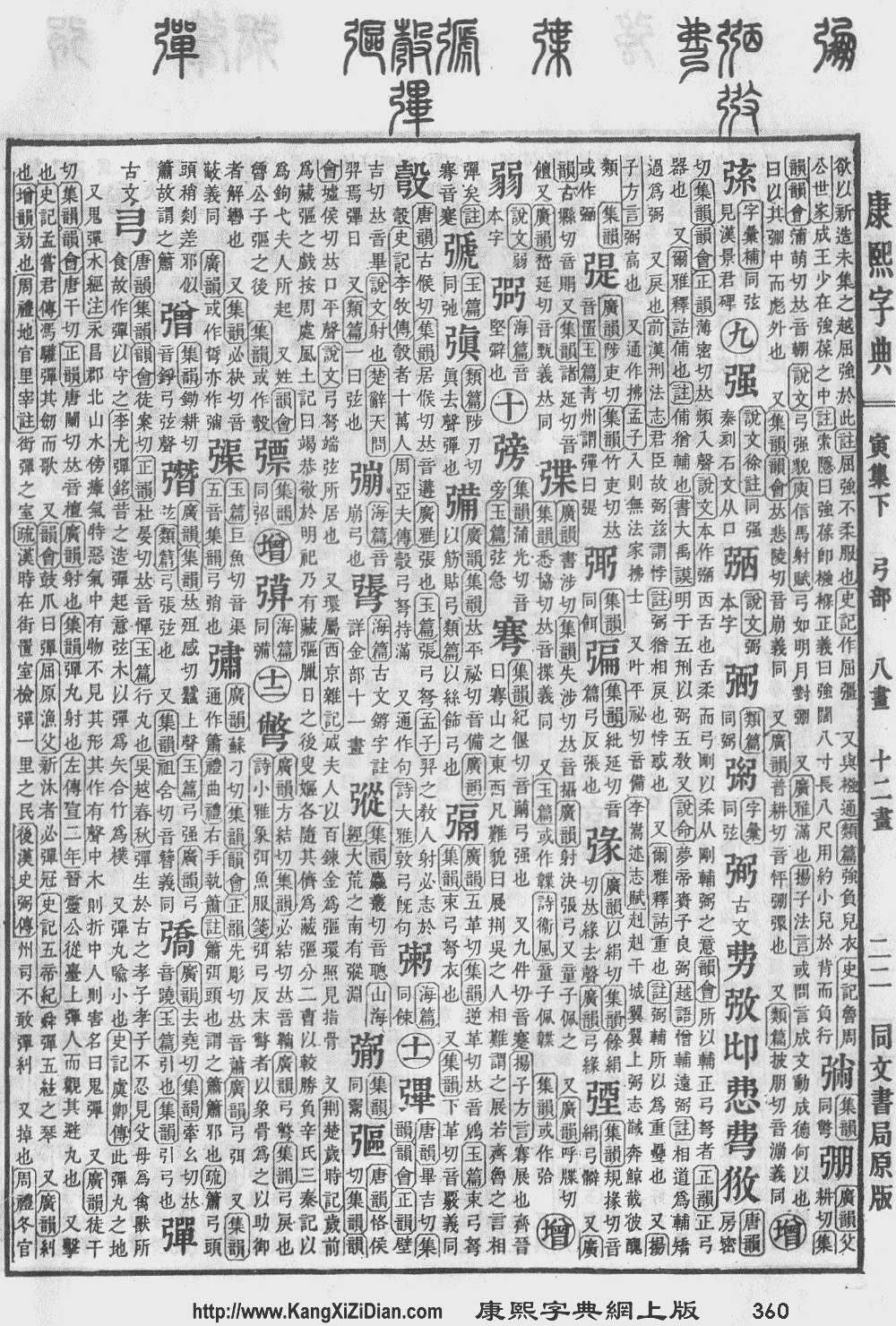
- KangXi: page 360, character 4
- Dai Kanwa Jiten: character 9822
- Dae Jaweon: page 676, character 8
- Hanyu Da Zidian (first edition): volume 2, page 999, character 15
- Unihan data for U+5F3A
Chinese
Glyph origin
Variant form of 強. Attested since Qin dynasty.
Definitions
| For pronunciation and definitions of 强 – see 強 (“strong; powerful; energetic; to strengthen; etc.”). (This character, 强, is the simplified and variant traditional form of 強.) |
Notes:
|
Japanese
Readings
Korean
References
- Supreme Court of the Republic of Korea (대한민국 대법원, Daehanmin'guk Daebeobwon) (2018). Table of hanja for personal names (인명용 한자표 / 人名用漢字表, Inmyeong-yong hanja-pyo), page 1.
Vietnamese
Han character
强: Hán Việt readings: cường (
强: Nôm readings: gượng[3][4][1][2], càng[3][4][1], cường[3][4][1], cưỡng[3][4][1], ngượng[3][1]
References
- Trần (2004).
- Bonet (1899).
- Nguyễn (2014).
- Nguyễn et al. (2009).
This article is issued from Wiktionary. The text is licensed under Creative Commons - Attribution - Sharealike. Additional terms may apply for the media files.