挙
| ||||||||
Translingual
| Traditional | 舉 |
|---|---|
| Simplified | 举 |
| Japanese | 挙 |
| Korean | 擧 |
Han character
挙 (Kangxi radical 64, 手+6, 10 strokes, cangjie input 火金手 (FCQ) or X火金手 (XFCQ), four-corner 90502, composition ⿱兴手)
Derived characters
- 﨔, 𧜎
Related characters
- 擧 (Kyūjitai form of 挙. Preferred form in Korean hanja, and variant traditional form of 舉 in modern Chinese. Orthodox form found in Kangxi dictionary)
- 舉 (Preferred form used for traditional Chinese)
- 举 (Simplified form of 舉 in mainland China)
References
- KangXi: not present, would follow page 431, character 17
- Dai Kanwa Jiten: character 12081
- Dae Jaweon: page 780, character 23
- Hanyu Da Zidian (first edition): not present, would follow volume 3, page 1864, character 8
- Unihan data for U+6319
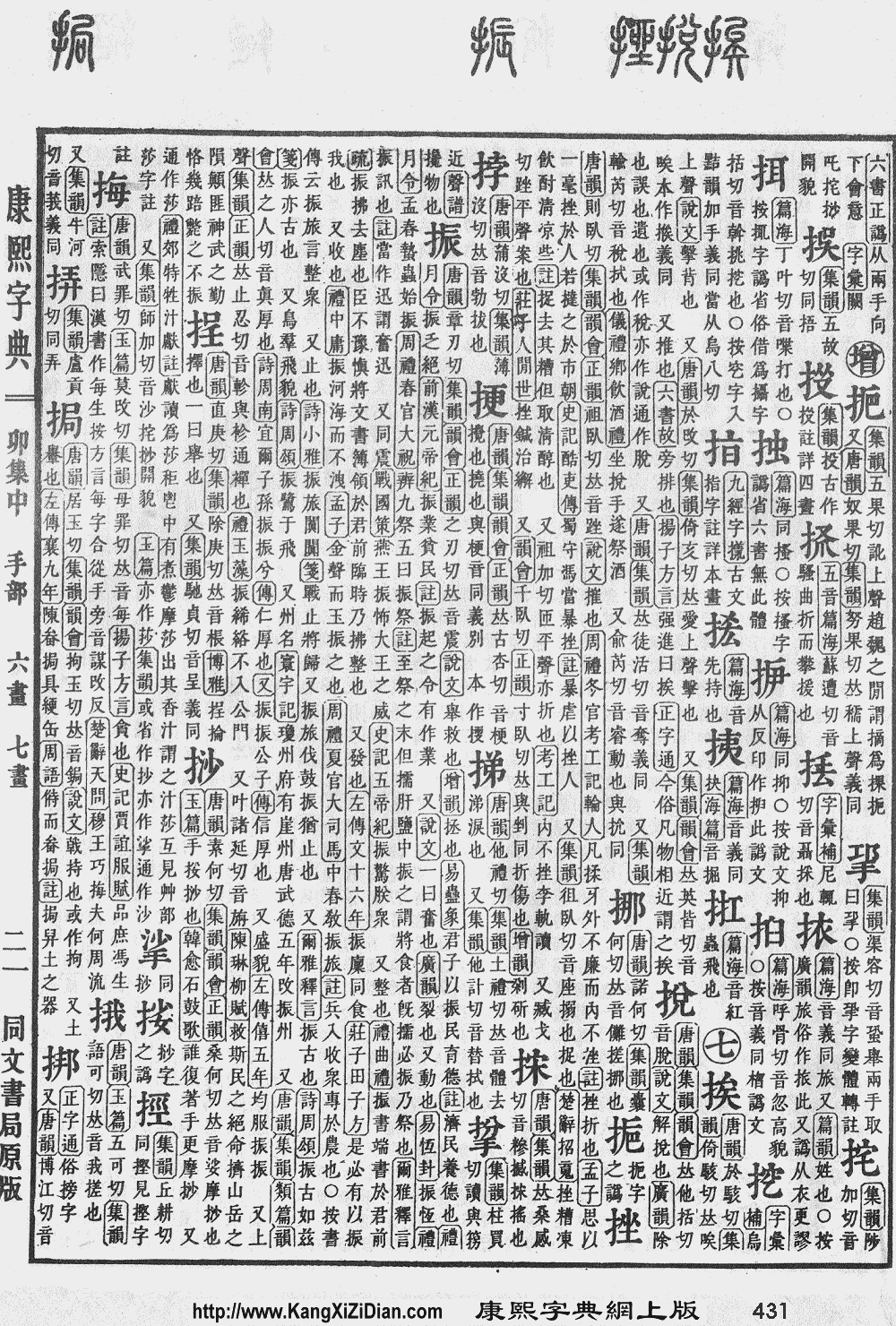
Chinese
Glyph origin
Found in Zhongwen Da Cidian 《中文大辭典》, a dictionary published in Taiwan from 1962 to 1968 that is based on the Japanese Dai Kan-Wa Jiten.
This article is issued from Wiktionary. The text is licensed under Creative Commons - Attribution - Sharealike. Additional terms may apply for the media files.