斉
| ||||||||
| ||||||||
Translingual
| Traditional | 齊 |
|---|---|
| Shinjitai | 斉 |
| Simplified | 齐 |
Han character
斉 (Kangxi radical 210, 斉+0, 8 strokes, cangjie input 卜大尸中 (YKSL), composition ⿵齐二)
See also
References
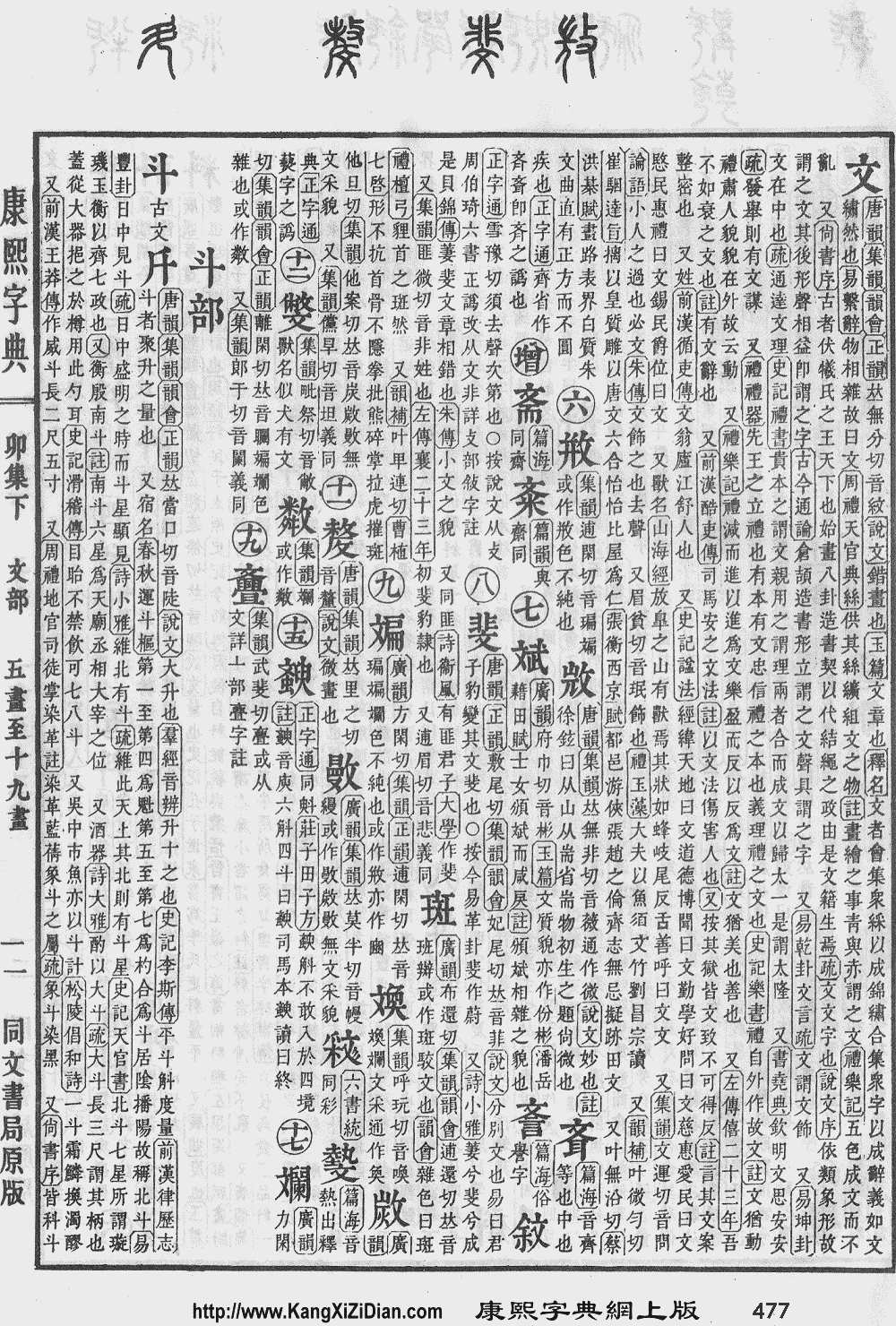
- KangXi: not present, would follow page 477, character 1
- Dai Kanwa Jiten: character 13454
- Dae Jaweon: page 834, character 5
- Hanyu Da Zidian (first edition): volume 3, page 2170, character 4
- Unihan data for U+6589
Chinese
Definitions
| For pronunciation and definitions of 斉 – see 齊 (“even; uniform; of equal length; same; identical; etc.”). (This character, 斉, is the former (1935–1936) ROC simplified and variant form of 齊.) |
Notes:
|
Japanese
| 斉 | |
| 齊 |
Readings
From Middle Chinese 齊 (MC d͡zei); compare Mandarin 齊/齐 (qí):
From Middle Chinese 齊 (MC d͡zeiH); compare Mandarin 齊/齐 (jì):
From Middle Chinese 齊 (MC t͡ʃˠɛi); compare Mandarin 齊/齐 (zhāi):
From Middle Chinese; compare Mandarin 齊/齐 (zī):
From native Japanese roots:
- Kun: そろう (sorō, 斉う)←そろふ (sorofu, 斉ふ, historical); そろえる (soroeru, 斉える)←そろへる (soroferu, 斉へる, historical); ととのう (totonō, 斉う)←ととのふ (totonofu, 斉ふ, historical); ととのえる (totonoeru, 斉える)←ととのへる (totonoferu, 斉へる, historical); ひとしい (hitoshii, 斉しい)
- Nanori: きよ (kiyo); ただ (tada); ただし (tadashi); とき (toki); とし (toshi); なお (nao)←なほ (nafo, historical); なり (nari); ひとし (hitoshi); まさ (masa); むね (mune); よし (yoshi)
Compounds
Etymology
| Kanji in this term |
|---|
| 斉 |
| せい Grade: S |
| kan’on |
| Alternative spelling |
|---|
| 齊 (kyūjitai) |
From Middle Chinese 齊 (MC d͡zei).
This article is issued from Wiktionary. The text is licensed under Creative Commons - Attribution - Sharealike. Additional terms may apply for the media files.