旄

旄 U+65C4, 旄
CJK UNIFIED IDEOGRAPH-65C4
← 旃
[U+65C3]
CJK Unified Ideographs 旅 →
[U+65C5]

Translingual

Han character

旄 (Kangxi radical 70, 方+6, 10 strokes, cangjie input 卜尸人竹山 (YSOHU), four-corner 08214, composition ⿸𭤨毛)

  1. a kind of ancient flag decorated with yak tails
  2. old

References

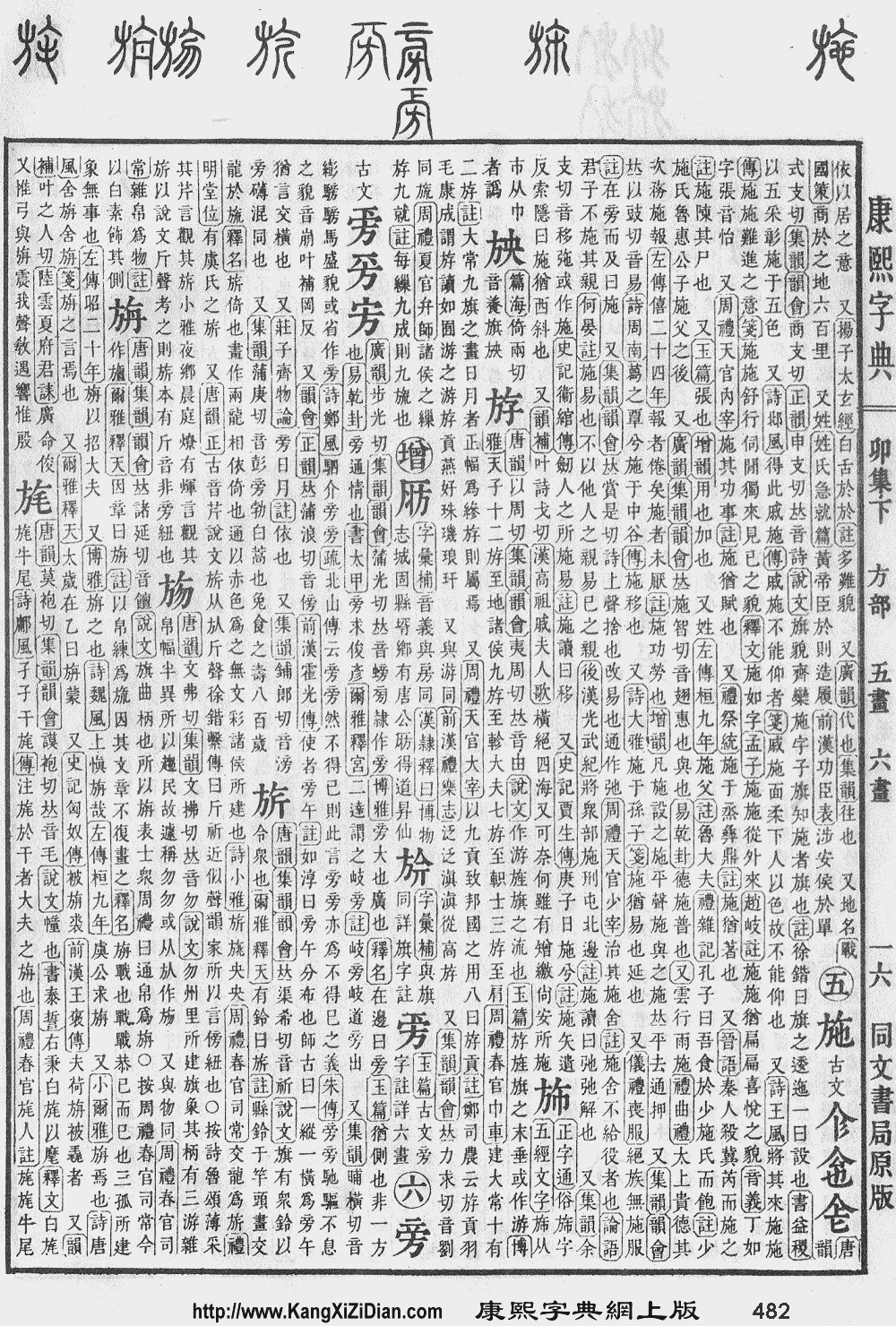
  • KangXi: page 482, character 18
  • Dai Kanwa Jiten: character 13642
  • Dae Jaweon: page 844, character 12
  • Hanyu Da Zidian (first edition): volume 3, page 2177, character 6
  • Unihan data for U+65C4

Chinese

simp. and trad.
旄

Glyph origin

Phono-semantic compound (形聲, OC *maːw, *maːws) : semantic 㫃 + phonetic 毛 (OC *maːw, *maːws)

Pronunciation 1


Rime
Character 旄 旄
Reading # 1/2 2/2
Initial (聲) 明 (4) 明 (4)
Final (韻) 豪 (89) 豪 (89)
Tone (調) Level (Ø) Departing (H)
Openness (開合) Open Open
Division (等) I I
Fanqie 莫袍切 莫報切
Reconstructions
Zhengzhang
Shangfang
/mɑu/ /mɑuH/
Pan
Wuyun
/mɑu/ /mɑuH/
Shao
Rongfen
/mɑu/ /mɑuH/
Edwin
Pulleyblank
/maw/ /mawH/
Li
Rong
/mɑu/ /mɑuH/
Wang
Li
/mɑu/ /mɑuH/
Bernard
Karlgren
/mɑu/ /mɑuH/
Expected
Mandarin
Reflex
máo mào
Expected
Cantonese
Reflex
mou4 mou6
Baxter–Sagart system 1.1 (2014)
Character 旄
Reading # 1/1
Modern
Beijing
(Pinyin)
máo
Middle
Chinese
‹ maw ›
Old
Chinese
/*mˁaw/
English ox-tail pennon

Notes for Old Chinese notations in the Baxter–Sagart system:

* Parentheses "()" indicate uncertain presence;
* Square brackets "[]" indicate uncertain identity, e.g. *[t] as coda may in fact be *-t or *-p;
* Angle brackets "<>" indicate infix;
* Hyphen "-" indicates morpheme boundary;

* Period "." indicates syllable boundary.
Zhengzhang system (2003)
Character 旄 旄
Reading # 1/2 2/2
No. 8782 8789
Phonetic
component
毛 毛
Rime
group
宵 宵
Rime
subdivision
1 1
Corresponding
MC rime
毛 冃
Old
Chinese
/*maːw/ /*maːws/

Definitions

旄

  1. a kind of ancient flag decorated with yak tails

Compounds

  • 旄丘
  • 旄倪
  • 旄牛
  • 旌旄
  • 白旄 (báimáo)
  • 羽旄
  • 干旄
  • 擁旄/拥旄
  • 旄鉞/旄钺
  • 旄頭/旄头

Pronunciation 2

For pronunciation and definitions of 旄 – see 耄 (“very old; senile; befuddled; confused”).
(This character, 旄, is an ancient form of 耄.)

References

Japanese

Kanji

旄

(uncommon “Hyōgai” kanji)

  1. pennant/banner with a long-haired yak tail attached
  2. yak tail
  3. yak

Readings

  • Go-on: もう (mō)
  • Kan-on: ぼう (bō)
  • Kun: はたかざり (hatakazari), おいぼれ (oibore)

Korean

Hanja

旄 • (mo) (hangeul 모, revised mo, McCune–Reischauer mo, Yale mo)

  1. This term needs a translation to English. Please help out and add a translation, then remove the text {{rfdef}}.

Vietnamese

Han character

旄: Hán Nôm readings: mao

  1. This term needs a translation to English. Please help out and add a translation, then remove the text {{rfdef}}.

References

This article is issued from Wiktionary. The text is licensed under Creative Commons - Attribution - Sharealike. Additional terms may apply for the media files.