芼
| ||||||||
Translingual
Han character
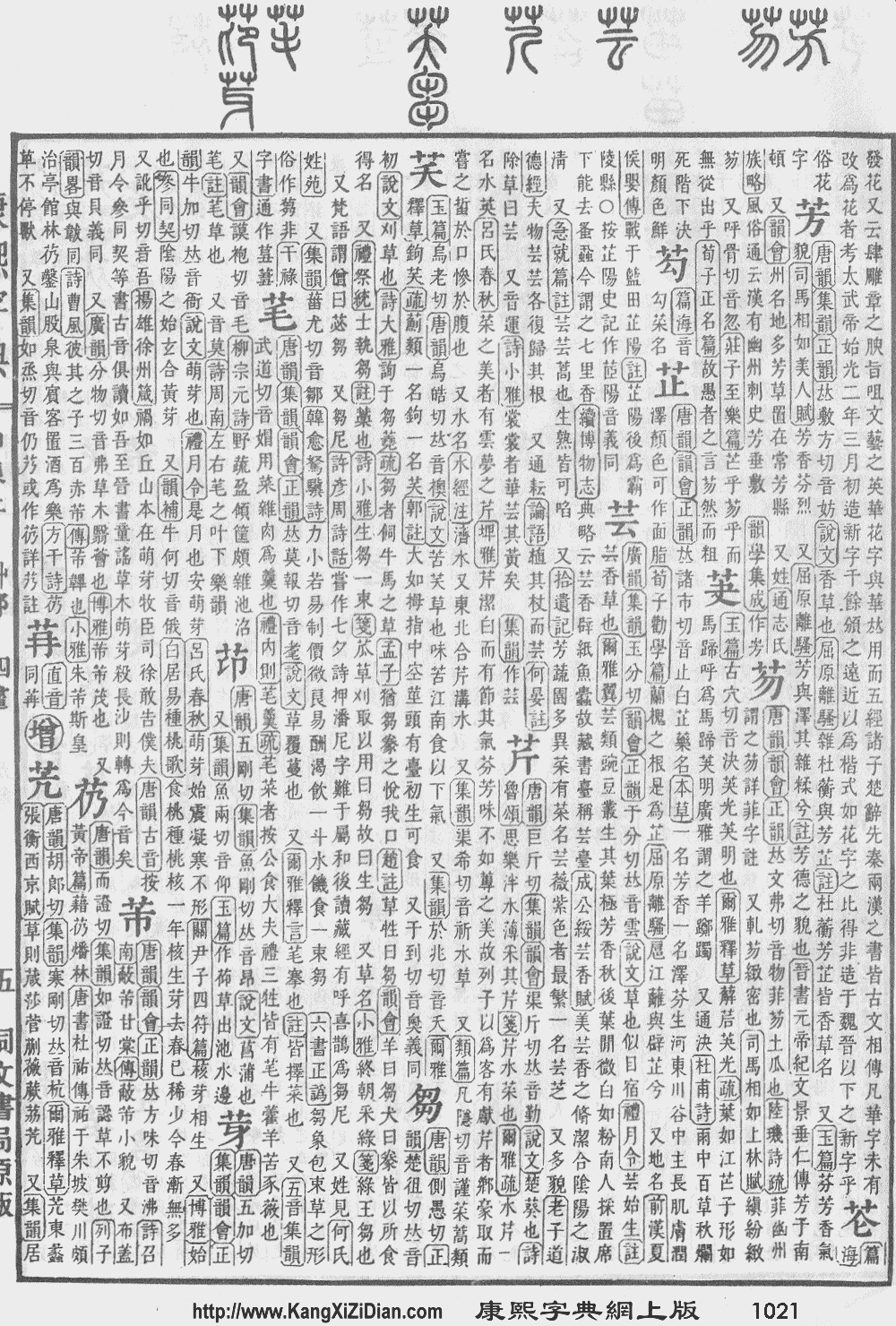
芼 (Kangxi radical 140, 艸+4, 10 strokes, cangjie input 廿竹手山 (THQU), four-corner 44714, composition ⿱艹毛)
References
- KangXi: page 1021, character 11
- Dai Kanwa Jiten: character 30745
- Dae Jaweon: page 1480, character 10
- Hanyu Da Zidian (first edition): volume 5, page 3181, character 2
- Unihan data for U+82BC
Chinese
| trad. | 芼 | |
|---|---|---|
| simp. # | 芼 | |
Glyph origin
Characters in the same phonetic series (毛) (Zhengzhang, 2003)
Phono-semantic compound (形聲, OC *maːw, *maːws) : semantic 艸 (“grass”) + phonetic 毛 (OC *maːw, *maːws)
Pronunciation
Definitions
芼
- (obsolete) to cook and present
- 參差荇菜、左右芼之。 [Pre-Classical Chinese, trad.]
- From: The Classic of Poetry, c. 11th – 7th centuries BCE, translated based on James Legge's version
- Cēncī xìngcài, zuǒyòu mào zhī. [Pinyin]
- Here long, there short, is the duckweed; On the left, on the right, we cook and present it.
参差荇菜、左右芼之。 [Pre-Classical Chinese, simp.]
- to choose
- to select
- greens
Japanese
Kanji
芼
- This term needs a translation to English. Please help out and add a translation, then remove the text
{{rfdef}}.
Korean
Hanja
芼 (eum 모 (mo))
- This term needs a translation to English. Please help out and add a translation, then remove the text
{{rfdef}}.
This article is issued from Wiktionary. The text is licensed under Creative Commons - Attribution - Sharealike. Additional terms may apply for the media files.