暜
| ||||||||
| ||||||||
Translingual
Alternative forms
A CJK compatibility ideograph (U+2F8D5) exists with 曰 as the bottom component instead of 日.
Han character
暜 (Kangxi radical 72, 日+10, 14 strokes, cangjie input X卜廿日 (XYTA) or 卜廿日 (YTA), composition ⿱竝日 or ⿱竝曰)
Derived characters
- 𧭘/譜, 普 (and its derived characters), 替 (and its derived characters)
References
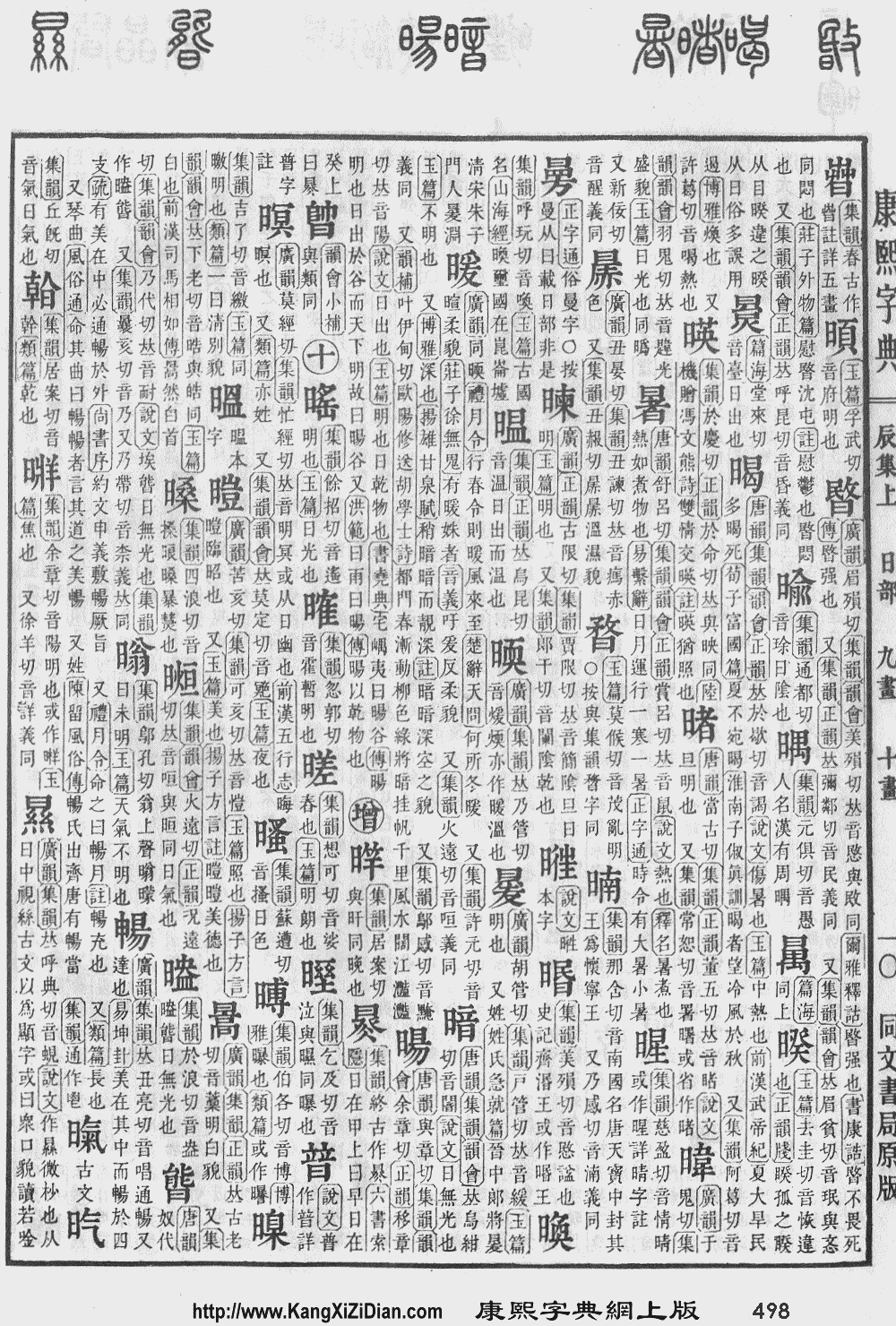
- KangXi: page 498, character 36
- Dai Kanwa Jiten: character 14082
- Hanyu Da Zidian (first edition): volume 2, page 1530, character 18
- Unihan data for U+669C
- Unihan data for U+2F8D5
Chinese
Glyph origin
Etymology 1
| For pronunciation and definitions of 暜 – see 替 (“to substitute for; to displace; for; in place of; etc.”). (This character, 暜, is an ancient form of 替.) |
Etymology 2
| For pronunciation and definitions of 暜 – see 普 (“lustreless; universal; general; widespread; etc.”). (This character, 暜, is an ancient form of 普.) |
Usage notes
Note that etymology 1 applies to the character with 曰 (U+2F8D5) as the bottom component while etymology 2 applies to the character with 日 (U+669C) as the bottom component. When regular script (楷書) became the more prominent style in Chinese calligraphy, the component 竝 in 暜 was simplified to make 替 and 普, respectively, to avoid confusion between the two forms.
Japanese
Usage notes
This character was added to JIS X 0208 in 1990 but is scarcely used except in historical texts.
This article is issued from Wiktionary. The text is licensed under Creative Commons - Attribution - Sharealike. Additional terms may apply for the media files.