杭

杭 U+676D, 杭
CJK UNIFIED IDEOGRAPH-676D
← 杬
[U+676C]
CJK Unified Ideographs 杮 →
[U+676E]

Translingual

Han character

杭 (Kangxi radical 75, 木+4, 8 strokes, cangjie input 木卜竹弓 (DYHN), four-corner 40917, composition ⿰木亢)

References

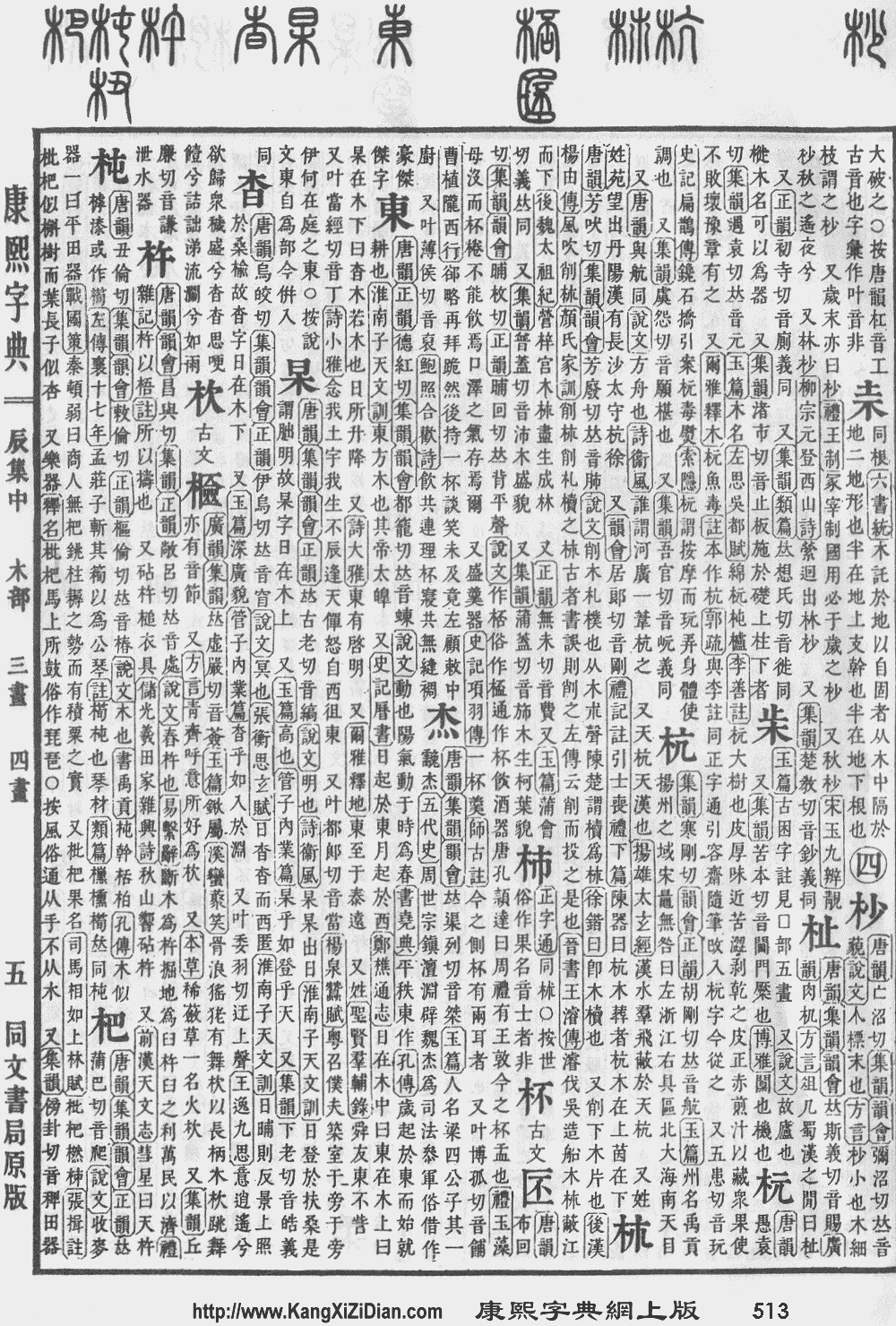
  • KangXi: page 513, character 6
  • Dai Kanwa Jiten: character 14494
  • Dae Jaweon: page 898, character 13
  • Hanyu Da Zidian (first edition): volume 2, page 1174, character 3
  • Unihan data for U+676D

Chinese

simp. and trad.
杭

Glyph origin

Phono-semantic compound (形聲, OC *ɡaːŋ) : semantic 木 (“wood”) + phonetic 亢 (OC *kaːŋ, *kʰaːŋs).

Originally a variant of 抗 (OC *kʰaːŋs, *ɡaːŋ, “to fight against”).

Pronunciation 1


Rime
Character 杭
Reading # 1/1
Initial (聲) 匣 (33)
Final (韻) 唐 (101)
Tone (調) Level (Ø)
Openness (開合) Open
Division (等) I
Fanqie 胡郎切
Reconstructions
Zhengzhang
Shangfang
/ɦɑŋ/
Pan
Wuyun
/ɦɑŋ/
Shao
Rongfen
/ɣɑŋ/
Edwin
Pulleyblank
/ɦaŋ/
Li
Rong
/ɣɑŋ/
Wang
Li
/ɣɑŋ/
Bernard
Karlgren
/ɣɑŋ/
Expected
Mandarin
Reflex
háng
Expected
Cantonese
Reflex
hong4
Baxter–Sagart system 1.1 (2014)
Character 杭
Reading # 1/1
Modern
Beijing
(Pinyin)
háng
Middle
Chinese
‹ hang ›
Old
Chinese
/*[m]-[ɡ]ˁaŋ/
English to go by boat

Notes for Old Chinese notations in the Baxter–Sagart system:

* Parentheses "()" indicate uncertain presence;
* Square brackets "[]" indicate uncertain identity, e.g. *[t] as coda may in fact be *-t or *-p;
* Angle brackets "<>" indicate infix;
* Hyphen "-" indicates morpheme boundary;

* Period "." indicates syllable boundary.
Zhengzhang system (2003)
Character 杭
Reading # 1/1
No. 7383
Phonetic
component
亢
Rime
group
陽
Rime
subdivision
0
Corresponding
MC rime
航
Old
Chinese
/*ɡaːŋ/

Definitions

杭

  1. † Alternative form of 航 (háng, “boat; ship”).
  2. † Alternative form of 航 (háng, “to cross a stream; to ferry”).
  3. † Alternative form of 航 (háng, “to sail; to navigate”).
  4. (dialectal) suddenly; all of a sudden
  5. Short for 杭州 (Hángzhōu, “Hangzhou”).
  6. a surname

Compounds

Pronunciation 2


Definitions

杭

  1. † Alternative form of 康 (kāng, “broad road”).
    杭莊/杭庄  ―  kāngzhuāng  ―  broad road

Pronunciation 3


Definitions

杭

  1. † Alternative form of 抗 (kàng, “to resist; to fight”).
  2. † Alternative form of 抗 (kàng, “to raise; to lift up”).
  3. † Alternative form of 抗 (kàng, “high”).

Japanese

Kanji

杭

(“Jinmeiyō” kanji used for names)

  1. stake, picket
  2. stump

Readings

Etymology 1

Kanji in this term
杭
くい
Jinmeiyō
kun’yomi
For pronunciation and definitions of 杭 – see the following entry.
【くい】
[noun] stake, pile, post
Alternative spellings
杭, 杙, 株
(This term, 杭, is an alternative spelling of the above term.)

Etymology 2

Kanji in this term
杭
くいぜ
Jinmeiyō
kun’yomi
For pronunciation and definitions of 杭 – see the following entry.
【くいぜ】
[noun] stump
Alternative spellings
杭, 杙, 株
(This term, 杭, is an alternative spelling of the above term.)

Korean

Hanja

杭 • (hang) (hangeul 항, revised hang, McCune–Reischauer hang, Yale hang)

  1. This term needs a translation to English. Please help out and add a translation, then remove the text {{rfdef}}.

Tày

Noun

杭 (transliteration needed)

  1. Nôm form of kháng (“ginger, galangal”).

Vietnamese

Han character

杭: Hán Nôm readings: cáng, hàng, khiêng

  1. This term needs a translation to English. Please help out and add a translation, then remove the text {{rfdef}}.
This article is issued from Wiktionary. The text is licensed under Creative Commons - Attribution - Sharealike. Additional terms may apply for the media files.