株
| ||||||||
| ||||||||
Translingual
| Stroke order | |||
 | |||
Han character
株 (Kangxi radical 75, 木+6, 10 strokes, cangjie input 木竹十木 (DHJD), four-corner 45990, composition ⿰木朱)
References
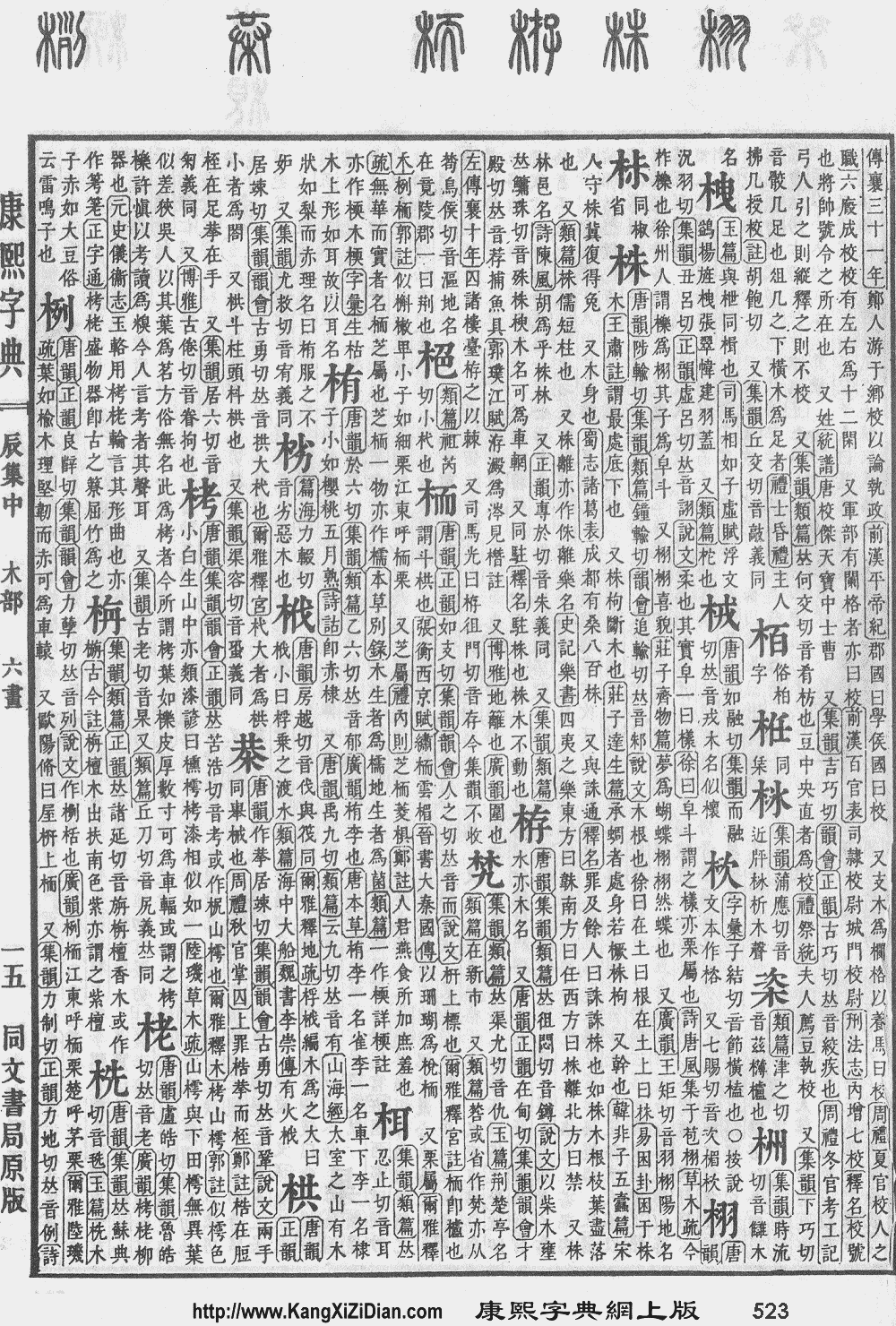
- KangXi: page 523, character 11
- Dai Kanwa Jiten: character 14723
- Dae Jaweon: page 911, character 9
- Hanyu Da Zidian (first edition): volume 2, page 1199, character 10
- Unihan data for U+682A
Chinese
| simp. and trad. |
株 | |
|---|---|---|
Glyph origin
Characters in the same phonetic series (朱) (Zhengzhang, 2003)
Phono-semantic compound (形聲, OC *to) : semantic 木 (“tree”) + phonetic 朱 (OC *tjo).
Etymology
Perhaps Austroasiatic; compare Proto-Mon-Khmer *ɟhooʔ (“tree; wood”), whence Mon ဆု (Schuessler, 2007).
Pronunciation
Definitions
株
- tree stump
- 守株待兔 ― shǒuzhūdàitù ― (literally) to watch a tree stump waiting for a rabbit
- plant
- Classifier for plants. ⇒ all nouns using this classifier
- 千株老柏,萬節修篁。 [Written Vernacular Chinese, trad.]
- From: Wu Cheng'en, Journey to the West, 16th century CE
- Qiān zhū lǎo bǎi, wàn jié xiū huáng. [Pinyin]
- A thousand stalks of old cypress, ten thousand stems of tall bamboo.
千株老柏,万节修篁。 [Written Vernacular Chinese, simp.]
- Classifier for viruses.
- root
Synonyms
- (plant):
- (classifier for plants):
Dialectal synonyms of 棵 (“(classifier for plants)”) [map]
Compounds
Derived terms from 株
Descendants
- → Proto-Tai: *toːᴬ
- Thai: ตอ (dtɔɔ)
Japanese
Readings
- Go-on: ちゅう (chū)←ちゆう (tyuu, historical)
- Kan-on: ちゅう (chū)←ちゆう (tyuu, historical)
- Kan’yō-on: しゅ (shu)←しゆ (syu, historical)
- Kun: かぶ (kabu, 株, Jōyō)
Etymology 1
| Kanji in this term |
|---|
| 株 |
| かぶ Grade: 6 |
| kun’yomi |
From Old Japanese, from Proto-Japonic *kampu. Cognate with Kunigami 株 (かぶー, khabū), Northern Amami-Oshima 株 (がぶ, gabu), Okinawan 株 (かぶ, kabu).
Noun
株 • (kabu)
Derived terms
Derived terms
- 岩株 (ganshu)
- 雌雄異株 (shiyūishu)
- 雌雄同株 (shiyūdōshu)
- 雌雄別株 (shiyūbesshu)
- 守株 (shushu)
- 株を削り根を掘る (shu o kezuri ne o horu)
Etymology 3
| Kanji in this term |
|---|
| 株 |
| くい Grade: 6 |
| kun’yomi |
| For pronunciation and definitions of 株 – see the following entry. | ||
| ||
| (This term, 株, is an alternative spelling of the above term.) |
Vietnamese
This article is issued from Wiktionary. The text is licensed under Creative Commons - Attribution - Sharealike. Additional terms may apply for the media files.