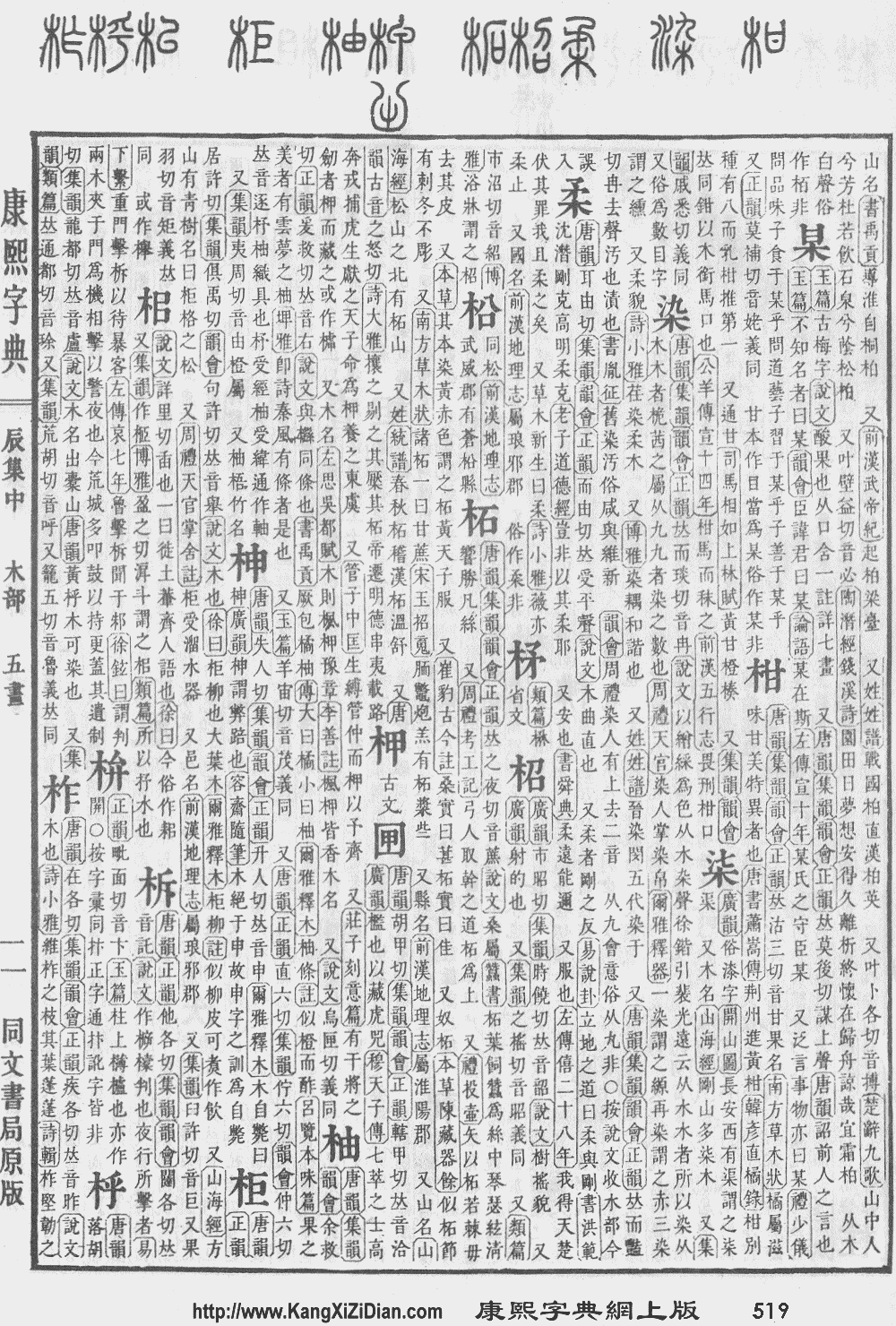
柘

柘 U+67D8, 柘
CJK UNIFIED IDEOGRAPH-67D8
← 柗
[U+67D7]
CJK Unified Ideographs 柙 →
[U+67D9]

Translingual

Han character

柘 (Kangxi radical 75, 木+5, 9 strokes, cangjie input 木一口 (DMR), four-corner 41960, composition ⿰木石)

References

  • KangXi: page 519, character 9
  • Dai Kanwa Jiten: character 14626
  • Dae Jaweon: page 907, character 7
  • Hanyu Da Zidian (first edition): volume 2, page 1180, character 2
  • Unihan data for U+67D8

Chinese

simp. and trad.
柘

Glyph origin

Historical forms of the character 柘
Warring States Shuowen Jiezi (compiled in Han)
Chu slip and silk script Small seal script

Etymology

Miyake (1997), apud Schuessler (2007), compared this to Middle Korean [script needed] (tak, “mulberry tree”).

Pronunciation


Rime
Character 柘
Reading # 1/1
Initial (聲) 章 (23)
Final (韻) 麻 (100)
Tone (調) Departing (H)
Openness (開合) Open
Division (等) III
Fanqie 之夜切
Reconstructions
Zhengzhang
Shangfang
/t͡ɕiaH/
Pan
Wuyun
/t͡ɕiaH/
Shao
Rongfen
/t͡ɕiaH/
Edwin
Pulleyblank
/ciaH/
Li
Rong
/t͡ɕiaH/
Wang
Li
/t͡ɕĭaH/
Bernard
Karlgren
/t͡ɕi̯aH/
Expected
Mandarin
Reflex
zhè
Expected
Cantonese
Reflex
ze3
Baxter–Sagart system 1.1 (2014)
Character 柘
Reading # 1/1
Modern
Beijing
(Pinyin)
zhè
Middle
Chinese
‹ tsyæH ›
Old
Chinese
/*tAk-s/
English a kind of mulberry tree

Notes for Old Chinese notations in the Baxter–Sagart system:

* Parentheses "()" indicate uncertain presence;
* Square brackets "[]" indicate uncertain identity, e.g. *[t] as coda may in fact be *-t or *-p;
* Angle brackets "<>" indicate infix;
* Hyphen "-" indicates morpheme boundary;

* Period "." indicates syllable boundary.
Zhengzhang system (2003)
Character 柘
Reading # 1/1
No. 11454
Phonetic
component
石
Rime
group
暮
Rime
subdivision
0
Corresponding
MC rime
柘
Old
Chinese
/*tjaɡs/

Definitions

柘

  1. a thorny tree
  2. sugar cane
  3. Maclura tricuspidata (Chinese mulberry)
  4. a surname

Compounds

  • 柘漿/柘浆
  • 柘絲/柘丝
  • 柘黃/柘黄

Japanese

Kanji

柘

(“Jinmeiyō” kanji used for names)

  1. This term needs a translation to English. Please help out and add a translation, then remove the text {{rfdef}}.

Readings

  • Go-on: しゃ (sha)
  • Kan-on: しゃ (sha)
  • Kun: やまぐわ (yamaguwa, 柘); つげ (tsuge, 柘); つみ (tsumi)

Korean

Hanja

柘 • (ja) (hangeul 자, revised ja, McCune–Reischauer cha, Yale ca)

  1. This term needs a translation to English. Please help out and add a translation, then remove the text {{rfdef}}.

Vietnamese

Han character

柘: Hán Nôm readings: rú, giá, chá

  1. This term needs a translation to English. Please help out and add a translation, then remove the text {{rfdef}}.
This article is issued from Wiktionary. The text is licensed under Creative Commons - Attribution - Sharealike. Additional terms may apply for the media files.