椵
| ||||||||
Translingual
Han character
椵 (Kangxi radical 75, 木+9, 13 strokes, cangjie input 木口尸水 (DRSE), four-corner 47947, composition ⿰木叚)
References
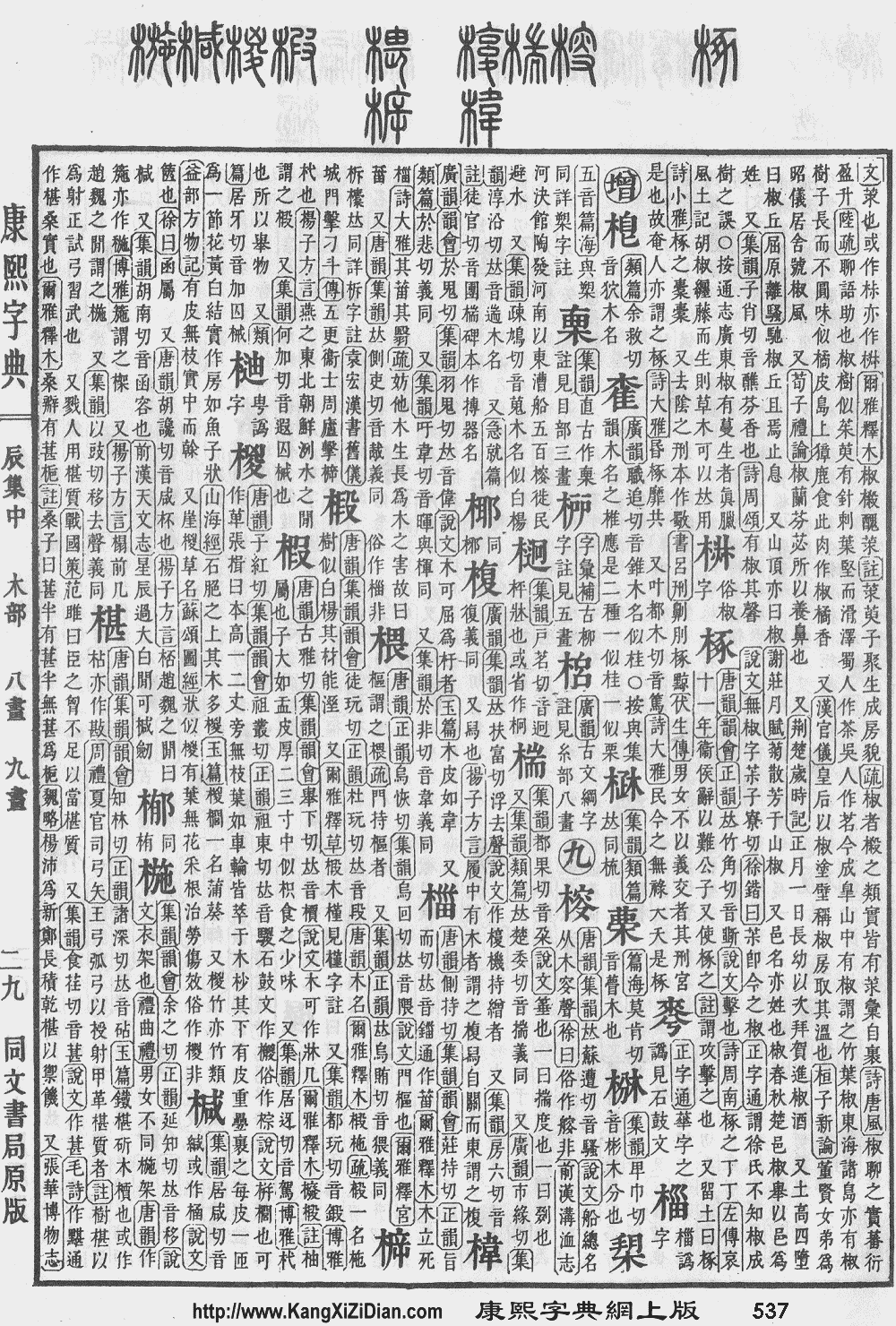
- KangXi: page 537, character 24
- Dai Kanwa Jiten: character 15076
- Dae Jaweon: page 925, character 9
- Hanyu Da Zidian (first edition): volume 2, page 1257, character 2
- Unihan data for U+6935
Chinese
| simp. and trad. |
椵 | |
|---|---|---|
Glyph origin
| Historical forms of the character 椵 |
|---|
| Shuowen Jiezi (compiled in Han) |
| Small seal script |
 |
Characters in the same phonetic series (叚) (Zhengzhang, 2003)
Pronunciation
Definitions
椵
- (archaic) A type of pomelo, whose fruit is as big as a basin, has a thick peel, and resembles the trifoliate orange on the inside. The wood from the tree can be used to make beds and tables.
Pronunciation
Japanese
Kanji
椵
- This term needs a translation to English. Please help out and add a translation, then remove the text
{{rfdef}}.
This article is issued from Wiktionary. The text is licensed under Creative Commons - Attribution - Sharealike. Additional terms may apply for the media files.