遐
| ||||||||
Translingual
Han character
遐 (Kangxi radical 162, 辵+9, 12 strokes, cangjie input 卜口尸水 (YRSE), four-corner 37304, composition ⿺辶叚)
Derived characters
References
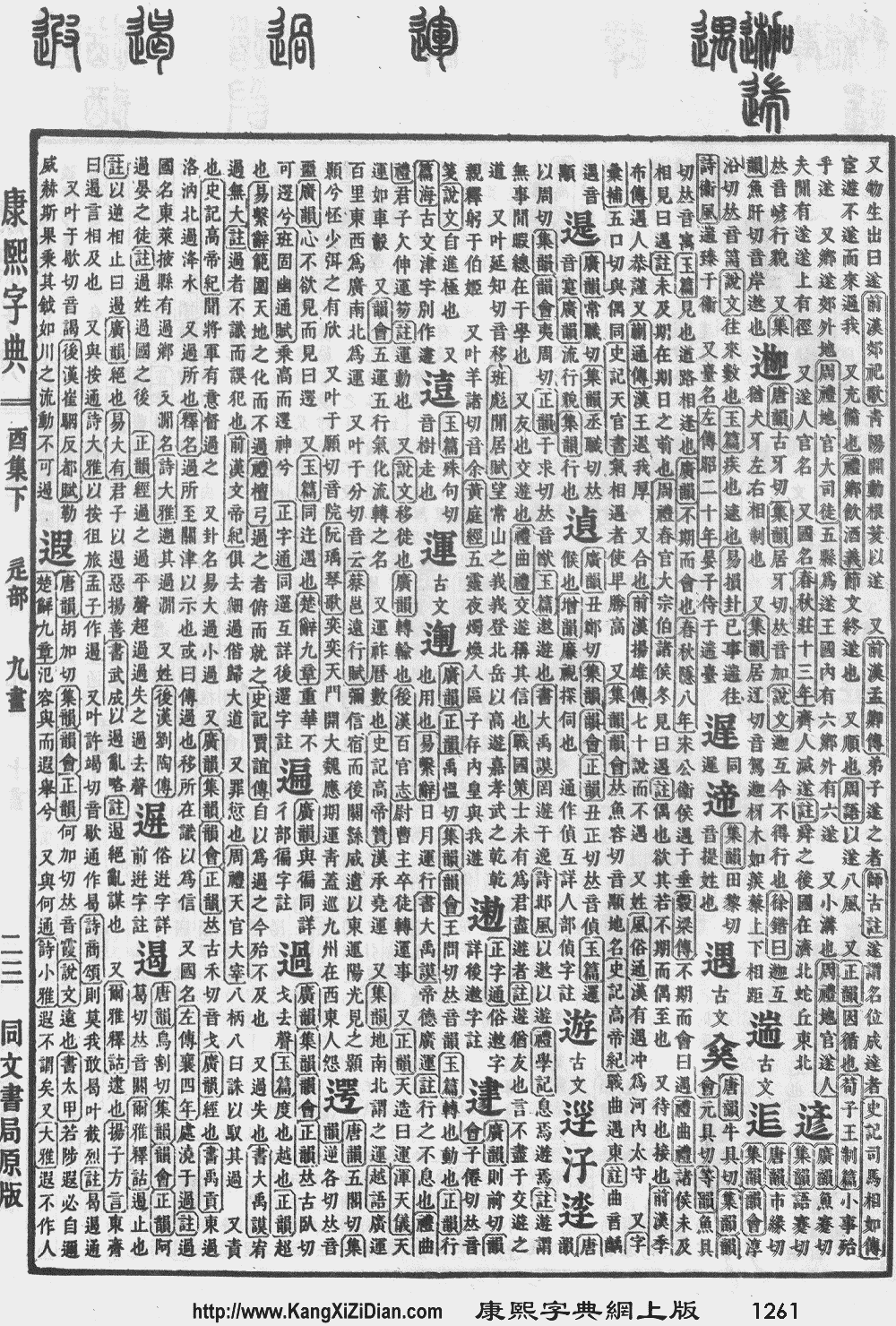
- KangXi: page 1261, character 25
- Dai Kanwa Jiten: character 39005
- Dae Jaweon: page 1754, character 4
- Hanyu Da Zidian (first edition): volume 6, page 3867, character 4
- Unihan data for U+9050
Chinese
| trad. | 遐 | |
|---|---|---|
| simp. # | 遐 | |
| alternative forms | 徦 | |
Glyph origin
| Historical forms of the character 遐 | |
|---|---|
| Shuowen Jiezi (compiled in Han) | Liushutong (compiled in Ming) |
| Small seal script | Transcribed ancient scripts |
 |
 |
Characters in the same phonetic series (叚) (Zhengzhang, 2003)
Etymology 1
From Proto-Sino-Tibetan *gra (“long (period of time)”). Cognate with Burmese ကြာ (kra, “be a long time (since)”).
Pronunciation
Compounds
Synonyms
Dialectal synonyms of 那裡 (“there”) [map]
Pronunciation 2
Definitions
遐
- (Xiamen, Zhangzhou and Taiwanese Hokkien, degree) so; that
- 倩特別護士一日兩千,一個月愛六萬,𪜶哪有遐濟錢來倩? [Taiwanese Hokkien, trad.]
- From: 林美麗, 大家·新婦
- Chhiàⁿ te̍k-pia̍t hō͘-sū chi̍t ji̍t nn̄g-chheng, chi̍t kò͘ goe̍h ài la̍k-bān, in ná ū hiah chē chîⁿ lâi chhiàⁿ? [Pe̍h-ōe-jī]
- Hiring a special duty nurse costs two thousand a day, sixty thousand a month. How do they have that much money to hire one?
倩特别护士一日两千,一个月爱六万,𪜶哪有遐济钱来倩? [Taiwanese Hokkien, simp.]
Japanese
Korean
Hanja
遐 • (ha) (hangeul 하, revised ha, McCune–Reischauer ha, Yale ha)
- This term needs a translation to English. Please help out and add a translation, then remove the text
{{rfdef}}.
Vietnamese
Han character
- This term needs a translation to English. Please help out and add a translation, then remove the text
{{rfdef}}.
References
This article is issued from Wiktionary. The text is licensed under Creative Commons - Attribution - Sharealike. Additional terms may apply for the media files.