槩

槩 U+69E9, 槩
CJK UNIFIED IDEOGRAPH-69E9
← 槨
[U+69E8]
CJK Unified Ideographs 槪 →
[U+69EA]

Translingual

Han character

槩 (Kangxi radical 75, 木+10, 14 strokes, cangjie input 竹山木 (HUD) or X竹山木 (XHUD), composition ⿱既木 or ⿱旣木)

  1. generally, approximately

Usage notes

  • In the Unicode charts, the G and H source glyphs of this character are shown as ⿱既木, identical to 㮣/概 (gài). This is also the form used by many common fonts for Simplified Chinese. The other source glyphs are shown as ⿱旣木.

References

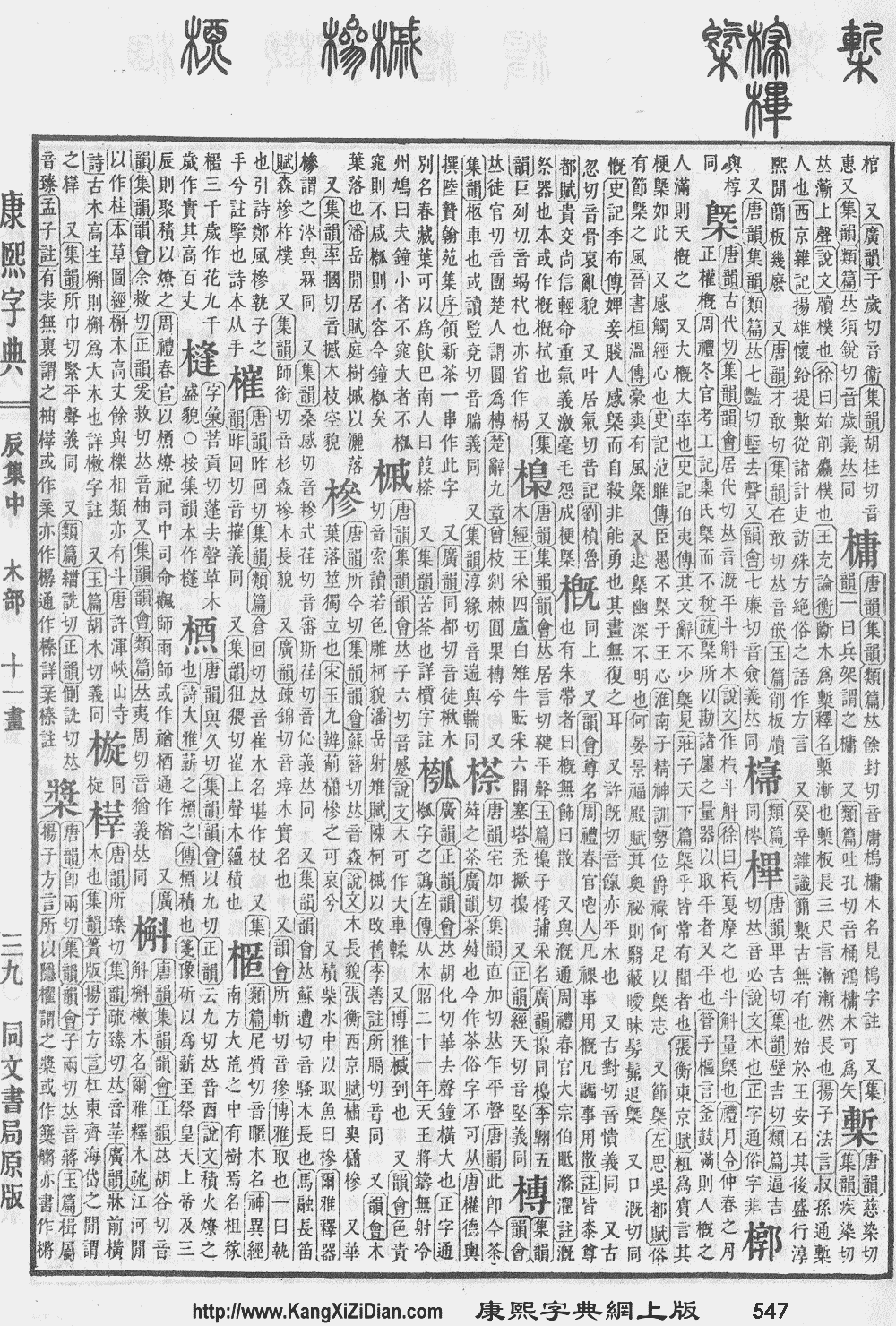
  • KangXi: page 547, character 6
  • Dai Kanwa Jiten: character 15363
  • Dae Jaweon: page 935, character 3
  • Hanyu Da Zidian (first edition): volume 2, page 1257, character 1
  • Unihan data for U+69E9

Chinese

Etymology 1

For pronunciation and definitions of 槩 – see 概 (“manner; mettle; general idea; etc.”).
(This character, 槩, is a variant form of 概.)

Etymology 2

For pronunciation and definitions of 槩 – see 㮣 (“a piece of wood used to strike off grain in a measure; thus:--all; etc.”).
(This character, 槩, is a variant form of 㮣.)

Japanese

Kanji

槩

(uncommon “Hyōgai” kanji)

  1. generally
  2. approximately

Readings

  • On (unclassified): がい (gai); かい (kai)
  • Kun: とかき (tokaki, 槩); おおむね (ōmune, 槩ね); おもむき (omomuki, 槩)

Korean

Hanja

槩 • (gae) (hangeul 개, revised gae, McCune–Reischauer kae, Yale kay)

  1. This term needs a translation to English. Please help out and add a translation, then remove the text {{rfdef}}.
This article is issued from Wiktionary. The text is licensed under Creative Commons - Attribution - Sharealike. Additional terms may apply for the media files.