泲

泲 U+6CF2, 泲
CJK UNIFIED IDEOGRAPH-6CF2
← 泱
[U+6CF1]
CJK Unified Ideographs 泳 →
[U+6CF3]

Translingual

Han character

泲 (Kangxi radical 85, 水+5, 8 strokes, cangjie input 水中X竹 (ELXH), four-corner 35127, composition ⿰氵𠂔)

References

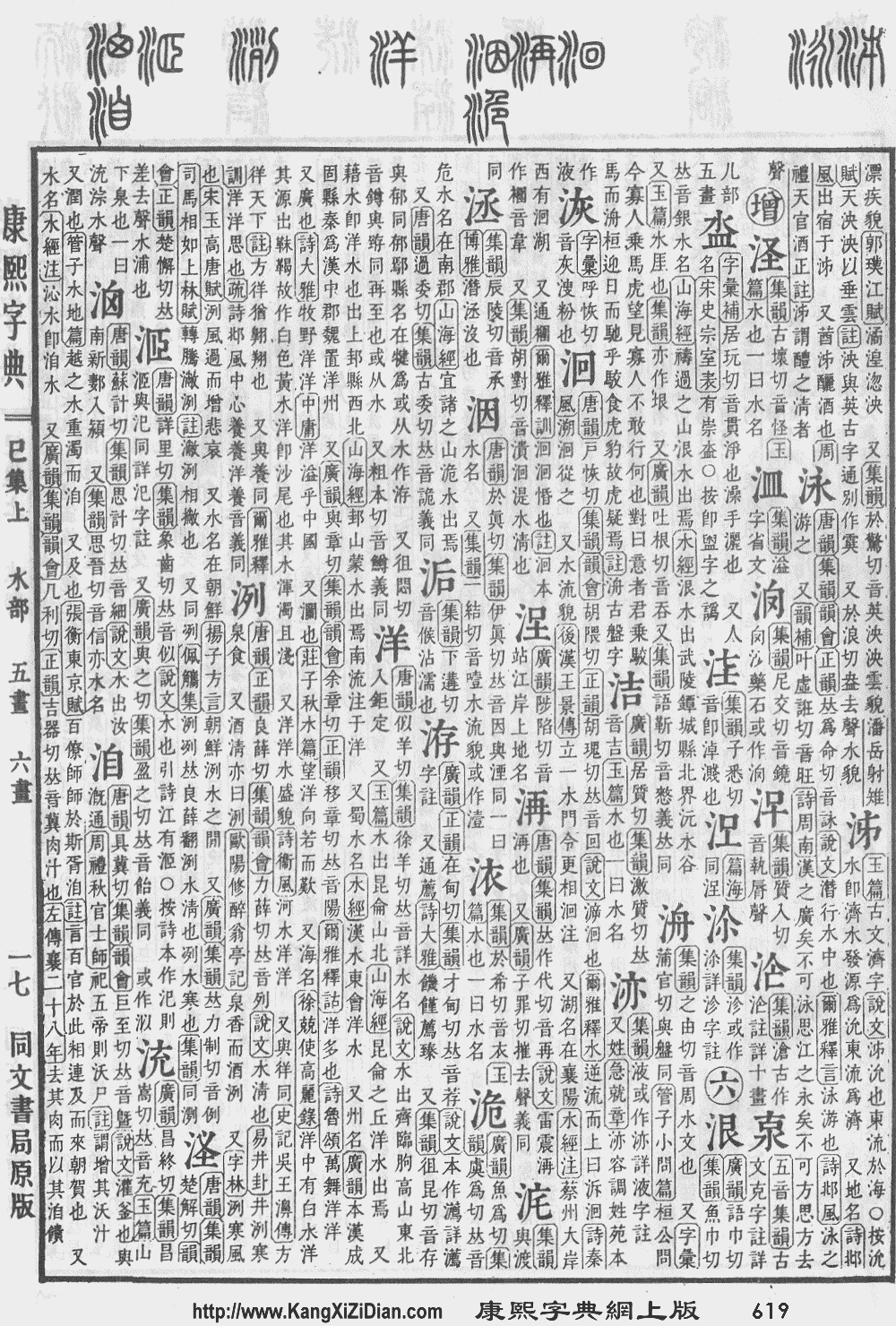
  • KangXi: page 619, character 1
  • Dai Kanwa Jiten: character 17327
  • Dae Jaweon: page 1014, character 2
  • Hanyu Da Zidian (first edition): volume 3, page 1570, character 1
  • Unihan data for U+6CF2

Chinese

simp. and trad.
泲

Pronunciation


Baxter–Sagart system 1.1 (2014)
Character 泲
Reading # 1/1
Modern
Beijing
(Pinyin)
jǐ
Middle
Chinese
‹ tsejX ›
Old
Chinese
/*tsˁ[i]jʔ/
English [river name]

Notes for Old Chinese notations in the Baxter–Sagart system:

* Parentheses "()" indicate uncertain presence;
* Square brackets "[]" indicate uncertain identity, e.g. *[t] as coda may in fact be *-t or *-p;
* Angle brackets "<>" indicate infix;
* Hyphen "-" indicates morpheme boundary;

* Period "." indicates syllable boundary.

Definitions

泲

  1. (~水) Alternative form of 濟/济 (Jǐ, “Ji River”).
  2. An ancient place.
  3. † to filter
  4. † to squeeze

Japanese

Kanji

泲

(uncommon “Hyōgai” kanji)

  1. This term needs a translation to English. Please help out and add a translation, then remove the text {{rfdef}}.

Readings

  • On (unclassified): せい (sei), さい (sai)
This article is issued from Wiktionary. The text is licensed under Creative Commons - Attribution - Sharealike. Additional terms may apply for the media files.